
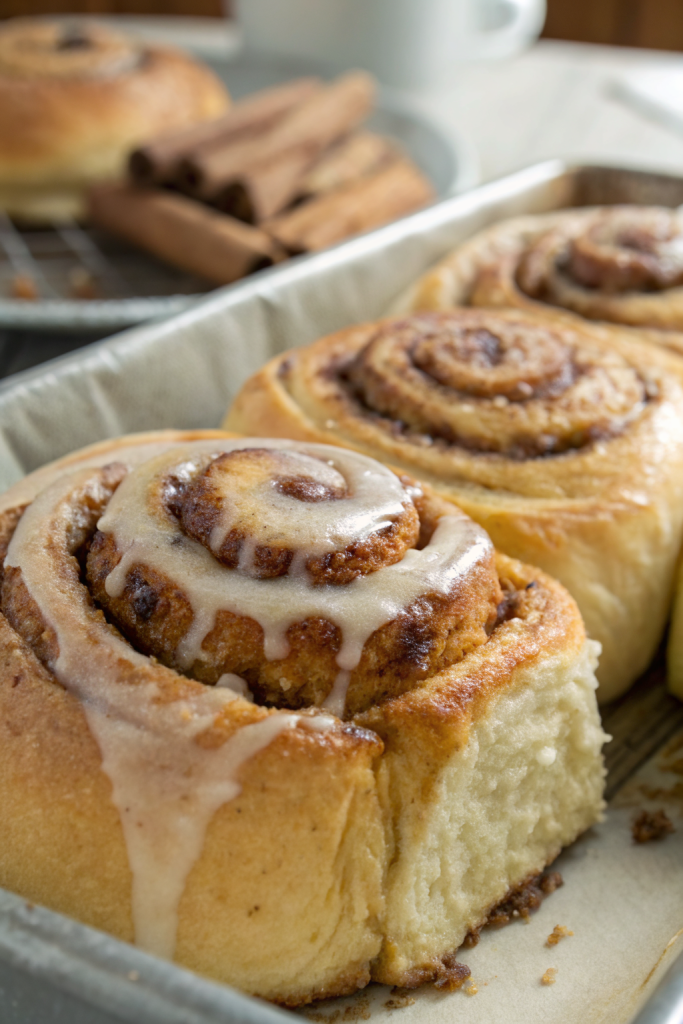
Pumpkin Cinnamon Rolls Recipe tastes like a cozy October morning with gooey spiced centers, fluffy pumpkin dough, and a cream cheese frosting that melts right into the swirls. It works perfectly for holiday brunch, weekend baking projects, or anyone who wants a bakery-style treat in about 2 ½ hours start to finish. I tested this version in my tiny American kitchen with two hungry kids circling the pan like sharks, so you know it passes the “worth the carbs” test.
Why Pumpkin Cinnamon Rolls Recipe Is Worth It
Pumpkin adds moisture and richness to the dough, so the rolls stay soft and tender even the next day. The cinnamon, nutmeg, and brown sugar filling tastes like pumpkin pie and a classic cinnamon roll had the best possible baby.
You mix everything in one big bowl, let the dough rise, roll it up, slice, rise again, and bake. The recipe uses basic pantry ingredients, and canned pumpkin keeps things simple and consistent every time.
“These pumpkin cinnamon rolls taste like a bakery pastry and a slice of pumpkin pie in one bite—total weekend hero status. ★★★★★”
Ingredients You Need
Dough
- ¾ cup whole milk, warmed to about 105–110°F (use 2% if needed, but avoid skim)
- 2 ¼ tsp instant or active dry yeast (one standard packet)
- ⅓ cup granulated sugar
- ½ cup canned pumpkin puree (not pumpkin pie filling; I like Libby’s for consistent texture)
- 1 large egg, room temperature
- ¼ cup unsalted butter, melted and slightly cooled
- 3 ¼–3 ½ cups all-purpose flour, spooned and leveled
- 1 tsp fine sea salt
- 1 tsp ground cinnamon
- ¼ tsp ground nutmeg
- ¼ tsp ground ginger
You can swap in bread flour for 1–1 ½ cups if you want extra chew. If your kitchen runs cold, warm the milk slightly on the higher side of the range to help the yeast wake up.
Filling
- ½ cup unsalted butter, softened to room temperature
- ¾ cup packed light or dark brown sugar
- 1 ½ tbsp ground cinnamon
- ½ tsp ground nutmeg
- ¼ tsp ground cloves (optional but very cozy)
- Pinch of salt
Spread the butter very soft, not melted, so it clings to the dough and holds the sugar. Dark brown sugar gives a deeper molasses flavor, while light brown sugar tastes a bit milder.
Cream Cheese Frosting
- 4 oz cream cheese, softened (block style, not whipped)
- 3 tbsp unsalted butter, softened
- 1 cup powdered sugar, sifted
- 1–2 tbsp milk or heavy cream
- 1 tsp pure vanilla extract
- Pinch of salt
Thin the frosting with milk to a pourable glaze or keep it thicker and fluffy for a bakery-style topping. Use a hand mixer or stand mixer for the smoothest texture.
Pantry Shortcuts & Sub Notes
- Use canned pumpkin puree to save time and keep moisture levels consistent.
- Use pre-mixed pumpkin pie spice in place of the cinnamon, nutmeg, ginger, and cloves in both dough and filling.
- Use pre-cut parchment sheets for the pan so cleanup stays easy.
Equipment List
- Large mixing bowl (or stand mixer with dough hook)
- Measuring cups and spoons
- Whisk and rubber spatula
- Rolling pin
- 9×13-inch baking pan (metal or glass)
- Sharp knife or unflavored dental floss for cutting rolls
- Clean kitchen towel or plastic wrap
- Hand mixer or stand mixer for frosting
Quick Tips & substitutions
- Warm the milk to “hot bath” temperature; if it feels too hot on your finger, cool it a bit so you do not kill the yeast.
- Use instant yeast if you want to skip proofing; mix it right into the flour.
- Add flour slowly at the end; stop when the dough feels soft, slightly tacky, and pulls away from the bowl.
- Use dental floss to slice the rolls so you do not squish the spiral.
- Swap butter with vegan butter sticks and milk with oat or almond milk for a dairy-light version.
- Use pumpkin pie spice (about 1 ½–2 tsp) instead of the individual spices if you want a shortcut.
- Chill the rolled log for 10–15 minutes in the fridge if the dough feels too soft to slice cleanly.
- Spread frosting on warm rolls for a melty glaze or on cooled rolls for a thick, fluffy layer.
How to Make Pumpkin Cinnamon Rolls Recipe
Step 1: Mix the dough base
Warm the milk to about 105–110°F and pour it into a large mixing bowl. Whisk in the sugar and yeast, then let it sit 5–10 minutes until the top looks foamy and creamy. Add the pumpkin puree, egg, and melted butter, and whisk until smooth and well combined.
Sprinkle in the salt, cinnamon, nutmeg, and ginger, and stir again. Add 2 ½ cups of the flour and mix with a spatula until the dough looks shaggy and thick. Add more flour, a few tablespoons at a time, until the dough pulls away from the sides of the bowl but still feels soft and slightly tacky.
Step 2: Knead the dough
Turn the dough onto a lightly floured surface. Knead by hand for about 7–9 minutes, or use a stand mixer with a dough hook for about 5–6 minutes on medium-low speed. Add tiny sprinkles of flour only if the dough sticks badly; keep it as soft as you can handle.
Stop kneading when the dough feels smooth, elastic, and springs back when you poke it gently. Shape it into a ball and place it in a lightly greased bowl, turning once to coat the surface with oil. Cover the bowl with a clean towel or plastic wrap.
Step 3: Let the dough rise
Set the covered bowl in a warm, draft-free spot. A turned-off oven with the light on or a warm corner of the kitchen works well. Let the dough rise until it doubles in size, about 60–90 minutes, depending on room temperature.
You can test it by gently pressing a fingertip into the dough; if the indentation springs back slowly and not all the way, the dough stands ready. If it bounces back quickly, give it more time. If it does not move at all, you likely let it go too long, but it still bakes fine.
Step 4: Mix the filling
While the dough rises, stir together the softened butter, brown sugar, cinnamon, nutmeg, cloves, and a pinch of salt in a small bowl. Mix until you see a thick, spreadable paste. This method keeps the sugar from spilling out and helps the filling stay in the swirl.
Taste a tiny bit and adjust the spices if you want more cinnamon or less clove. Keep the filling at room temperature so it spreads easily over the dough later.
Step 5: Roll out the dough
Punch down the risen dough gently to release extra air. Turn it onto a lightly floured surface and shape it into a rough rectangle with your hands. Use a rolling pin to roll it into a large rectangle, about 12×18 inches, with the long side facing you.
Keep the thickness around ¼ inch so the rolls bake evenly. If the dough springs back a lot, let it rest 5 minutes, then roll again; the gluten relaxes and cooperates more.
Step 6: Fill and roll
Spread the filling mixture evenly over the dough, leaving a small ½-inch border along the long edge farthest from you. Make sure you cover the corners so every roll gets a good swirl of filling. Roll the dough up tightly from the long edge closest to you, like a jelly roll.
Gently stretch and tuck as you roll so the log stays even in thickness. Pinch the seam closed along the edge and roll the log seam-side down. If the dough feels too soft, chill the log in the fridge for 10–15 minutes before slicing.
Step 7: Slice the rolls
Use unflavored dental floss or a very sharp knife to cut the log into 12 even rolls. With floss, slide it under the log, cross the ends over the top, and pull to slice cleanly. This method keeps the spiral intact and avoids squishing.
Grease a 9×13-inch baking pan or line it with parchment. Arrange the rolls in the pan with a little space between each one so they can expand during the second rise.
Step 8: Second rise
Cover the pan loosely with a towel or plastic wrap. Let the rolls rise in a warm spot until they puff and nearly touch, about 30–45 minutes. The rolls should look pillowy and noticeably larger.
If your kitchen runs cool, you can place the pan in a turned-off oven with a bowl of hot water on the rack below to create a cozy environment. Do not overproof; if the rolls look huge and start to sag, move to baking.
Step 9: Bake
Preheat the oven to 350°F while the rolls finish rising. Bake the rolls for 22–28 minutes, until the tops look golden and the centers feel set. If the tops brown too quickly, tent the pan loosely with foil for the last 5–8 minutes.
You can check doneness by gently pulling one roll from the edge; the center should look cooked, not doughy. Slightly underbaked rolls taste soft and gooey, but raw centers do not taste great, so aim for that sweet spot.
Step 10: Make the frosting
While the rolls bake, beat the softened cream cheese and butter together in a bowl until smooth and fluffy. Add the powdered sugar, vanilla, and salt, and mix again. Thin with 1–2 tablespoons of milk until you reach your desired consistency.
Taste and adjust the sweetness or salt. A tiny pinch of salt in frosting makes the pumpkin cinnamon rolls taste more balanced and less cloying.
Step 11: Frost and serve
Let the baked rolls cool in the pan for about 10–15 minutes. Spread the frosting over warm rolls for a melty glaze that sinks into the swirls. If you want defined frosting, wait until the rolls cool more, then spread a thick layer on top.
Serve the pumpkin cinnamon rolls warm, ideally with coffee, tea, or a big glass of cold milk. They taste best the day you bake them, but they still hold up nicely the next morning.
Recipe Variations
- Gluten-free: Use a 1:1 gluten-free baking flour blend and add an extra tablespoon of milk if the dough feels dry.
- Vegan: Swap butter with vegan butter sticks, milk with almond or oat milk, and use a flax egg (1 tbsp ground flax + 3 tbsp water) in the dough; use vegan cream cheese for the frosting.
- Low sugar: Reduce the sugar in the filling to ½ cup and use a light drizzle of glaze instead of full frosting.
- Extra pumpkin: Add 2 more tablespoons of pumpkin puree and reduce the milk by 2 tablespoons to keep the dough balanced.
- Nutty version: Sprinkle chopped pecans or walnuts over the filling before rolling.
- Maple twist: Replace part of the powdered sugar in the frosting with maple syrup and reduce the milk.
- Chocolate swirl: Scatter mini chocolate chips over the filling for a pumpkin mocha vibe.
Ways to Serve Pumpkin Cinnamon Rolls Recipe
- Serve warm with coffee, hot chocolate, or chai for a cozy breakfast.
- Plate them with scrambled eggs and fruit for a more balanced brunch spread.
- Pack leftover rolls in lunchboxes as a special dessert.
- Reheat a single roll in the microwave for 15–20 seconds for a quick afternoon treat.
- Top with a sprinkle of chopped toasted pecans right before serving for crunch.
Storage Success
Let the pumpkin cinnamon rolls cool completely before you cover them so condensation does not make them soggy. Store them tightly covered at room temperature for up to 2 days, or in the fridge for up to 4 days. Reheat individual rolls in the microwave for 15–25 seconds or in a 300°F oven for 8–10 minutes until warm and soft again.
If you want to prep ahead, assemble the rolls in the pan, cover tightly, and chill overnight, then bring them to room temperature while the oven heats and bake in the morning. You can also freeze baked, unfrosted rolls for up to 2 months, then thaw, warm, and frost right before serving.
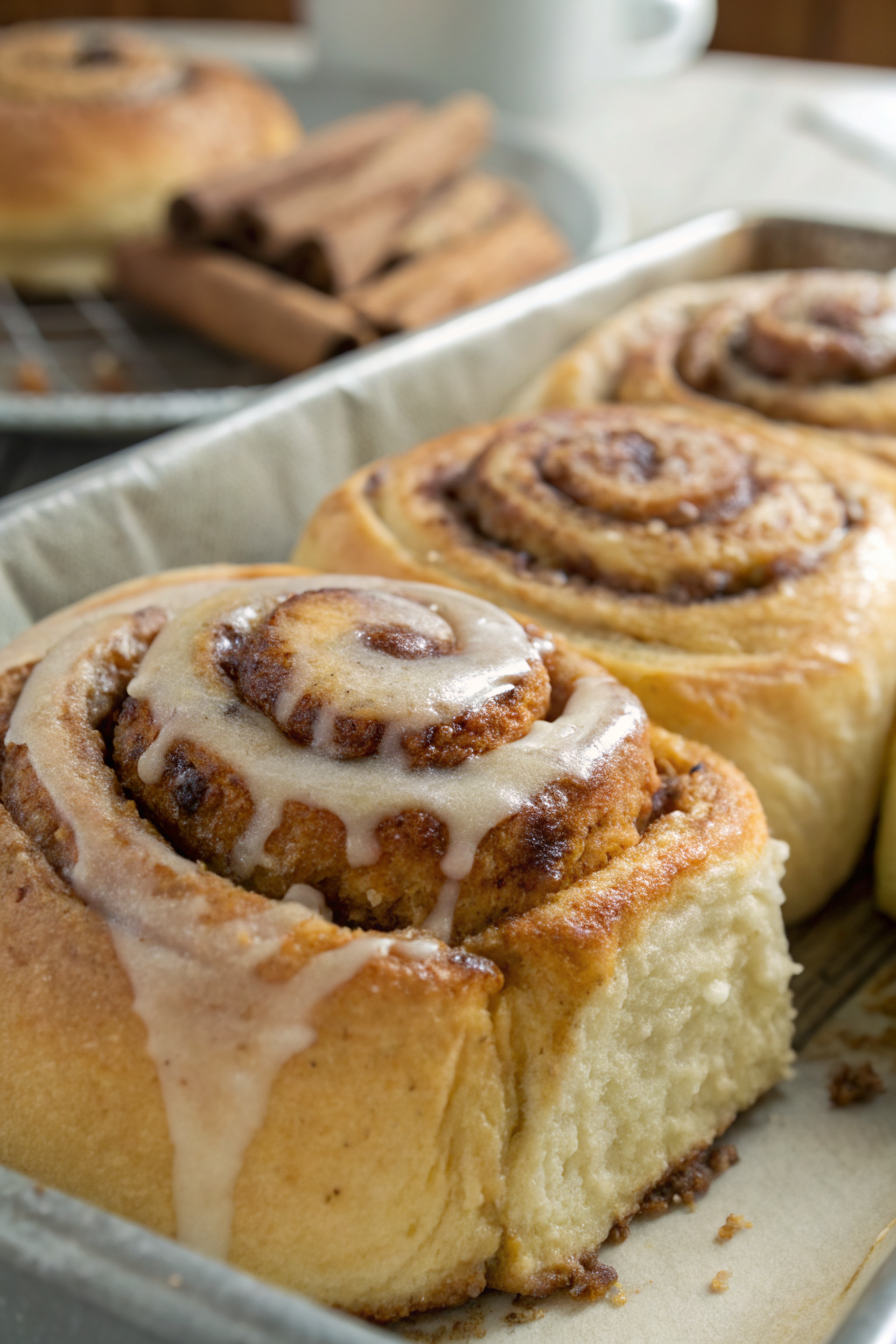
Pumpkin Cinnamon Rolls Recipe
Ingredients
Instructions
- Warm the milk to about 105–110°F and pour it into a large mixing bowl. Whisk in the sugar and yeast, then let sit 5–10 minutes until the top looks foamy and creamy.
- Add the pumpkin puree, egg, and melted butter to the yeast mixture and whisk until smooth and well combined.
- Sprinkle in the salt, cinnamon, nutmeg, and ginger, and stir again. Add 2 1/2 cups of the flour and mix with a spatula until the dough looks shaggy and thick.
- Add more flour a few tablespoons at a time until the dough pulls away from the sides of the bowl but still feels soft and slightly tacky.
- Turn the dough onto a lightly floured surface and knead by hand for 7–9 minutes, or in a stand mixer with a dough hook for 5–6 minutes on medium-low, adding only light sprinkles of flour as needed.
- Stop kneading when the dough feels smooth and elastic and springs back when gently poked. Shape into a ball and place in a lightly greased bowl, turning once to coat. Cover with a clean towel or plastic wrap.
- Let the dough rise in a warm, draft-free spot until doubled in size, about 60–90 minutes. When gently pressed with a fingertip, the indentation should spring back slowly.
- While the dough rises, stir together the softened butter, brown sugar, cinnamon, nutmeg, cloves, and a pinch of salt in a small bowl until you have a thick, spreadable paste.
- Punch down the risen dough to release excess air and turn it onto a lightly floured surface. Shape into a rough rectangle, then roll into a 12x18-inch rectangle about 1/4 inch thick, with the long side facing you.
- Spread the filling evenly over the dough, leaving a 1/2-inch border along the long edge farthest from you, making sure to reach the corners.
- Starting from the long edge closest to you, roll the dough up tightly into a log, gently stretching and tucking so it stays even in thickness. Pinch the seam closed and place the log seam-side down. Chill for 10–15 minutes if the dough feels too soft to slice.
- Use unflavored dental floss or a very sharp knife to cut the log into 12 even rolls.
- Grease or line a 9x13-inch baking pan with parchment, then arrange the rolls in the pan with a little space between each one.
- Cover the pan loosely with a towel or plastic wrap and let the rolls rise in a warm spot until puffed and nearly touching, about 30–45 minutes.
- Preheat the oven to 350°F while the rolls finish rising. Bake for 22–28 minutes, until the tops are golden and the centers feel set. Tent loosely with foil if the tops brown too quickly.
- While the rolls bake, beat the softened cream cheese and butter together in a bowl until smooth and fluffy. Add the powdered sugar, vanilla, and salt, then mix again. Thin with 1–2 tablespoons of milk or cream to reach your desired consistency.
- Let the baked rolls cool in the pan for 10–15 minutes. Spread the frosting over warm rolls for a melty glaze, or wait until they cool more for a thicker, defined layer of frosting.
- Serve the pumpkin cinnamon rolls warm, ideally with coffee, tea, or cold milk.
Notes
Approximate per 1 roll (1/12 of recipe), including frosting: 320–360 calories; fat 13–16 g; saturated fat 8–10 g; carbohydrates 48–52 g; fiber 1–2 g; sugars 24–28 g; protein 6–7 g; sodium 260–320 mg. Values will vary based on brands, exact ingredient amounts, and portion size.
Leave a Reply