
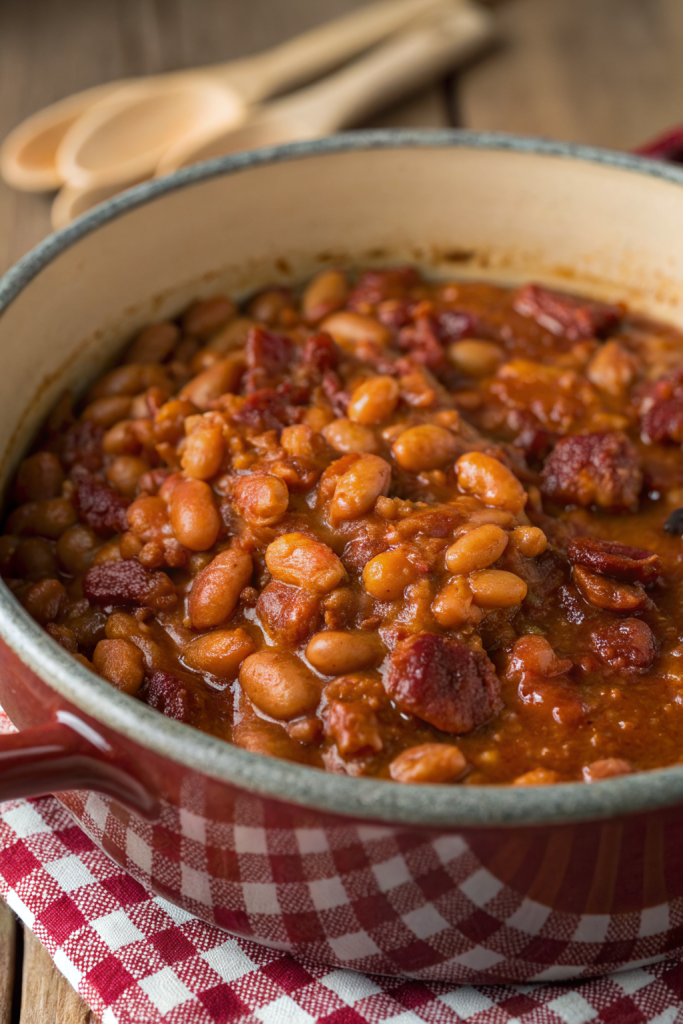
Barbecue Beans Recipe hits that sweet spot between smoky, tangy, and just a little bit sticky, with tender beans that soak up every drop of sauce. It works for weeknight dinners, potlucks, game day, and cookouts, and you can get it on the table in about 1 hour (or less with a few shortcuts). I grew up in a house where “a good cookout” meant three kinds of beans, so this recipe comes straight from years of tweaking and taste-testing.
Why Barbecue Beans Recipe Is Worth It
You get deep, slow-cooked flavor without babysitting a smoker all day. Canned beans keep the process simple, while a quick homemade barbecue-style sauce adds layers of sweet, smoky, and tangy notes.
The recipe scales easily, so you can feed two people or a backyard crowd with almost the same effort. It also works as a side dish or a main, so you gain a lot of flexibility from one pot.
“These barbecue beans taste like they simmered all afternoon on the grill, but they came from my stove in under an hour—my family scraped the pot clean. ★★★★★”
Ingredients You Need
You can tweak this Barbecue Beans Recipe with what you already keep in your pantry, but this list gives you the best flavor.
Beans
- 2 cans (15 ounces each) pinto beans, drained and rinsed
- 1 can (15 ounces) kidney beans, drained and rinsed
- 1 can (15 ounces) black beans, drained and rinsed
You can swap any of these with navy beans, great northern beans, or all pinto beans. Use what you have, but aim for at least two types for better texture.
Veggies & Aromatics
- 1 tablespoon neutral oil (canola, avocado, or light olive oil)
- 1 large yellow onion, diced
- 1 small green bell pepper, diced
- 1 small red bell pepper, diced
- 2–3 cloves garlic, minced
If you feel lazy, you can use frozen diced onions and peppers. They work well and save chopping time.
Smoky-Sweet Sauce Base
- 1 cup barbecue sauce (use your favorite; I like a thick, smoky Kansas City–style sauce)
- 1 cup tomato sauce or crushed tomatoes
- 2 tablespoons tomato paste
- 1/3 cup brown sugar (light or dark)
- 2 tablespoons molasses (optional but adds depth)
- 2 tablespoons yellow mustard or Dijon mustard
- 2 tablespoons apple cider vinegar
- 1–2 tablespoons Worcestershire sauce (use a vegan brand if needed)
You can use store-brand barbecue sauce without any problem. If it tastes very sweet, reduce the brown sugar slightly.
Seasonings
- 1–2 teaspoons smoked paprika
- 1 teaspoon chili powder
- 1/2 teaspoon ground cumin
- 1/4 teaspoon cayenne pepper (optional, to taste)
- 1 teaspoon kosher salt, plus more to taste
- 1/2 teaspoon black pepper
Smoked paprika gives that “from the smoker” vibe, so I recommend it strongly. If you only have regular paprika, add a tiny splash of liquid smoke (about 1/4 teaspoon).
Optional Meaty Add-Ins
- 4–6 slices thick-cut bacon, chopped
- or 1/2 pound smoked sausage, sliced
- or 1 cup chopped leftover pulled pork or rotisserie chicken
You can skip the meat entirely and keep the recipe vegetarian or vegan. The beans and sauce carry enough flavor on their own.
Equipment
- Large Dutch oven or heavy-bottomed pot (at least 5-quart)
- Cutting board and sharp knife
- Wooden spoon or heat-safe spatula
- Measuring cups and spoons
- Can opener
- Optional: oven-safe pot lid or foil if you finish the beans in the oven
Quick Tips & substitutions
- Use canned beans to save time; rinse them well to remove extra starch and salt.
- Mix at least two types of beans for better texture and flavor.
- Swap brown sugar with maple syrup or honey if you prefer a different sweetness.
- Use liquid smoke (start with 1/4 teaspoon) if you do not use bacon or smoked sausage.
- Choose a barbecue sauce you enjoy on its own, since it drives most of the flavor.
- Keep the simmer gentle so the beans stay intact and do not break down.
- Taste near the end and adjust with more vinegar for tang, sugar for sweetness, or salt for punch.
- Use a vegan Worcestershire or soy sauce if you keep the recipe fully plant-based.
How to Make Barbecue Beans Recipe
Step 1: Sauté veggies and aromatics
Heat oil in a large stock pot or Dutch oven over medium heat. Once hot, add onions and bell peppers; cook until soft and lightly golden, about 7–8 minutes, and stir often. Add garlic and cook 1 minute, until it smells fragrant and toasty, and season with a pinch of salt.
If you use bacon or sausage, cook it first in the pot until it browns and crisps slightly. Scoop out most of the rendered fat if it looks excessive, then cook the veggies in the remaining fat instead of oil.
Step 2: Build the smoky sauce
Stir in tomato paste and cook 1–2 minutes to caramelize it slightly. Add barbecue sauce, tomato sauce or crushed tomatoes, brown sugar, molasses, mustard, apple cider vinegar, and Worcestershire sauce. Stir until everything blends into a smooth sauce.
Add smoked paprika, chili powder, cumin, cayenne (if using), salt, and black pepper. Taste the sauce at this stage; it should taste a bit stronger than you want, since the beans will mellow it out.
Step 3: Add beans and simmer
Add the drained and rinsed beans to the pot and stir gently to coat them in the sauce. Bring the mixture to a gentle simmer over medium heat. Once it bubbles, reduce the heat to low.
Cover the pot partially and simmer 25–35 minutes, and stir every 5–10 minutes. The sauce will thicken, the flavors will deepen, and the beans will soften slightly without turning mushy.
Step 4: Adjust texture and seasoning
Check the thickness of the beans. If the sauce looks too thick, stir in a splash of water or broth until you reach your preferred consistency. If it looks thin, simmer uncovered for another 5–10 minutes.
Taste and adjust seasoning. Add more salt, a spoonful of brown sugar, or a splash of vinegar as needed. You control the balance of sweet, smoky, and tangy, so tweak it until it makes you want to grab a spoon straight from the pot.
Step 5: Optional oven finish
If you want that baked-bean style texture, preheat your oven to 350°F (175°C). Transfer the pot (oven-safe only) or the beans in a baking dish to the oven. Bake uncovered 20–30 minutes, until the top looks slightly caramelized and the sauce thickens more.
Let the beans rest 10 minutes before serving so the sauce sets up a bit. This rest time also keeps the beans from burning your tongue, which I say from personal experience.
Recipe Variations
- Gluten-free: Use a gluten-free barbecue sauce and gluten-free Worcestershire or tamari.
- Vegan: Skip bacon and sausage, use oil only, and choose vegan Worcestershire or soy sauce.
- Low sugar: Reduce brown sugar to 1–2 tablespoons and use a low-sugar barbecue sauce.
- Spicy version: Add extra cayenne, a diced jalapeño, or a spoonful of hot sauce.
- Smokier flavor: Add a little more smoked paprika or a tiny splash of liquid smoke.
- Hearty meal: Stir in cooked ground turkey, chicken, or plant-based crumbles.
- Veggie boost: Add diced carrots or celery with the onions, or stir in spinach at the end.
Ways to Serve Barbecue Beans Recipe
- Spoon over baked potatoes or sweet potatoes with a sprinkle of cheese or green onions.
- Serve as a side with grilled chicken, ribs, or veggie burgers.
- Pile into a bowl and top with shredded cheese, diced onions, and a dollop of sour cream or dairy-free yogurt.
- Use as a filling for loaded nachos or stuffed bell peppers.
- Serve with cornbread, biscuits, or crusty bread to soak up the sauce.
Storage Success
Let the barbecue beans cool to room temperature, then store them in airtight containers in the fridge for up to 4–5 days. The flavors deepen as they sit, so leftovers often taste even better. Reheat gently on the stove over low heat with a splash of water if the sauce thickens too much. Freeze portions in freezer-safe containers for up to 3 months, then thaw in the fridge overnight before reheating.
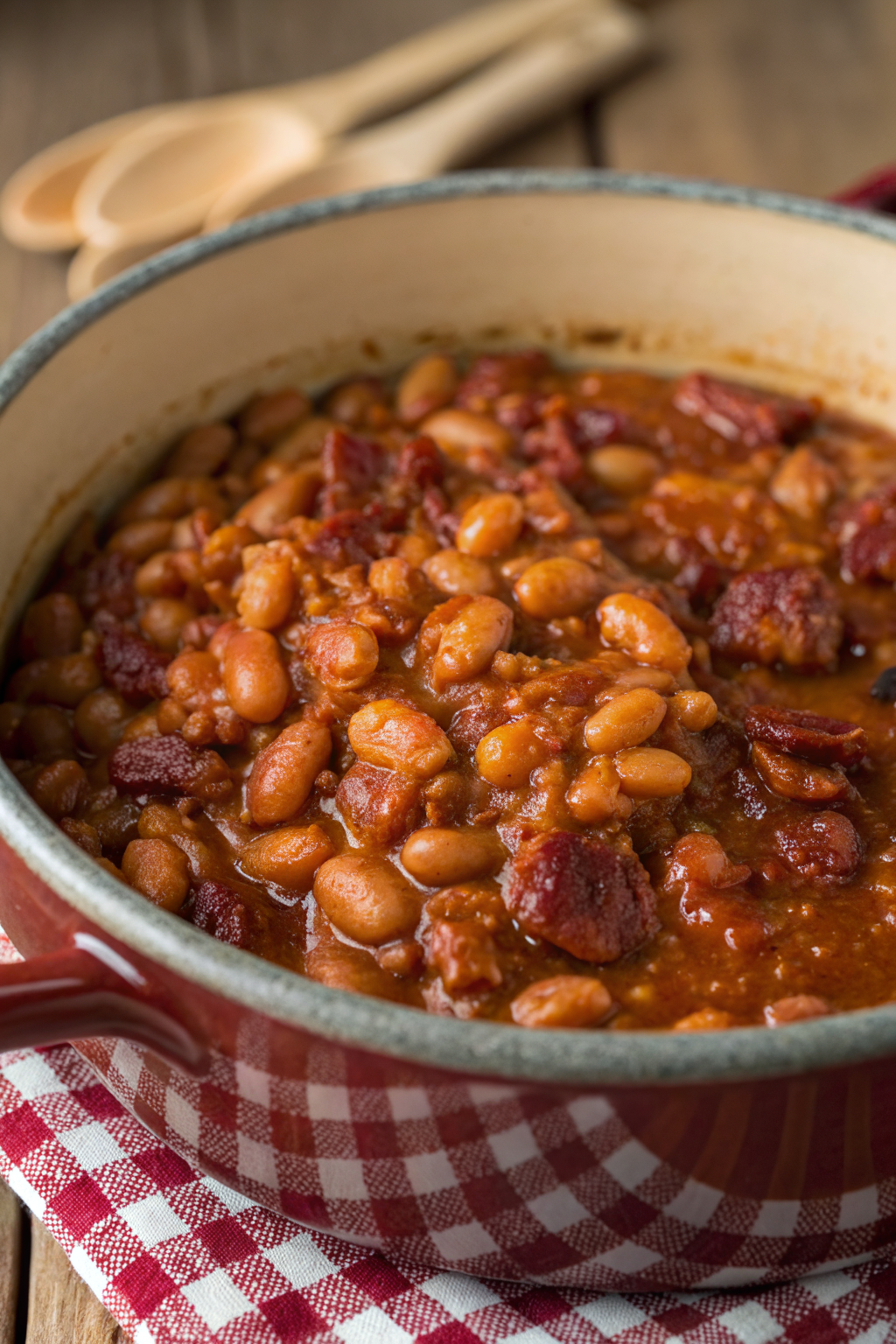
Barbecue Beans Recipe
Ingredients
Instructions
- Heat the oil in a large Dutch oven or heavy-bottomed pot over medium heat. Add the diced onion and bell peppers and cook, stirring often, until soft and lightly golden, about 7–8 minutes. Add the minced garlic and cook for 1 minute, until fragrant, seasoning with a pinch of salt.
- If using bacon or sausage, cook it first in the pot until browned and slightly crisp, then spoon off most of the excess fat and cook the veggies in the remaining drippings instead of oil.
- Stir in the tomato paste and cook for 1–2 minutes to lightly caramelize it. Add the barbecue sauce, tomato sauce or crushed tomatoes, brown sugar, molasses (if using), mustard, apple cider vinegar, and Worcestershire sauce. Stir until the mixture forms a smooth sauce.
- Add the smoked paprika, chili powder, cumin, cayenne (if using), salt, and black pepper. Taste the sauce; it should be a bit stronger than you want in the finished dish, since the beans will mellow it out.
- Add the drained and rinsed pinto, kidney, and black beans. Stir gently to coat the beans evenly in the sauce. Bring to a gentle simmer over medium heat, then reduce the heat to low.
- Partially cover the pot and simmer for 25–35 minutes, stirring every 5–10 minutes, until the sauce thickens, the flavors deepen, and the beans soften slightly without becoming mushy.
- Check the texture. If the sauce is too thick, stir in a splash of water or broth. If it is too thin, simmer uncovered for 5–10 minutes more. Taste and adjust with additional salt, a little brown sugar, or a splash of vinegar until the balance of sweet, smoky, and tangy suits you.
- For a baked-bean style finish, preheat the oven to 350°F (175°C). Transfer the beans to an oven-safe pot or baking dish and bake uncovered for 20–30 minutes, until the top is slightly caramelized and the sauce thickens more. Let rest for 10 minutes before serving.
Notes
Approximate per serving (8 servings, without optional meats): 310 calories; fat 7 g; saturated fat 1 g; carbohydrates 52 g; fiber 11 g; sugars 20 g; protein 13 g; sodium 720 mg. Values will vary based on specific brands, barbecue sauce sweetness/saltiness, optional meat add-ins, and portion size.
Leave a Reply