
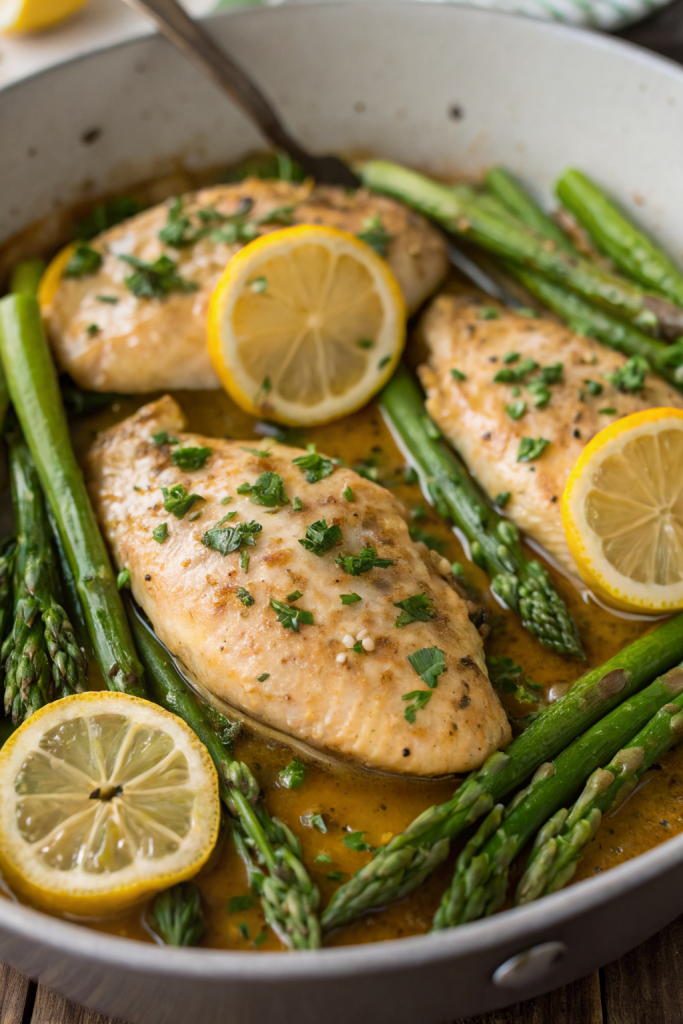
Lemon and Dill Butter Garlic Chicken and Asparagus tastes bright, herby, and rich, with juicy chicken and crisp-tender asparagus soaking up a silky, garlicky butter sauce. It works perfectly for busy weeknights or casual dinner guests, and you can bring it to the table in about 35 minutes. I cook this on repeat in my tiny kitchen, and my family now calls it “the green pan of happiness.”
Why You Should Try This Lemon and Dill Butter Garlic Chicken and Asparagus
This recipe hits that sweet spot where comfort food meets fresh, springy flavors. The lemon and dill cut through the buttery garlic sauce, so the dish tastes light, not heavy, even though it feels cozy and satisfying.
You cook everything in one skillet, so cleanup stays easy and weeknight friendly. The asparagus cooks in the same pan as the chicken, which means it soaks up all that flavor and turns into the best side dish built right in.
“Bright, buttery, and full of flavor, this Lemon and Dill Butter Garlic Chicken and Asparagus tastes like a restaurant meal from a single skillet ★★★★★”
Ingredients You’ll Need
Chicken and Marinade
- 1.5 pounds boneless skinless chicken breasts
- Slice large breasts in half horizontally so they cook evenly.
- 1 teaspoon kosher salt
- ½ teaspoon black pepper
- 1 teaspoon onion powder
- 1 teaspoon garlic powder
- 1 teaspoon smoked paprika or sweet paprika
- 1 tablespoon olive oil
- 1 tablespoon fresh lemon juice
I like air-chilled chicken because it browns better, but any good quality chicken works. If you only have chicken thighs, use boneless skinless thighs and cook a few minutes longer.
Asparagus and Sauce
- 1 pound asparagus, trimmed and cut into 2 to 3 inch pieces
- Thin asparagus cooks faster and tastes more tender.
- 3 tablespoons unsalted butter
- Use a good butter brand since it carries the sauce flavor.
- 4 large garlic cloves, minced or pressed
- Zest of 1 lemon
- Juice of 1 large lemon (about 3 tablespoons)
- ¼ cup low sodium chicken broth or vegetable broth
- 2 to 3 tablespoons fresh dill, finely chopped
- ¼ teaspoon red pepper flakes, optional, for a little heat
- Extra salt and pepper to taste
If you do not have fresh dill, use 1 to 1½ teaspoons dried dill and add it with the broth so it softens. Fresh lemon works best here, so skip bottled juice if possible.
Pantry Shortcuts and Substitutions
- Use pre-minced garlic from a jar if you feel tired, but add a little extra since it tastes milder.
- Swap asparagus with green beans or broccolini if asparagus looks out of season.
- Use ghee instead of butter if you want a slightly nutty flavor and a higher smoke point.
- Use a gluten free broth if you need the dish gluten free.
Equipment List
- Large heavy skillet (12 inch works best, stainless or cast iron)
- Cutting board and sharp knife
- Small bowl for seasoning the chicken
- Tongs or spatula
- Microplane or small grater for lemon zest
- Measuring spoons and cups
Tips & Tricks
- Pat the chicken dry before seasoning so it browns instead of steaming.
- Slice thick chicken breasts in half horizontally so they cook faster and stay juicy.
- Season the chicken generously since the lemon and butter will balance the salt.
- Trim asparagus by snapping the woody ends where they naturally break.
- Use medium high heat to sear the chicken, then lower the heat to finish cooking gently.
- Do not crowd the pan; cook chicken in batches if needed so you get good color.
- Add garlic after you lower the heat so it turns golden instead of burning.
- Zest the lemon before you cut it, since zesting a cut lemon feels slippery and annoying.
- Stir fresh dill in at the end so it stays bright and fragrant.
- Taste the sauce before serving and adjust with a pinch of salt, extra lemon, or a tiny knob of butter.
How to Make Lemon and Dill Butter Garlic Chicken and Asparagus
Step 1: Season the Chicken
Place the chicken on a board and pat it dry with paper towels. Sprinkle both sides with salt, pepper, onion powder, garlic powder, and paprika. Drizzle with olive oil and lemon juice, then rub everything in so each piece looks evenly coated.
Let the chicken sit at room temperature for about 10 to 15 minutes while you prep the asparagus and other ingredients. This short rest helps the chicken cook more evenly and stay tender.
Step 2: Prep the Asparagus and Aromatics
Rinse the asparagus and dry it with a clean towel. Snap off the woody ends and cut the spears into 2 to 3 inch pieces. Mince the garlic, zest the lemon, and chop the dill so everything stands ready near the stove.
Keep the lemon halves nearby so you can squeeze them right into the pan. This setup keeps the cooking flow smooth and helps you avoid overcooking the chicken while you scramble for ingredients.
Step 3: Sear the Chicken
Heat your large skillet over medium high heat. Add 1 tablespoon of butter and 1 teaspoon of olive oil so the butter does not brown too quickly. When the fat shimmers and a drop of water sizzles, lay the chicken pieces in the pan in a single layer.
Sear the chicken for about 4 to 5 minutes on the first side without moving it much so it develops a nice golden crust. Flip the pieces and cook another 3 to 5 minutes, depending on thickness, until the internal temperature reaches 165°F and the juices run clear.
Transfer the cooked chicken to a plate and tent it loosely with foil to keep it warm. If the pan looks very dry or dark, lower the heat and add a splash of broth to loosen the browned bits, then let it cook off.
Step 4: Cook the Asparagus
Keep the skillet over medium heat. Add another tablespoon of butter to the pan. Toss in the asparagus pieces with a pinch of salt and pepper.
Sauté the asparagus for 4 to 6 minutes, stirring occasionally, until it turns bright green and crisp tender. If the pan looks too dry or the asparagus starts to brown too fast, add a tablespoon or two of broth to help it steam and soften.
Push the asparagus to one side of the pan to make a little space for the garlic. This move keeps the garlic from hiding under the vegetables and burning.
Step 5: Build the Lemon Garlic Butter Sauce
Lower the heat to medium low. Add the remaining tablespoon of butter to the empty side of the pan. When it melts, add the minced garlic and red pepper flakes if you use them.
Stir the garlic for about 30 seconds to 1 minute until it smells fragrant and turns lightly golden. Add the lemon zest, lemon juice, and chicken broth, then stir and scrape up any browned bits from the bottom of the pan.
Let the sauce simmer gently for 2 to 3 minutes so it thickens slightly and the flavors blend. Taste and adjust with more salt, pepper, or lemon juice if you want more brightness.
Step 6: Add the Chicken Back and Finish with Dill
Slide the cooked chicken and any juices from the plate back into the skillet. Nestle the pieces among the asparagus so everything touches the sauce. Spoon the lemon garlic butter over the chicken.
Simmer on low heat for 2 to 3 minutes so the chicken warms through and soaks up the flavor. Turn off the heat and sprinkle the chopped fresh dill over the top, then toss gently so the dill spreads through the sauce.
Give the sauce one last taste and tweak the seasoning if needed. Serve the Lemon and Dill Butter Garlic Chicken and Asparagus straight from the skillet while it still looks glossy and vibrant.
What to Serve with Lemon and Dill Butter Garlic Chicken and Asparagus
This dish pairs beautifully with fluffy white rice, brown rice, or simple buttered noodles that catch all that lemony garlic butter. You can spoon it over mashed potatoes if you crave something extra cozy. A simple side salad with crisp lettuce, cucumber, and a light vinaigrette keeps the meal fresh and balanced.
You can also serve it with quinoa or cauliflower rice if you want a lighter base. Add some warm crusty bread or garlic toast so nobody leaves a drop of sauce behind.
Storage Options
- Store leftovers in an airtight container in the fridge for up to 3 days.
- Cool the chicken and asparagus completely before you cover and chill them.
- Reheat gently in a skillet over low to medium heat with a splash of broth or water until warmed through.
- Freeze portions in freezer safe containers for up to 2 months, then thaw overnight in the fridge and reheat on the stove.
- Avoid high microwave heat, since it can dry out the chicken; use medium power and short bursts if you use a microwave.
Leave a Reply