
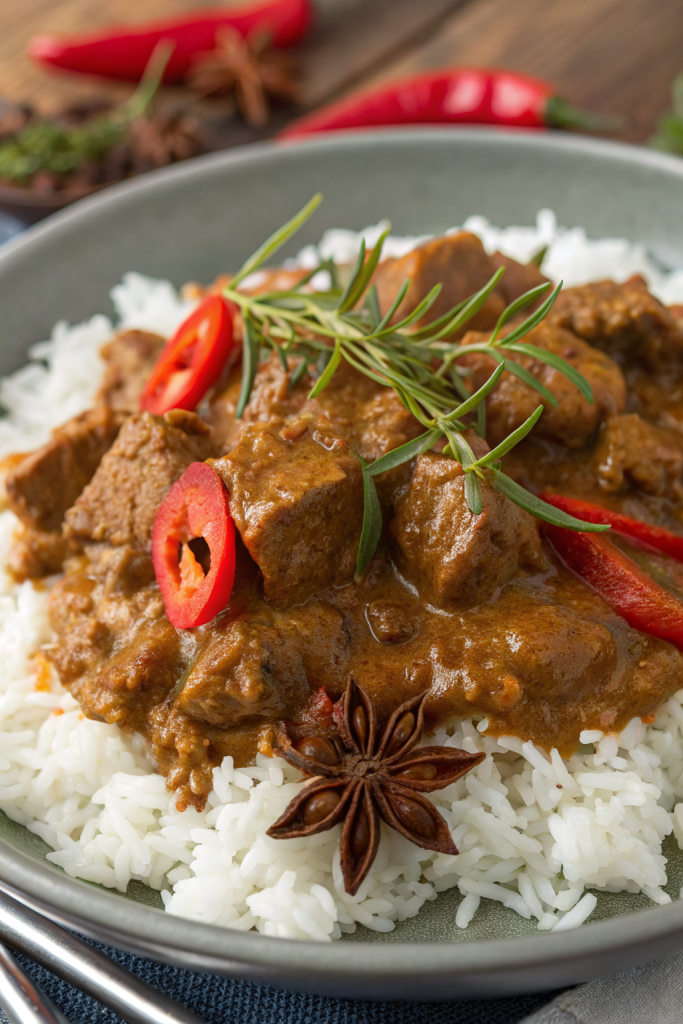
Slow Cooker Beef Coconut Curry Recipe tastes rich, creamy, and deeply spiced, with tender beef that practically melts as you scoop it over rice. It works well for busy cooks who want big flavor with about 20 minutes of hands-on time and 6–8 hours in the slow cooker. I tested versions of this on more than one hectic Tuesday, and my kids now call it “the good beef.”
Why Slow Cooker Beef Coconut Curry Recipe Is Worth It
This slow cooker beef coconut curry recipe gives you restaurant-level flavor with weeknight effort. You toss everything in, walk away, and come back to beef that tastes like it simmered on the stove all day.
Coconut milk softens the heat of the spices and gives the curry a velvety texture. The slow cooker keeps the beef juicy and tender, even if you use a budget-friendly cut.
“This Slow Cooker Beef Coconut Curry Recipe tastes like takeout from a great little curry spot, except my house smells amazing all day while it cooks.” ★★★★★
Ingredients You Need
Beef and Main Ingredients
-
2–2½ pounds beef chuck roast, cut into 1½-inch cubes
- Chuck roast works best because it turns tender and juicy during slow cooking.
- You can use beef stew meat in a pinch, but choose well-marbled pieces.
-
1 large yellow onion, diced
-
2 medium carrots, sliced into coins
-
1 red bell pepper, sliced into strips
-
1 can (14–15 oz) full-fat coconut milk
- Use full-fat for the creamiest curry; light coconut milk tastes thinner.
- I like Thai Kitchen or Chaokoh for consistent flavor.
-
1 can (14–15 oz) crushed tomatoes or tomato sauce
-
2–3 tablespoons tomato paste
-
2 tablespoons neutral oil (avocado, canola, or light olive oil)
Aromatics and Spices
-
4 cloves garlic, minced
-
1½ tablespoons fresh ginger, minced or grated
-
2–3 tablespoons red curry paste or 1–2 tablespoons harissa
- Use Thai red curry paste for a more classic coconut curry vibe.
- Harissa adds a smokier, North African-style heat.
-
2 teaspoons ground coriander
-
1 teaspoon ground turmeric
-
1–2 teaspoons curry powder (mild or hot, your choice)
-
½–1 teaspoon ground cumin
-
½ teaspoon smoked paprika (optional, for a subtle smoky note)
-
1–2 teaspoons kosher salt, plus more to taste
-
½ teaspoon black pepper
Liquid and Balance
-
½–1 cup beef broth or stock
- Use low-sodium so you control the salt level.
- Water works if you run out of broth, but add a pinch more salt.
-
1–2 tablespoons soy sauce or tamari
- Tamari keeps it gluten-free.
-
1–2 tablespoons brown sugar, coconut sugar, or honey
- This balances the acidity from tomatoes and the heat from spices.
-
Juice of ½–1 lime, to taste
Finishing Touches
- ¼ cup fresh cilantro, chopped (optional but tasty)
- Thinly sliced green onions, for garnish
- Cooked jasmine rice, basmati rice, or cauliflower rice, for serving
- Lime wedges, for squeezing over bowls
Pantry Shortcuts
- Use pre-minced garlic and ginger from jars if you feel short on time.
- Use frozen diced onions and mixed peppers to cut down on chopping.
- Use a store-bought curry paste as your main seasoning if you want the simplest route.
Equipment List
- 5–7 quart slow cooker (manual or programmable)
- Large skillet, stock pot, or Dutch oven for sautéing
- Cutting board and sharp chef’s knife
- Wooden spoon or heat-safe spatula
- Measuring spoons and cups
- Ladle for serving
Quick Tips & substitutions
- Brown the beef in batches so it sears instead of steams; this adds deep flavor.
- Use full-fat coconut milk for a rich, silky curry; light versions taste thinner and less satisfying.
- Swap beef with boneless, skinless chicken thighs and cook on low for about 5–6 hours.
- Use sweet potatoes instead of carrots if you want extra sweetness and creaminess.
- Choose tamari instead of soy sauce to keep the curry gluten-free.
- Stir in a handful of baby spinach or kale at the end for extra greens.
- Add more curry paste or harissa if you love heat; stir it into a small bowl of hot liquid from the slow cooker first, then mix it back in.
- If the curry tastes flat, add a pinch of salt and a squeeze of lime before anything else.
- If the sauce tastes too thick, thin it with a splash of broth or water near the end of cooking.
- If the sauce tastes too spicy, add more coconut milk or a spoonful of brown sugar.
How to Make Slow Cooker Beef Coconut Curry Recipe
Step 1: Sauté veggies and aromatics
Heat oil in a large stock pot or Dutch oven over medium heat. Once hot, add onions and carrots; cook until soft, about 8 minutes. Stir in garlic, ginger, harissa, coriander, and turmeric; cook 2 minutes, until aromatic. Season with salt.
Step 2: Brown the beef
Add the beef cubes to the pot in a single layer and sear them on each side until they show deep brown color, about 2–3 minutes per side. Work in batches so the beef browns instead of steams. Sprinkle with black pepper and a pinch of extra salt as they cook.
Transfer the browned beef and sautéed veggies to the slow cooker. Scrape every bit of browned goodness from the pan, since that carries a ton of flavor.
Step 3: Build the curry sauce
In the same pot, add tomato paste and cook it over medium heat for 1–2 minutes to deepen the flavor. Stir in crushed tomatoes, coconut milk, curry powder, cumin, smoked paprika, soy sauce or tamari, and brown sugar. Whisk until the sauce looks smooth and uniform.
Pour this sauce over the beef and veggies in the slow cooker. Add ½–1 cup beef broth, depending on how saucy you like your curry. Stir everything gently so the beef nestles into the sauce.
Step 4: Slow cook until tender
Cover the slow cooker and cook on low for 7–8 hours or on high for 4–5 hours. Stir once halfway through if you can, though the recipe still works if you set it and ignore it. The beef should feel very tender when you poke it with a fork.
Taste the sauce and adjust with more salt, extra curry paste, or a pinch of sugar if needed. Squeeze in lime juice and stir again to brighten the flavor.
Step 5: Finish and serve
If the sauce looks too thin, remove the lid and cook on high for 15–20 minutes to thicken slightly. If it looks too thick, stir in a splash of broth or coconut milk. Stir in chopped cilantro and green onions right before serving.
Spoon the slow cooker beef coconut curry over hot rice or your favorite base. Add extra cilantro, green onions, and lime wedges on the side so everyone can customize their bowl.
Recipe Variations
- Gluten-free: Use tamari instead of soy sauce and confirm your curry paste lists gluten-free ingredients.
- Dairy-free: The recipe already uses coconut milk, so it stays dairy-free as written.
- Vegan version: Swap beef with cubed tofu, chickpeas, and extra vegetables like cauliflower and sweet potatoes; cook on low for 4–5 hours.
- Low carb: Serve over cauliflower rice or steamed green beans instead of regular rice.
- Extra veggie: Add zucchini, green beans, or peas during the last hour of cooking.
- Mild version: Use less curry paste or harissa and add more coconut milk to soften the heat.
- Spicy version: Add sliced fresh chili or a pinch of red pepper flakes near the end of cooking.
Ways to Serve Slow Cooker Beef Coconut Curry Recipe
- Spoon over jasmine rice, basmati rice, or brown rice.
- Serve with warm naan or flatbread for dipping into the coconut curry sauce.
- Ladle over cauliflower rice or steamed broccoli for a lighter bowl.
- Pair with a simple cucumber salad or shredded cabbage slaw for crunch.
- Serve in a bowl with roasted potatoes or sweet potatoes underneath instead of rice.
Storage Success
Let the slow cooker beef coconut curry cool until it reaches room temperature, then pack it into airtight containers. Store it in the fridge for up to 4 days; the flavors actually deepen and taste even better the next day. Reheat gently on the stove over low heat or in the microwave, and add a splash of water or coconut milk if the sauce thickens too much. Freeze portions for up to 3 months, thaw overnight in the fridge, and stir well after reheating to bring the sauce back together.
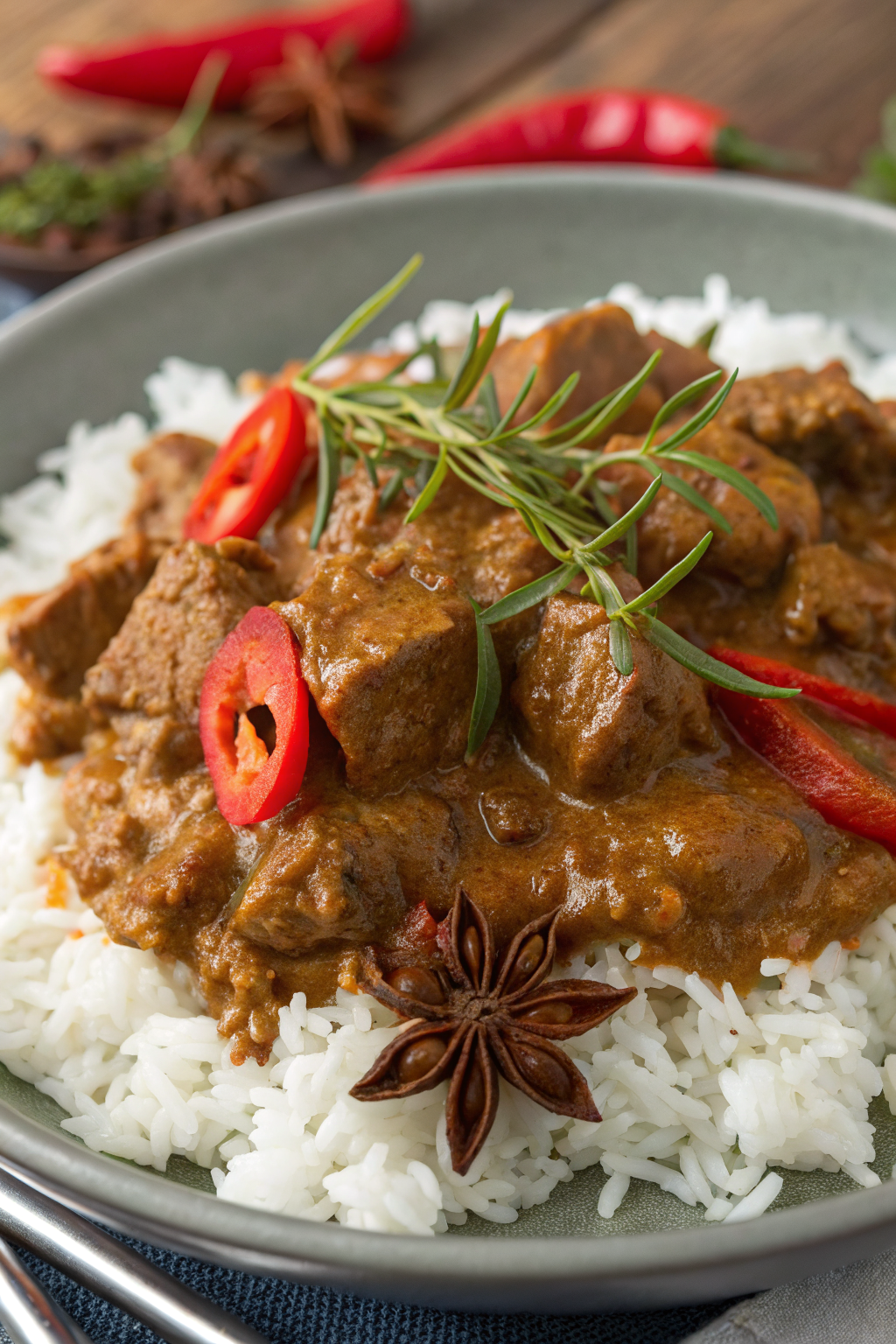
Slow Cooker Beef Coconut Curry Recipe
Ingredients
Instructions
- Heat the neutral oil in a large stock pot or Dutch oven over medium heat. Add the diced onion and sliced carrots and cook until softened, about 8 minutes.
- Stir in the minced garlic, ginger, and red curry paste or harissa, along with the ground coriander and turmeric. Cook for about 2 minutes, until very fragrant. Season with a pinch of salt.
- Add the beef cubes to the pot in a single layer and sear on each side until deeply browned, about 2–3 minutes per side. Work in batches so the beef browns instead of steams, seasoning with black pepper and a little extra salt as it cooks.
- Transfer the browned beef and sautéed vegetables to a 5–7 quart slow cooker, scraping in all browned bits from the pot for extra flavor.
- In the same pot, add the tomato paste and cook over medium heat for 1–2 minutes to deepen the flavor. Stir in the crushed tomatoes or tomato sauce, coconut milk, curry powder, cumin, smoked paprika (if using), soy sauce or tamari, and brown sugar. Whisk until the sauce is smooth and combined.
- Pour the curry sauce over the beef and vegetables in the slow cooker. Add 1/2–1 cup beef broth, depending on how saucy you like the curry, and stir gently so the beef is nestled into the sauce.
- Cover and cook on low for 7–8 hours or on high for 4–5 hours, until the beef is very tender when pierced with a fork. Stir once halfway through if possible.
- Taste the curry and adjust the seasoning with more salt, extra curry paste or harissa, or a pinch more sugar if needed. Stir in the lime juice to brighten the flavors.
- If the sauce is too thin, remove the lid and cook on high for 15–20 minutes to thicken slightly. If it is too thick, stir in a splash of broth or coconut milk. Stir in chopped cilantro and some of the green onions just before serving.
- Serve the slow cooker beef coconut curry over hot rice or your preferred base. Garnish with additional cilantro, green onions, and lime wedges for squeezing over each bowl.
Notes
Approximate per serving (1 of 6, without rice): 480–520 calories; fat 34 g; saturated fat 18 g; carbohydrates 14 g; fiber 3 g; sugars 7 g; protein 32 g; sodium 780 mg. Values will vary based on exact beef cut, coconut milk brand, broth, and added garnishes or sides.
Leave a Reply