
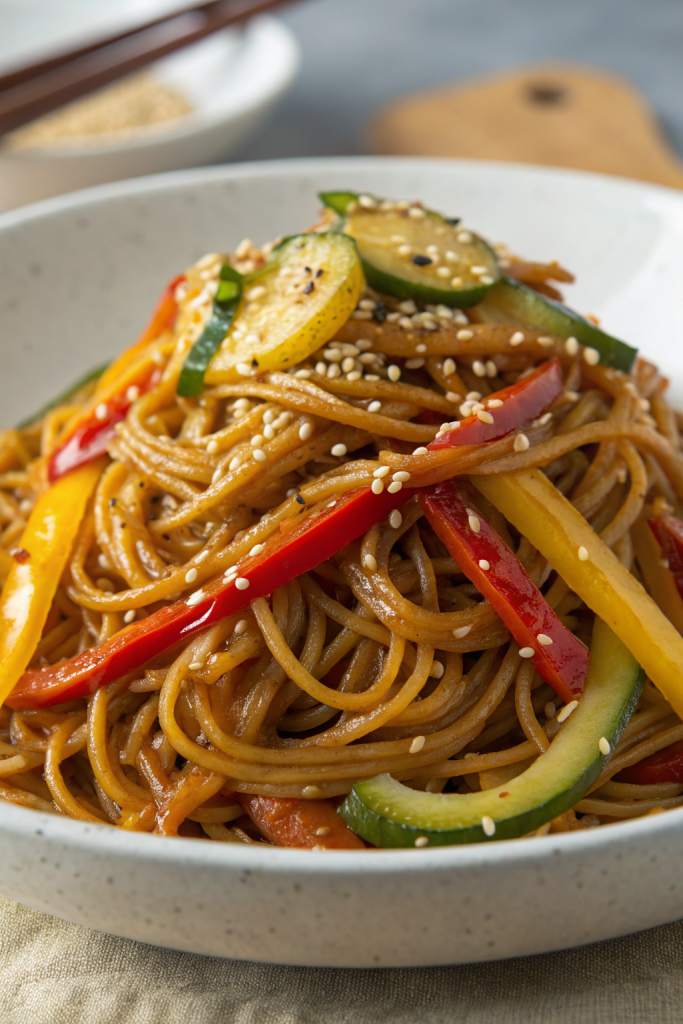
Thai Zucchini Noodles Recipe hits all the notes: bright, nutty, a little spicy, and super fresh with crunchy veggies and a silky Thai-inspired peanut sauce. It works perfectly for busy weeknights, meal prep lunches, or a lighter dinner that still feels cozy, and you can get it on the table in about 25–30 minutes. I tested this one so many times that my neighbors now assume I run a secret zoodle restaurant out of my kitchen.
Why Thai Zucchini Noodles Recipe Is Worth It
This Thai Zucchini Noodles Recipe gives you all the flavor of a takeout noodle bowl with a fraction of the heaviness. You get tender-crisp zucchini noodles, a creamy peanut or almond sauce, and that sweet-salty-lime balance that Thai-inspired dishes do so well.
You skip the post-pasta slump and still feel satisfied, thanks to healthy fats, protein add-ins, and loads of veggies. Clean-up stays easy, and the whole thing uses simple pantry staples that you probably already own.
“This Thai Zucchini Noodles Recipe tastes like my favorite noodle takeout but lighter, fresher, and somehow even more addictive. ★★★★★”
Ingredients You Need
You can tweak this Thai Zucchini Noodles Recipe a lot, so I’ll list the base version and easy swaps.
Zucchini Noodles
- 3–4 medium zucchini, spiralized into noodles
- Use a handheld spiralizer, countertop spiralizer, or the spiralize setting on a food processor.
- In a pinch, use store-bought zucchini noodles from the produce section.
Veggies & Aromatics
- 1 tablespoon avocado oil or light olive oil
- 1 red bell pepper, thinly sliced
- 1 cup shredded carrots (bagged matchstick carrots save time)
- 3 green onions, sliced (white and green parts separated)
- 2 cloves garlic, minced
- 1–2 teaspoons fresh ginger, grated (or ½ teaspoon ground ginger if needed)
Thai-Inspired Peanut Sauce
- ⅓ cup creamy peanut butter
- Use natural peanut butter (no added sugar) for best flavor.
- Swap almond butter or sunflower seed butter for peanut-free versions.
- 2–3 tablespoons low-sodium soy sauce
- Use tamari or coconut aminos for gluten-free.
- 1–2 tablespoons fresh lime juice (about 1 lime)
- 1 tablespoon rice vinegar
- 1–2 tablespoons honey or maple syrup
- 1–2 teaspoons sriracha or chili garlic sauce (adjust to heat level)
- 2–4 tablespoons warm water to thin the sauce
Protein Options (choose one or mix)
- 1 block extra-firm tofu, pressed and cubed
- 1 pound chicken breast or thighs, thinly sliced
- ½ pound shrimp, peeled and deveined
- 1 cup shelled edamame for a quick vegetarian protein boost
Toppings & Garnishes
- ¼ cup chopped roasted peanuts or cashews
- Fresh cilantro leaves, chopped
- Extra lime wedges
- Red pepper flakes or extra sriracha for heat
- Sesame seeds (optional, but they look fancy with zero effort)
Pantry Shortcuts & Brand Notes
- Pre-minced garlic and ginger from a jar work on busy nights, though fresh gives better flavor.
- I like low-sodium soy sauce so I control the salt level.
- Use a good-quality peanut butter without added palm oil or weird fillers; it blends smoother.
Equipment List
- Spiralizer (or sharp knife and patience)
- Large skillet or wok
- Small bowl and whisk for the sauce
- Cutting board and knife
- Tongs for tossing the noodles
- Paper towels or clean kitchen towel to blot zucchini noodles
Quick Tips & substitutions
- Salt zucchini noodles lightly, then blot them dry to reduce excess moisture.
- Keep the skillet hot so veggies stay crisp and don’t steam.
- Use tamari or coconut aminos instead of soy sauce for gluten-free.
- Swap peanut butter with almond butter or sunflower seed butter for nut-free.
- Add pre-cooked rotisserie chicken or frozen cooked shrimp to save time.
- Use bagged coleslaw mix instead of slicing carrots and extra veggies.
- Thin the sauce slowly with warm water until it coats the back of a spoon.
- Toss zucchini noodles at the end and cook only 1–2 minutes so they stay firm.
- Taste the sauce before adding it and adjust lime, salt, and heat to your liking.
- Double the sauce and store extra in the fridge for quick lunches.
How to Make Thai Zucchini Noodles Recipe
Step 1: Prep the zucchini noodles
Spiralize the zucchini into noodles and place them in a large colander. Sprinkle with a small pinch of salt and toss gently. Let them sit 10–15 minutes while you prep everything else, then pat dry with paper towels or a clean towel to remove extra moisture.
Step 2: Mix the Thai-inspired peanut sauce
In a small bowl, whisk peanut butter, soy sauce, lime juice, rice vinegar, and honey or maple syrup. Add sriracha or chili garlic sauce to taste. Whisk in warm water, one tablespoon at a time, until the sauce turns smooth and pourable but still thick enough to cling to noodles.
Taste the sauce and adjust: add more lime for brightness, more soy sauce for salt, or more sweetener if it tastes too sharp. Set the bowl aside.
Step 3: Cook the protein
Heat 1 teaspoon oil in a large skillet or wok over medium-high heat. Add your chosen protein (tofu, chicken, shrimp, or edamame). Season lightly with salt and a splash of soy sauce.
Cook until the protein browns and cooks through, stirring occasionally. Transfer the cooked protein to a plate and keep it nearby.
Step 4: Sauté veggies and aromatics
Heat the remaining oil in the same skillet over medium heat. Add the white parts of the green onions, bell pepper, and carrots. Cook until they soften slightly but still stay crisp, about 4–5 minutes.
Stir in garlic and ginger and cook about 1 minute, until everything smells fragrant. Keep the heat moderate so the garlic does not burn.
Step 5: Toss in the zucchini noodles
Add the zucchini noodles to the skillet with the veggies. Use tongs to toss gently so you coat the noodles with the aromatics. Cook 1–2 minutes, just until the noodles warm and soften slightly.
You want them tender but not mushy, so keep an eye on them. If the skillet looks dry, add a tablespoon of water instead of more oil.
Step 6: Sauce it up
Return the cooked protein to the skillet. Pour in most of the peanut sauce and toss everything together with tongs. Coat the zucchini noodles, veggies, and protein evenly.
Taste and add more sauce if you want a richer coating. Turn off the heat once everything looks glossy and hot.
Step 7: Garnish and serve
Divide the Thai Zucchini Noodles Recipe into bowls. Top with chopped peanuts or cashews, cilantro, green onion tops, sesame seeds, and extra sriracha if you like heat. Serve with lime wedges so everyone can squeeze more citrus on top.
Recipe Variations
- Gluten-free: Use tamari or coconut aminos instead of soy sauce and check labels on sriracha and vinegar.
- Vegan: Use tofu or edamame for protein and maple syrup or agave instead of honey.
- Low carb: Keep the zucchini base and skip sweetener or use a low-carb sweetener; add extra non-starchy veggies like mushrooms or snap peas.
- Extra protein: Add both tofu and edamame or double the chicken.
- Extra veggies: Toss in shredded cabbage, snap peas, mushrooms, or baby spinach.
- Mild version: Skip sriracha in the sauce and just add a tiny bit at the table.
- Crunch factor: Add chopped cucumber, bean sprouts, or extra peanuts on top right before serving.
Ways to Serve Thai Zucchini Noodles Recipe
- Serve warm in big bowls with extra lime wedges and chili flakes.
- Pack in meal prep containers with a little extra sauce on the side.
- Pair with sliced mango or pineapple on the side for a fresh contrast.
- Serve alongside grilled chicken skewers or tofu skewers for a bigger spread.
- Top with a fried or soft-boiled egg for a brunch twist.
Storage Success
Store leftover Thai Zucchini Noodles Recipe in an airtight container in the fridge for up to 3 days. The zucchini releases a bit of liquid, so stir everything before reheating and add a spoonful of extra sauce if it looks dry. Reheat gently on the stove over low heat or in the microwave in short bursts so the zucchini does not overcook. If you plan to meal prep, keep the sauce separate and toss it with freshly warmed zucchini noodles right before eating for the best texture.
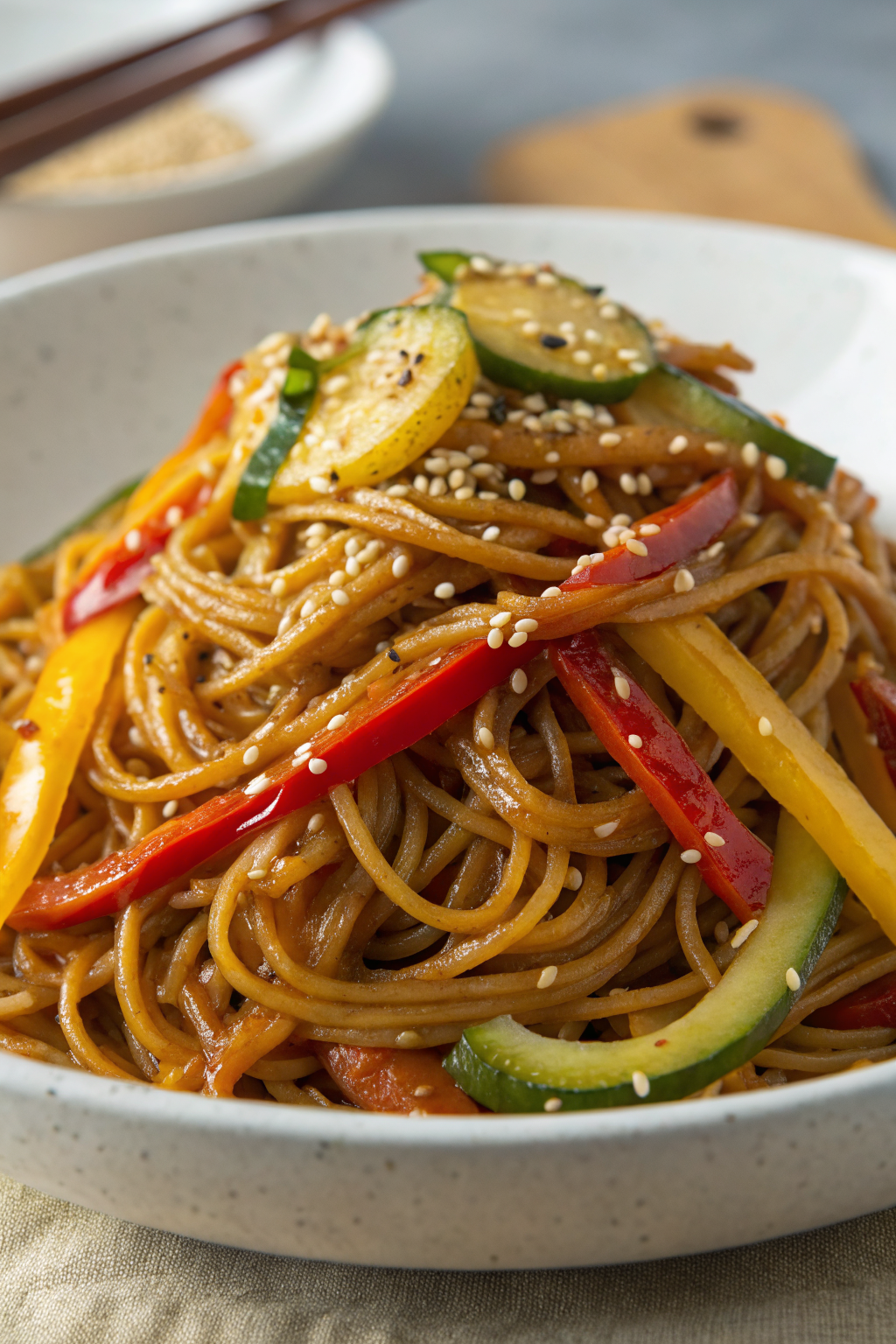
Thai Zucchini Noodles Recipe
Ingredients
Instructions
- Spiralize the zucchini into noodles and place them in a large colander. Sprinkle with a small pinch of salt, toss gently, and let sit for 10–15 minutes. Pat dry with paper towels or a clean kitchen towel to remove excess moisture.
- In a small bowl, whisk together the peanut butter, soy sauce, lime juice, rice vinegar, and honey or maple syrup. Add sriracha or chili garlic sauce to taste, then whisk in warm water 1 tablespoon at a time until the sauce is smooth, pourable, and thick enough to cling to noodles. Taste and adjust lime, soy, or sweetness as needed; set aside.
- Heat 1 teaspoon of the oil in a large skillet or wok over medium-high heat. Add your chosen protein (tofu, chicken, shrimp, or edamame), season lightly with salt and a splash of soy sauce, and cook until browned and cooked through. Transfer the cooked protein to a plate and set aside.
- Add the remaining oil to the same skillet over medium heat. Add the white parts of the green onions, bell pepper, and shredded carrots. Sauté for 4–5 minutes until slightly softened but still crisp. Stir in the garlic and ginger and cook for about 1 minute, just until fragrant.
- Add the prepared zucchini noodles to the skillet. Toss gently with tongs to combine with the veggies and aromatics. Cook for 1–2 minutes, just until the zucchini noodles are warmed through and slightly tender but not mushy. If the pan seems dry, add a tablespoon of water rather than more oil.
- Return the cooked protein to the skillet. Pour in most of the peanut sauce and toss everything together until the zucchini noodles, veggies, and protein are evenly coated and glossy. Add more sauce if desired, then turn off the heat.
- Divide the Thai zucchini noodles into bowls. Top with chopped peanuts or cashews, cilantro, and the green parts of the green onions. Add sesame seeds and extra sriracha or red pepper flakes if you like more heat, and serve with lime wedges for squeezing over the top.
Notes
Approximate per serving (4 servings, using peanut butter and tofu, without optional toppings): 340 calories; fat 20 g; saturated fat 3 g; carbohydrates 24 g; fiber 5 g; sugars 12 g; protein 17 g; sodium 720 mg. Values will vary based on protein choice, sauce thickness, toppings, and portion size.
Leave a Reply