

Asian Zucchini Noodles Recipe brings bouncy veggie “noodles” tossed in a savory, garlicky, sesame-soy sauce with just enough heat to keep things interesting. It works perfectly for busy weeknights, meal prep fans, low-carb eaters, and anyone who wants a lighter takeout-style dinner in about 25 minutes. I tested this one on my own family of noodle snobs, and no one complained about the missing wheat.
Why Asian Zucchini Noodles Recipe Is Worth It
This dish hits that sweet spot between fresh and cozy. You get crunchy-tender zucchini noodles, a glossy umami sauce, and plenty of garlic and ginger in every bite.
You cook it in one pan, it uses mostly pantry ingredients, and it cleans out your veggie drawer at the same time. It also tastes great hot, room temp, or chilled, so leftovers never feel like punishment.
“These Asian Zucchini Noodles taste like takeout met a farmers’ market and decided to stay for dinner. ★★★★★”
Ingredients You Need
Zucchini & veggies
-
4 medium zucchini, spiralized into noodles
- Use firm zucchini with smooth skin so the noodles stay crisp.
- If you don’t own a spiralizer, use a julienne peeler or buy pre-spiralized zucchini from the produce section.
-
1 medium red bell pepper, thinly sliced
-
1 cup shredded carrots (bagged matchstick carrots save time)
-
1 cup snap peas or snow peas, trimmed and halved
-
3 green onions, thinly sliced (white and green parts separated)
Aromatics
- 3 cloves garlic, minced
- 1 tablespoon fresh ginger, minced or grated
- Tube ginger works in a pinch; I use the Gourmet Garden brand when I feel lazy.
Sauce ingredients
- 3 tablespoons low-sodium soy sauce or tamari (for gluten-free)
- 1 tablespoon oyster sauce or vegetarian “oyster” mushroom sauce
- 1 tablespoon toasted sesame oil
- 1–2 teaspoons chili-garlic sauce or sriracha (adjust to heat level)
- 1 tablespoon rice vinegar
- 1–2 teaspoons honey, maple syrup, or coconut sugar
- 2 tablespoons water or low-sodium vegetable broth
- 1 teaspoon cornstarch or arrowroot powder (helps the sauce cling to the noodles)
Protein options (choose one, optional but recommended)
- 12 ounces extra-firm tofu, pressed and cubed
- 12 ounces chicken breast or thighs, thinly sliced
- 12 ounces shrimp, peeled and deveined
- Or use leftover rotisserie chicken, shredded, and warm it in the pan with the sauce
Toppings
- 2 tablespoons toasted sesame seeds
- Extra sliced green onion tops
- Crushed roasted peanuts or cashews (optional)
- Lime wedges
Oil & seasoning
- 1–2 tablespoons neutral oil with high smoke point (avocado, canola, or grapeseed)
- Kosher salt and black pepper, to taste
Equipment list
- Large skillet or wok (nonstick or well-seasoned works best)
- Spiralizer or julienne peeler (or a sharp chef’s knife and patience)
- Small bowl and whisk for the sauce
- Tongs for tossing the zucchini noodles
- Cutting board and knife
Quick Tips & substitutions
- Use firm zucchini and avoid overcooking so the noodles stay crisp-tender, not soggy.
- Salt the zucchini noodles lightly and pat dry before cooking if they release a lot of water.
- Swap soy sauce with tamari or coconut aminos for gluten-free or soy-light versions.
- Use maple syrup instead of honey to keep the sauce fully vegan.
- Add more chili-garlic sauce for extra heat or skip it for a mild family-friendly version.
- Toss in any quick-cooking veggies you have: mushrooms, baby spinach, shredded cabbage, or broccoli slaw.
- Use pre-minced garlic and ginger from jars or tubes when you want a faster prep.
- Cook protein first, remove it, then return it at the end so it stays juicy and tender.
How to Make Asian Zucchini Noodles Recipe
Step 1: Prep zucchini noodles and veggies
Spiralize the zucchini into noodles and place them on a clean kitchen towel. Sprinkle lightly with salt and let them sit 10 minutes while you prep the other veggies. Pat them dry to remove extra moisture so the sauce clings better.
Slice the bell pepper, shred or measure the carrots, and trim the snap peas. Mince the garlic and ginger, and slice the green onions, keeping white and green parts separate. This quick prep step makes the actual cooking fly by.
Step 2: Mix the sauce
In a small bowl, whisk soy sauce or tamari, oyster sauce, sesame oil, chili-garlic sauce, rice vinegar, honey or maple syrup, water or broth, and cornstarch. Taste and adjust salt, sweetness, and heat to your liking. You want a salty-sweet-tangy balance with a gentle kick.
Set the sauce near the stove so you can grab it quickly. Cornstarch settles fast, so give it another stir right before you pour it into the pan.
Step 3: Cook the protein
Heat 1 tablespoon oil in a large skillet or wok over medium-high heat. Add your chosen protein in a single layer and season with a pinch of salt and pepper. Cook until the chicken or tofu browns on the edges and cooks through, or until shrimp turns opaque and curls.
Transfer the cooked protein to a plate and keep it nearby. This step keeps the pan hot and ready for veggies while your protein rests.
Step 4: Sauté veggies and aromatics
Heat another 1 tablespoon oil in the same skillet over medium-high heat. Add the white parts of the green onions, bell pepper, carrots, and snap peas. Stir-fry until the veggies turn crisp-tender, about 3–4 minutes.
Add garlic and ginger and cook 1–2 minutes, stirring often, until they smell fragrant and toasty. Lower the heat slightly if they start to brown too fast, since burnt garlic tastes bitter.
Step 5: Add zucchini noodles
Add the zucchini noodles to the skillet with the veggies. Toss gently with tongs and cook 2–3 minutes, just until the noodles soften slightly but still feel firm. They should bend easily but still hold shape.
Keep the heat at medium-high so excess moisture evaporates. If the pan looks watery, cook another minute and toss often.
Step 6: Sauce it up
Give the sauce a quick stir, then pour it over the zucchini noodles and veggies. Toss everything together so the sauce coats every strand and piece. The cornstarch thickens the sauce in about 1–2 minutes and turns it glossy.
Return the cooked protein to the pan and toss again. Taste and adjust with a splash more soy sauce, a squeeze of lime, or extra chili-garlic sauce.
Step 7: Finish and serve
Turn off the heat and sprinkle in the green onion tops and sesame seeds. Toss once more so the toppings distribute evenly. The residual heat keeps everything warm without overcooking the zucchini noodles.
Plate the Asian Zucchini Noodles Recipe in shallow bowls. Add crushed peanuts or cashews on top if you like crunch. Serve with lime wedges on the side so everyone can add brightness to taste.
Recipe Variations
- Gluten-free: Use tamari or coconut aminos and a gluten-free oyster-style sauce; double-check labels on chili-garlic sauce.
- Vegan: Use tofu or edamame for protein, swap oyster sauce with mushroom-based sauce, and sweeten with maple syrup.
- Low carb: Keep the sweetener minimal, skip carrots if you track carbs closely, and load up on leafy greens and mushrooms.
- Extra protein: Add scrambled egg ribbons, edamame, or leftover shredded chicken.
- Nut-free: Skip peanuts and cashews and stick with sesame seeds and green onions.
- Extra saucy: Double the sauce ingredients and cook 1 extra minute to thicken.
Ways to Serve Asian Zucchini Noodles Recipe
- Serve as a main dish with a side of steamed edamame or cucumber salad.
- Pack into meal prep containers with extra veggies for easy lunches.
- Spoon over a small scoop of jasmine or brown rice if you want a heartier bowl.
- Serve chilled as a noodle salad with extra lime and sesame seeds.
Storage Success
Cool the Asian Zucchini Noodles Recipe to room temperature before you pack it into airtight containers. Store in the fridge for up to 3 days; the zucchini softens a bit but still tastes great. Reheat gently in a skillet over medium heat, just until warm, so the noodles don’t turn mushy. If the dish looks dry, add a splash of water, soy sauce, or a drizzle of sesame oil while it warms.
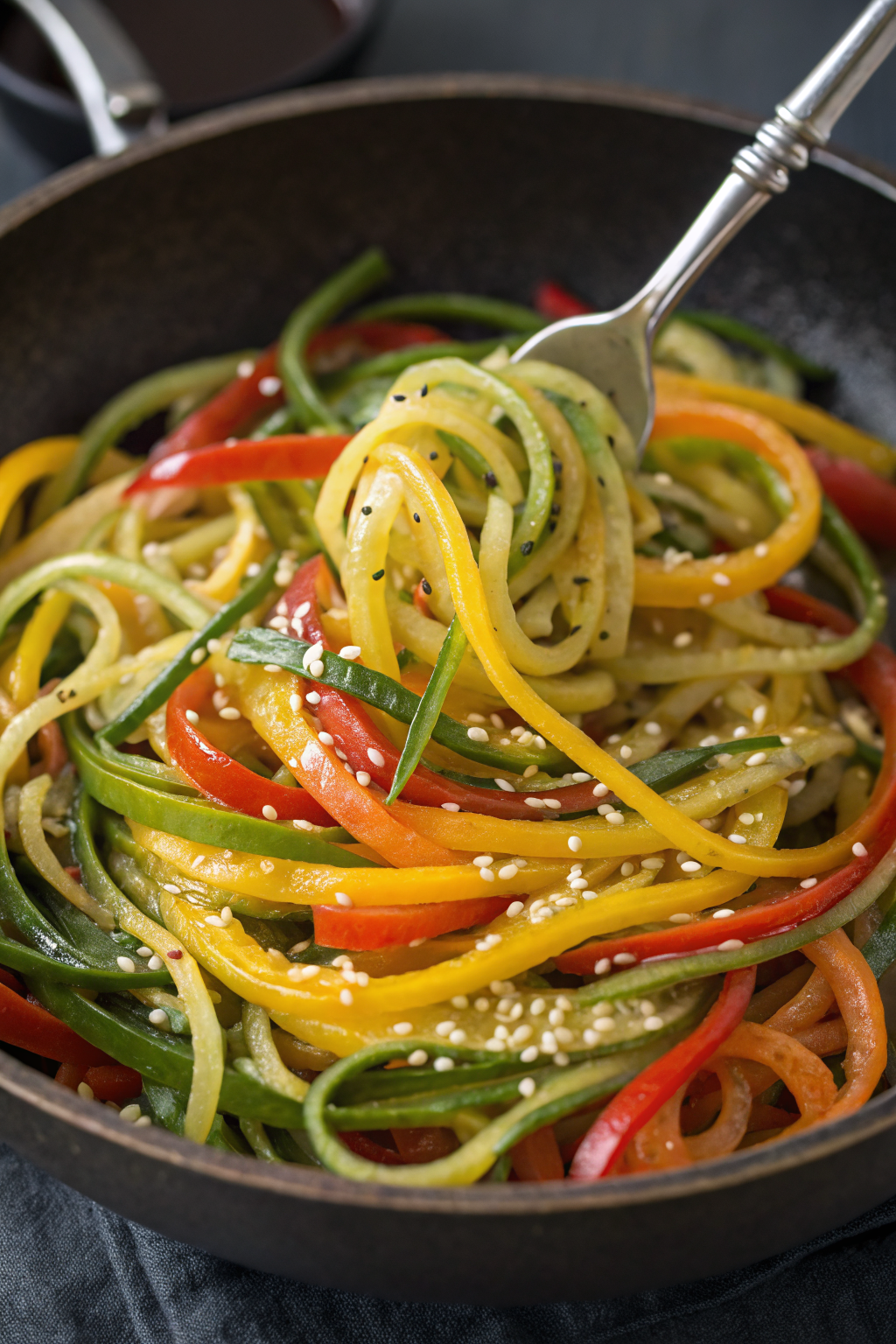
Asian Zucchini Noodles Recipe
Ingredients
Instructions
- Spiralize the zucchini into noodles and place them on a clean kitchen towel. Sprinkle lightly with salt and let sit for about 10 minutes, then pat dry to remove excess moisture.
- Prepare the vegetables: thinly slice the red bell pepper, measure the shredded carrots, trim and halve the snap peas, and slice the green onions, keeping white and green parts separate. Mince the garlic and ginger.
- In a small bowl, whisk together the soy sauce or tamari, oyster or mushroom sauce, toasted sesame oil, chili-garlic sauce or sriracha, rice vinegar, honey or other sweetener, water or broth, and cornstarch. Set aside.
- Heat 1 tablespoon of neutral oil in a large skillet or wok over medium-high heat. Add your chosen protein in a single layer, season lightly with salt and pepper, and cook until browned on the edges and cooked through. Transfer the protein to a plate and set aside.
- In the same skillet, add another tablespoon of oil if needed. Add the white parts of the green onions, bell pepper, carrots, and snap peas. Stir-fry over medium-high heat until crisp-tender, about 3 to 4 minutes.
- Add the minced garlic and ginger and cook, stirring often, for 1 to 2 minutes, until fragrant but not browned.
- Add the zucchini noodles to the skillet. Toss gently with tongs and cook for 2 to 3 minutes, just until the noodles soften slightly but remain firm and not soggy.
- Stir the sauce to recombine, then pour it over the zucchini noodles and vegetables. Toss to coat and cook for 1 to 2 minutes, until the sauce thickens and turns glossy.
- Return the cooked protein to the pan and toss to combine. Taste and adjust seasoning with more soy sauce, chili-garlic sauce, or a squeeze of lime if desired.
- Turn off the heat and sprinkle in the green onion tops and toasted sesame seeds. Toss once more, then serve in shallow bowls with crushed peanuts or cashews and lime wedges if using.
Notes
Approximate per serving (4 servings, without optional nuts or specific protein): 220–260 calories; fat 11 g; saturated fat 2 g; carbohydrates 20 g; fiber 4 g; sugars 10 g; protein 11 g; sodium 900 mg. Using chicken or shrimp will increase protein and slightly reduce carbs from tofu. Values will vary based on protein choice, brands, add-ins, and portion size.
Leave a Reply