
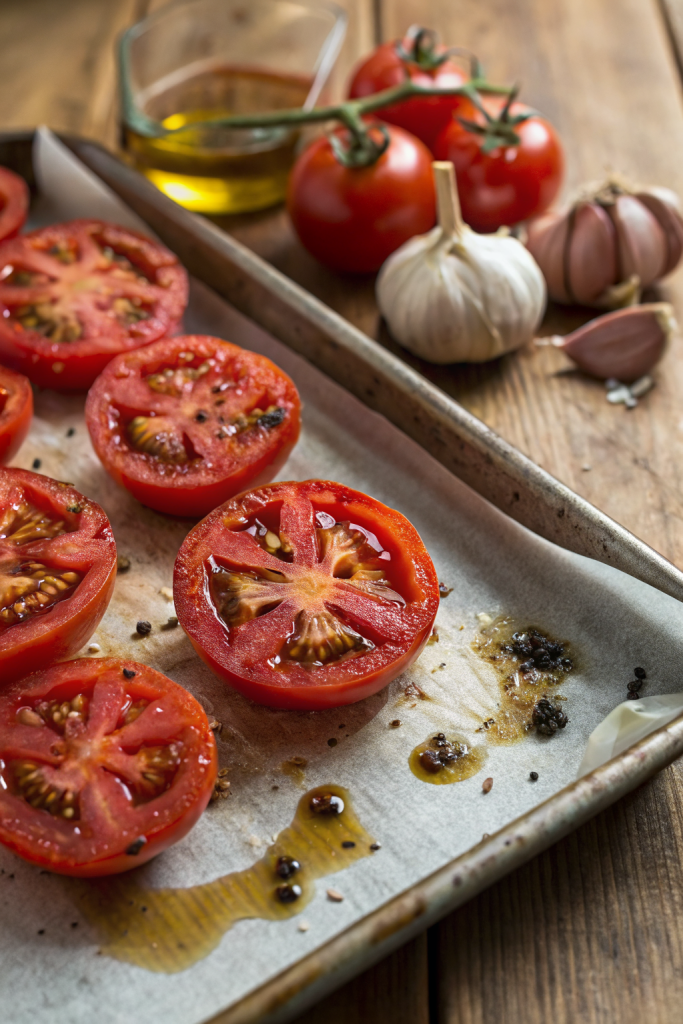
Easy Homemade Roasted Tomato Sauce tastes rich, slightly smoky, and naturally sweet, with a thick, spoon-coating texture that clings to pasta like a hug. It works for busy home cooks who want a big-batch, freezer-friendly sauce on the table in about 1 hour total, with only 15 minutes of hands-on time. I first made this on a Tuesday night when my kids refused jarred sauce, and now they ask for the “roasted red stuff” weekly.
Why Make This Easy Homemade Roasted Tomato Sauce at Home
Roasting tomatoes concentrates their flavor, so you get a deeper, sweeter, more complex sauce than most store-bought jars. The oven does most of the work while you clean up, boil pasta, or scroll recipes you will never actually cook.
You control the salt, the oil, and the spice level, so this roasted tomato sauce fits picky kids, spice lovers, and anyone who avoids added sugar. You also use up tomatoes that look a little tired, which saves money and reduces waste.
“This Easy Homemade Roasted Tomato Sauce tastes like a fancy Italian restaurant cooked it just for you, but your sheet pan and blender did all the work. ★★★★★”
Ingredients You Need
Tomatoes
- Fresh ripe tomatoes, about 4 pounds
- Use Roma, plum, or vine tomatoes for best flavor and less water.
- Mix in a few cherry tomatoes if you want extra sweetness.
- Canned tomatoes (sub option)
- Use two 28-ounce cans of whole peeled tomatoes if fresh tomatoes cost too much or look sad.
- Choose a good brand like Cento, Muir Glen, or your favorite Italian import.
Vegetables and Aromatics
- Yellow onion, 1 large, sliced or roughly chopped
- Carrots, 2 medium, sliced into coins
- Carrots add natural sweetness and help balance acidity without sugar.
- Garlic cloves, 6 to 8, peeled
- Fresh basil, 1 small bunch
- Fresh thyme or oregano, a few sprigs, or 1 teaspoon dried Italian seasoning
- Fresh parsley, optional, for finishing
Fats and Seasoning
- Extra-virgin olive oil, about 1/3 cup total
- Use a decent everyday olive oil; no need for the super fancy bottle.
- Kosher salt
- Freshly ground black pepper
- Crushed red pepper flakes, optional, for a little heat
- Sugar or honey, 1 teaspoon, optional
- Use only if the tomatoes taste very acidic.
Flavor Boosters
- Tomato paste, 2 tablespoons
- Tube tomato paste works great and stores easily in the fridge.
- Balsamic vinegar or red wine vinegar, 1 to 2 teaspoons
- Adds brightness at the end.
- Parmesan rind, optional
- Drop it into the pot while simmering for extra savory flavor, then pull it out.
Pantry Shortcuts and Substitutions
- Use pre-minced garlic from a jar if you feel tired; just drain off excess liquid.
- Use frozen chopped onions and carrots to save time on prep.
- Swap basil for baby spinach if you want a milder, greener note.
- Use Italian seasoning if you do not have fresh herbs.
Equipment List
- Large rimmed baking sheet or two smaller sheets
- Parchment paper or a silicone baking mat
- Large stock pot or Dutch oven
- Wooden spoon or heatproof spatula
- Blender or immersion blender
- Measuring spoons and cups
- Chef’s knife and cutting board
Tips & Mistakes
- Roast the tomatoes in a single layer so they caramelize instead of steam.
- Dry the tomatoes after rinsing so excess water does not dilute the flavor.
- Salt lightly before roasting, then adjust salt at the end so you avoid oversalting.
- Taste a roasted tomato before blending so you know if you need sugar or extra acid.
- Use enough olive oil so the veggies roast and brown; too little oil leads to pale, bland sauce.
- Do not rush the roasting; give the tomatoes time to blister and brown around the edges.
- Cool the roasted vegetables slightly before blending so hot liquid does not splash.
- Blend in batches if you use a regular blender so you avoid overflow.
- Simmer the blended sauce at least 10 to 15 minutes so flavors marry and thicken.
- Add fresh basil at the end of cooking so it stays bright and fragrant.
How to Make Easy Homemade Roasted Tomato Sauce
Step 1: Roast the tomatoes and veggies
Preheat your oven to 425°F and line a large baking sheet with parchment. Spread the tomatoes, onion, carrots, and garlic cloves on the sheet in a single layer.
Drizzle with olive oil, then season with salt, pepper, and a pinch of red pepper flakes if you like heat. Toss everything with your hands so the vegetables coat evenly, then spread them back out.
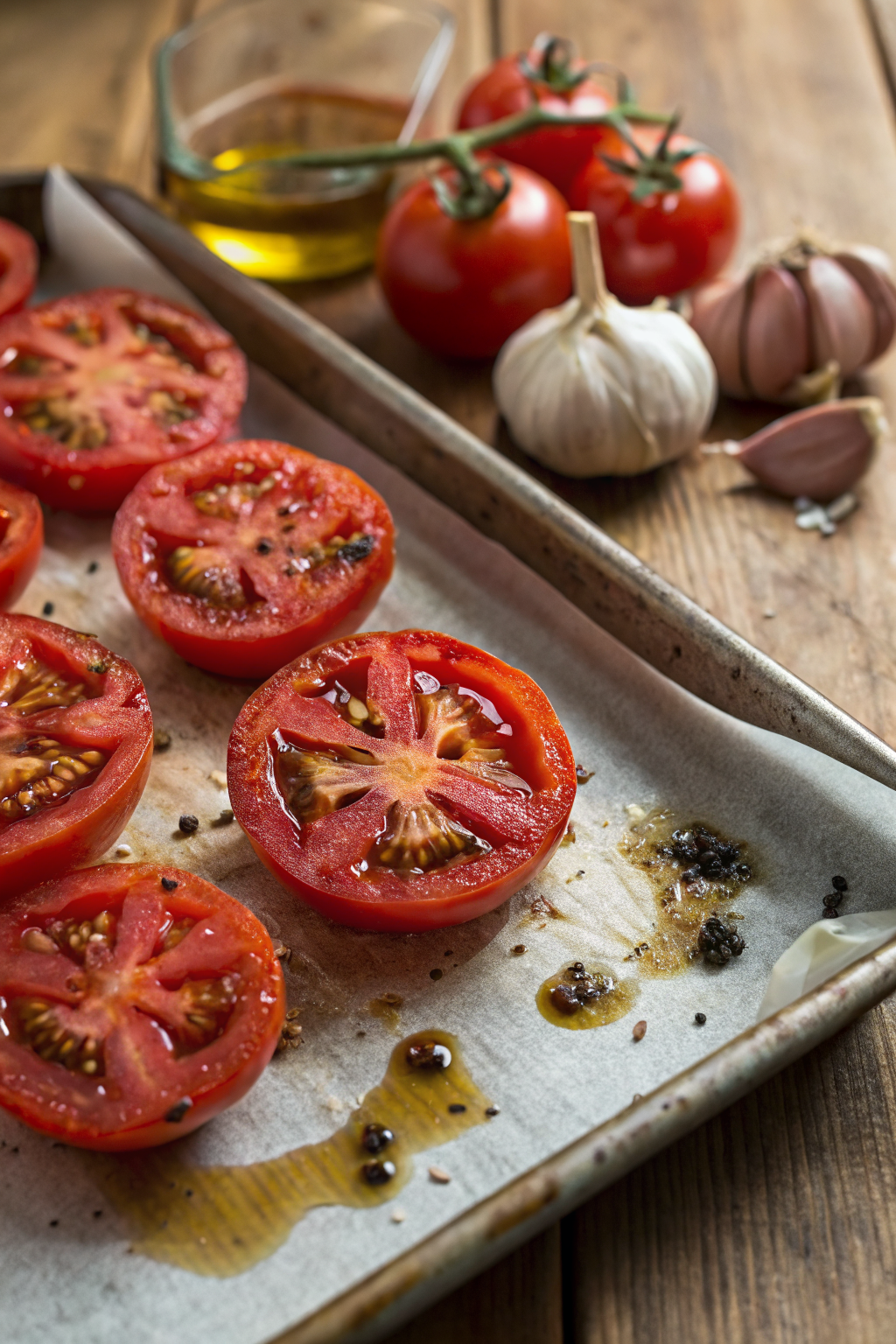
Roast 30 to 40 minutes, until the tomatoes collapse, edges char slightly, and carrots turn tender. Rotate the pan halfway through so everything cooks evenly.
Step 2: Sauté aromatics and tomato paste
Set a large stock pot or Dutch oven over medium heat and add a tablespoon of olive oil. Spoon in the roasted onions and carrots, then cook 3 to 4 minutes while you stir.
Add tomato paste and cook 2 to 3 minutes, until it darkens in color and smells toasty. This step deepens the flavor and removes that raw tomato paste taste.
If you use a Parmesan rind, add it now so it can infuse while the sauce simmers.
Step 3: Blend the roasted tomatoes
Transfer the roasted tomatoes and garlic to the pot. Stir everything together, then turn off the heat.
Use an immersion blender directly in the pot and blend until the sauce reaches your preferred texture. Blend fully for a smooth roasted tomato sauce, or pulse a few times for a rustic, chunky style.
If you use a regular blender, work in batches and vent the lid slightly, then return the blended sauce to the pot.
Step 4: Simmer and season
Turn the heat back to medium-low and bring the sauce to a gentle bubble. Add chopped fresh basil and any other herbs you like.
Taste the sauce and add a small splash of balsamic or red wine vinegar for brightness. If the sauce tastes too acidic, stir in 1 teaspoon sugar or honey and taste again.
Let the roasted tomato sauce simmer 10 to 20 minutes, stirring occasionally, until it thickens to your liking. Pull out the Parmesan rind if you used one, then adjust salt and pepper one last time.
Variations I've Tried
I add a small spoon of harissa or Calabrian chili paste when I want a spicy roasted tomato sauce for adults. I stir in a splash of coconut milk at the end for a creamy, dairy-free version that coats noodles beautifully.
I blend in a roasted red bell pepper or two for a sweeter, smoky twist that kids love on pizza. I also toss in a handful of baby spinach or kale during the last few minutes of simmering when I want extra greens without a salad lecture.
How to Serve Easy Homemade Roasted Tomato Sauce
Serve this Easy Homemade Roasted Tomato Sauce over hot spaghetti, penne, or your favorite gluten-free pasta and top it with grated Parmesan or pecorino. Use it as a pizza sauce, a base for shakshuka-style eggs, or spoon it over roasted chicken or meatballs.
I also ladle it over zucchini noodles or spaghetti squash when I want a lighter dinner that still feels cozy. Keep a jar in the fridge and use it as a dip for garlic bread, mozzarella sticks, or simple grilled cheese.
How to store
- Fridge: Cool the roasted tomato sauce to room temperature, then store in airtight containers or jars in the refrigerator for up to 5 days.
- Freezer: Portion into freezer-safe containers or silicone bags, label with the date, and freeze for up to 3 months.
- Reheating on stove: Reheat gently in a saucepan over medium-low heat, stirring often, and add a splash of water if it looks too thick.
- Reheating in microwave: Transfer to a microwave-safe bowl, cover loosely, and heat in 45-second bursts, stirring between each, until hot.
- Refreshing flavor: Stir in a drizzle of olive oil and a few torn basil leaves after reheating to bring the sauce back to life.
Easy Homemade Roasted Tomato Sauce
Ingredients
Instructions
- Preheat the oven to 425°F (220°C). Line a large rimmed baking sheet with parchment paper or a silicone baking mat.
- Spread the tomatoes, onion, carrots, and garlic cloves on the baking sheet in a single layer so they roast and caramelize instead of steaming.
- Drizzle the vegetables with most of the olive oil and season with kosher salt, black pepper, and a pinch of red pepper flakes if using. Toss with your hands to coat evenly, then spread back into a single layer.
- Roast for 30 to 40 minutes, rotating the pan halfway through, until the tomatoes have collapsed, edges are lightly charred, and the carrots are tender.
- Set a large stock pot or Dutch oven over medium heat and add the remaining olive oil. Spoon in the roasted onions and carrots and sauté for 3 to 4 minutes, stirring often.
- Add the tomato paste and cook for 2 to 3 minutes, stirring, until it darkens slightly and smells toasty, which deepens the flavor.
- If using a Parmesan rind, add it to the pot now so it can infuse the sauce as it simmers.
- Add the roasted tomatoes and garlic to the pot and stir to combine. Turn off the heat.
- Use an immersion blender directly in the pot to blend the mixture to your desired texture—completely smooth or slightly chunky. If using a regular blender, work in batches, vent the lid, blend carefully, and return the sauce to the pot.
- Turn the heat back to medium-low and bring the sauce to a gentle simmer. Stir in the chopped fresh basil and any other herbs you like.
- Taste the sauce and add 1 to 2 teaspoons of balsamic vinegar or red wine vinegar for brightness. If the sauce tastes too acidic, stir in sugar or honey a little at a time, tasting as you go.
- Let the sauce simmer for 10 to 20 minutes, stirring occasionally, until it thickens to your liking and the flavors meld. Remove the Parmesan rind if used, then adjust salt and pepper to taste.
- Serve the roasted tomato sauce over hot pasta, use as pizza sauce, or cool and store in the fridge or freezer for later use.
Notes
Approximate per 1/2-cup serving (12 servings total): 80 calories; fat 5 g; saturated fat 1 g; carbohydrates 9 g; fiber 2 g; sugars 5 g; protein 2 g; sodium 260 mg. Values are estimates and will vary based on exact ingredients, brands, and portion size.
Leave a Reply