
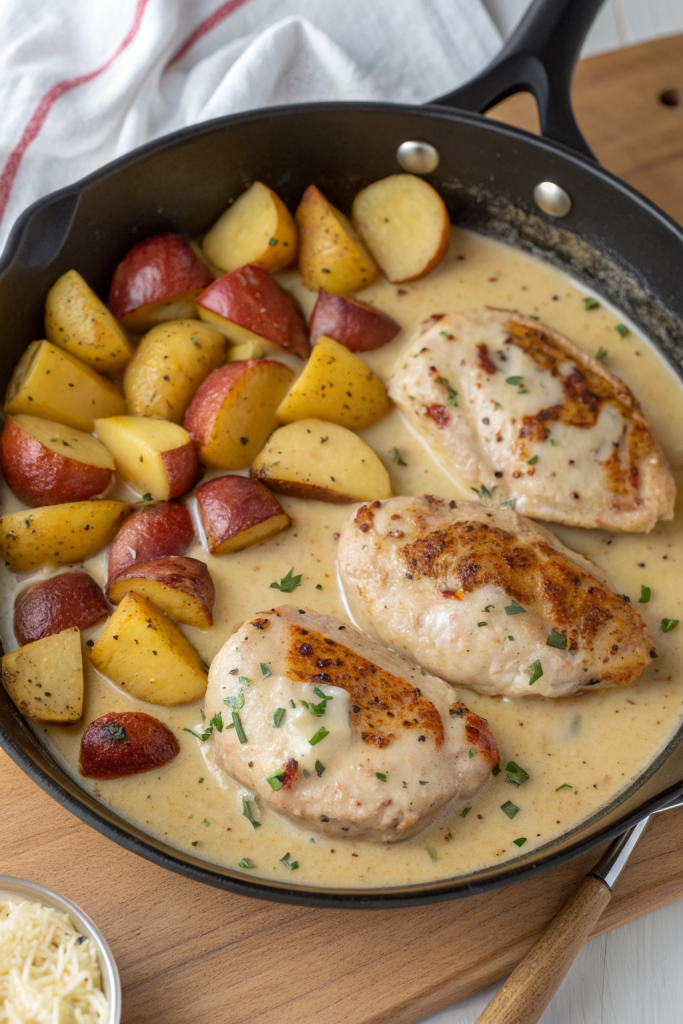
Chicken Potatoes with Dijon Cream Sauce tastes rich, tangy, and cozy, like a hug in a skillet with extra crispy edges. It works perfectly for busy weeknights or casual dinner guests, and you can finish everything in about 45 minutes. I tested this on my own picky family in a tiny apartment kitchen, and they scraped the pan clean.
Why Make This Chicken Potatoes with Dijon Cream Sauce at Home
You control the flavor, the salt, and the quality of the chicken and potatoes, so the dish tastes fresher than any takeout version. The Dijon cream sauce turns simple ingredients into something that feels restaurant level without fancy skills.
You also save money and stretch a pack of chicken and a few potatoes into a full, satisfying meal. Leftovers taste even better the next day, so you cook once and eat twice.
Creamy, tangy, and comforting, this Chicken Potatoes with Dijon Cream Sauce tastes like a cozy bistro meal that you pull off in under an hour. ★★★★★
Ingredients You Need
Chicken and potatoes
-
1.5 to 2 pounds boneless skinless chicken thighs
- Use thighs for juicy, forgiving results.
- Use chicken breasts if you prefer leaner meat, but lower the cook time a bit.
-
1.5 pounds baby gold or red potatoes, halved or quartered
- Baby potatoes roast quickly and keep a creamy center.
- Use russet potatoes in a pinch, but cut them smaller so they cook through.
-
2 tablespoons olive oil
- Any neutral oil works, but olive oil adds nice flavor.
-
1 tablespoon unsalted butter
- Butter helps browning and adds richness.
-
1 teaspoon kosher salt, plus more to taste
-
½ teaspoon black pepper
-
1 teaspoon garlic powder
-
1 teaspoon onion powder
-
1 teaspoon smoked paprika or sweet paprika
Dijon cream sauce
-
2 tablespoons unsalted butter
-
3 cloves garlic, minced
-
1 cup low sodium chicken broth
- Use a good quality boxed broth or bouillon paste mixed with water.
- I like Better Than Bouillon for strong flavor.
-
1 cup heavy cream
- Use half and half for a lighter version, but the sauce thickens less.
- Avoid regular milk, since it can curdle and tastes thin.
-
2 to 3 tablespoons Dijon mustard
- Use a smooth Dijon, not whole grain, for a silky sauce.
- Start with 2 tablespoons, then taste and add more if you like extra tang.
-
1 teaspoon Worcestershire sauce
- Adds depth and a little savoriness.
-
½ teaspoon dried thyme or 1 teaspoon fresh thyme leaves
-
½ teaspoon dried parsley or 1 tablespoon fresh chopped parsley
-
¼ teaspoon red pepper flakes (optional, for gentle heat)
-
¼ cup grated Parmesan cheese (optional, but highly recommended)
Pantry shortcuts and swaps
- Use pre-minced garlic from a jar if you feel tired, but fresh garlic tastes brighter.
- Use frozen parboiled potatoes if you want to skip chopping; just roast them straight from frozen.
- Use rotisserie chicken in a pinch; skip the browning step and just heat it in the sauce at the end.
Equipment list
- Large oven safe skillet or braiser (12 inch works well)
- Cutting board and sharp knife
- Tongs or spatula
- Measuring cups and spoons
- Small whisk
- Sheet pan (optional, if you roast potatoes separately)
Tips & Mistakes
- Cut potatoes in similar sizes so they cook at the same rate and stay tender.
- Pat chicken dry with paper towels so it browns instead of steaming.
- Season chicken and potatoes generously; bland food usually needs more salt and acid.
- Brown chicken on medium high heat and avoid constant flipping so a good crust forms.
- Do not boil the cream sauce hard; keep it at a gentle simmer so it thickens without splitting.
- Add Dijon gradually and taste as you go so the sauce does not turn too sharp.
- Use a wooden spoon to scrape browned bits from the pan; those bits carry huge flavor.
- Rest the chicken a few minutes before slicing so juices stay inside the meat.
- If the sauce tastes flat, add a pinch of salt and a tiny splash of Dijon instead of more cream.
- If the sauce turns too thick, thin it with a spoonful of broth or water until it coats a spoon.
How to Make Chicken Potatoes with Dijon Cream Sauce
Step 1: Prep the chicken and potatoes
Pat the chicken thighs dry and trim extra fat if needed. In a small bowl, mix salt, pepper, garlic powder, onion powder, and paprika. Season both sides of the chicken with this mixture.
Scrub the potatoes and cut them into halves or quarters, about 1 inch pieces. Toss potatoes with a drizzle of olive oil, a pinch of salt, and pepper. Set them aside while you heat the pan.
Step 2: Brown the potatoes
Heat a large oven safe skillet over medium high heat. Add 1 tablespoon olive oil and 1 tablespoon butter. When the butter foams and sizzles, add the potatoes in a single layer, cut side down.
Let them cook without stirring for 4 to 5 minutes until the bottoms turn golden. Stir and cook another 4 to 5 minutes until they brown on multiple sides. Transfer the potatoes to a plate; they finish cooking later in the sauce.
Step 3: Sear the chicken
In the same skillet, add a drizzle of oil if the pan looks dry. Lay the seasoned chicken thighs in the pan, smooth side down. They should sizzle when they hit the pan.
Cook 4 to 6 minutes per side until the chicken develops a deep golden crust and almost cooks through. Adjust the heat if the spices start to burn. Transfer the chicken to the plate with the potatoes.
Step 4: Build the Dijon cream sauce base
Lower the heat to medium. Add 2 tablespoons butter to the skillet. When it melts, add the minced garlic and stir for about 30 seconds until it smells fragrant.
Pour in the chicken broth while you scrape the browned bits from the bottom of the pan. Those bits mix into the broth and build flavor. Let the broth simmer for 2 to 3 minutes so it reduces slightly.
Step 5: Add cream and Dijon
Pour in the heavy cream and whisk to combine with the broth. Add Dijon mustard, Worcestershire sauce, thyme, parsley, and red pepper flakes if you use them. Whisk until the sauce looks smooth and pale golden.
Let the sauce simmer on low heat for 3 to 5 minutes. Stir often so it does not scorch. If you use Parmesan, stir it in now and let it melt into the sauce.
Taste the sauce and adjust with more salt, pepper, or a little extra Dijon if you want more tang. The sauce should coat the back of a spoon and feel silky.
Step 6: Return chicken and potatoes to the pan
Nestle the browned chicken thighs into the sauce. Tuck the potatoes around the chicken so they sit partly in the sauce. Spoon some sauce over the top of each piece of chicken.
Cover the skillet loosely with a lid or foil and simmer on low heat for 8 to 10 minutes. The chicken finishes cooking and the potatoes turn fork tender. Check that the thickest part of the chicken reaches 165°F.
Step 7: Finish and thicken if needed
If the sauce looks too thin, remove the chicken and potatoes to a plate and tent with foil. Simmer the sauce by itself for a few minutes until it thickens to your liking. Stir often so it stays smooth.
Once it reaches a creamy, spoon coating texture, return the chicken and potatoes to the pan. Spoon sauce over everything. Sprinkle extra fresh parsley or chives on top for color.
Step 8: Taste and serve
Taste one potato and a bit of sauce. Adjust seasoning with a pinch of salt, pepper, or a squeeze of lemon juice if you want more brightness. Turn off the heat and bring the skillet straight to the table if your pan allows it.
Variations I've Tried
- Herb swap version: Use rosemary and sage instead of thyme and parsley. The flavor leans more toward roasted holiday vibes and pairs nicely with the potatoes.
- Mushroom version: Sauté sliced cremini mushrooms after you brown the chicken, then build the sauce on top of them. The mushrooms soak up the Dijon cream and add a meaty texture.
- Lighter version: Use half and half instead of heavy cream and skip the Parmesan. The sauce turns thinner but still tastes creamy, so it works well if you want something a bit lighter.
- Garlic lovers version: Double the garlic and add a small spoonful of garlic powder to the sauce. This version fits garlic fans who always ask for extra.
- Spicy version: Add extra red pepper flakes and a spoonful of hot mustard with the Dijon. The heat cuts through the richness and wakes up the whole dish.
How to Serve Chicken Potatoes with Dijon Cream Sauce
Serve the chicken and potatoes right from the skillet with plenty of extra sauce over the top. Add a simple green side like steamed green beans, roasted broccoli, or a crisp salad to balance the richness. Warm crusty bread or soft dinner rolls help soak up every drop of the Dijon cream sauce.
You can also spoon the chicken and potatoes over plain white rice or fluffy mashed potatoes if you want a double carb comfort situation. Kids usually love the creamy sauce, so this dish works well as a family friendly dinner.
How to store
- Fridge: Cool leftovers to room temperature, then store chicken, potatoes, and sauce together in an airtight container for up to 3 days.
- Freezer: Place cooled portions in freezer safe containers or bags and freeze for up to 2 months; heavy cream holds up better than lighter dairy here.
- Reheat on stove: Warm gently in a skillet over low heat with a splash of broth or water until hot and creamy again, about 8 to 10 minutes.
- Reheat in microwave: Cover and heat on medium power in 45 second bursts, stirring between each round, until everything heats through and the sauce looks smooth.
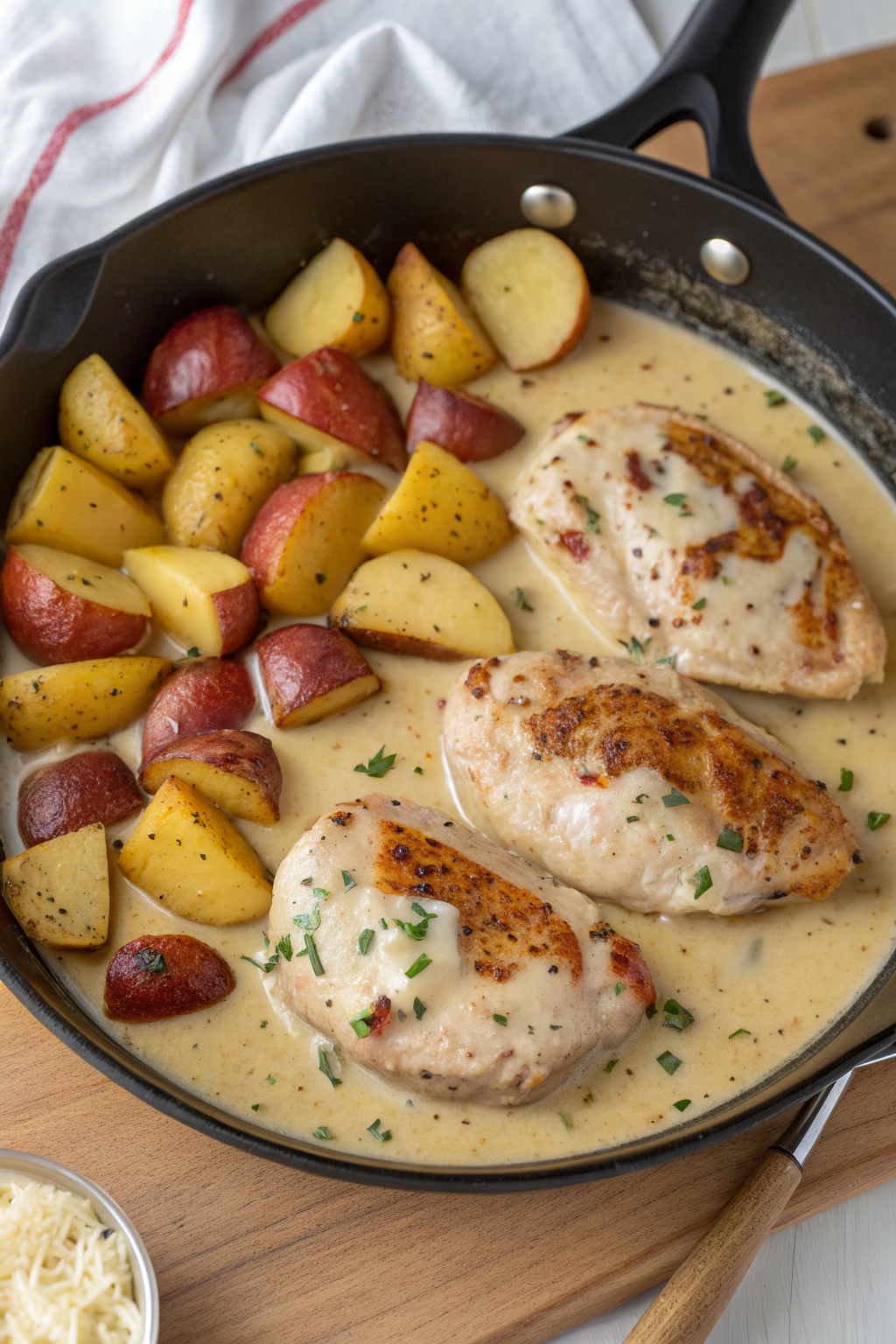
Chicken Potatoes with Dijon Cream Sauce
Ingredients
Instructions
- Pat the chicken thighs dry with paper towels and trim any excess fat if needed.
- In a small bowl, mix together the kosher salt, black pepper, garlic powder, onion powder, and paprika. Season both sides of the chicken with this mixture.
- Scrub the potatoes and cut them into halves or quarters, about 1-inch pieces. Toss the potatoes with a drizzle of olive oil and a pinch of salt and pepper. Set aside.
- Heat a large oven-safe skillet over medium-high heat. Add 1 tablespoon olive oil and 1 tablespoon butter.
- When the butter foams and sizzles, add the potatoes in a single layer, cut side down.
- Cook without stirring for 4–5 minutes until the bottoms are golden, then stir and cook another 4–5 minutes until browned on multiple sides.
- Transfer the potatoes to a plate; they will finish cooking later in the sauce.
- In the same skillet, add a drizzle of oil if the pan looks dry. Lay the seasoned chicken thighs in the pan, smooth side down.
- Cook 4–6 minutes per side until the chicken develops a deep golden crust and is almost cooked through, adjusting the heat if the spices start to burn.
- Transfer the chicken to the plate with the potatoes.
- Lower the heat to medium and add 2 tablespoons butter to the skillet.
- When the butter melts, add the minced garlic and cook for about 30 seconds until fragrant.
- Pour in the chicken broth and use a wooden spoon to scrape up any browned bits from the bottom of the pan. Let the broth simmer for 2–3 minutes to reduce slightly.
- Stir in the heavy cream, then add Dijon mustard, Worcestershire sauce, thyme, parsley, and red pepper flakes if using. Whisk until the sauce is smooth and pale golden.
- Let the sauce simmer gently on low heat for 3–5 minutes, stirring often so it does not scorch. If using Parmesan, stir it in now and let it melt completely.
- Taste the sauce and adjust with more salt, pepper, or a little extra Dijon if you want more tang. The sauce should coat the back of a spoon and feel silky.
- Nestle the browned chicken thighs into the sauce and tuck the potatoes around the chicken so they sit partly in the sauce.
- Spoon some sauce over the chicken, then cover the skillet loosely with a lid or foil and simmer on low heat for 8–10 minutes, until the chicken is cooked through (165°F in the thickest part) and the potatoes are fork-tender.
- If the sauce seems too thin, transfer the chicken and potatoes to a plate and tent with foil, then simmer the sauce alone for a few minutes until thickened to your liking, stirring often. Return the chicken and potatoes to the pan and spoon sauce over everything.
- Taste a potato and a bit of sauce and adjust seasoning with a pinch of salt, pepper, or a squeeze of lemon juice if desired. Serve hot, straight from the skillet if your pan is table-safe.
Notes
Approximate per serving (4 servings): 650–700 calories; fat 45 g; saturated fat 21 g; carbohydrates 30 g; fiber 3 g; sugars 3 g; protein 34 g; sodium 900 mg. Values are estimates and will vary based on exact ingredient brands, optional additions (like Parmesan), and portion size.
Leave a Reply