
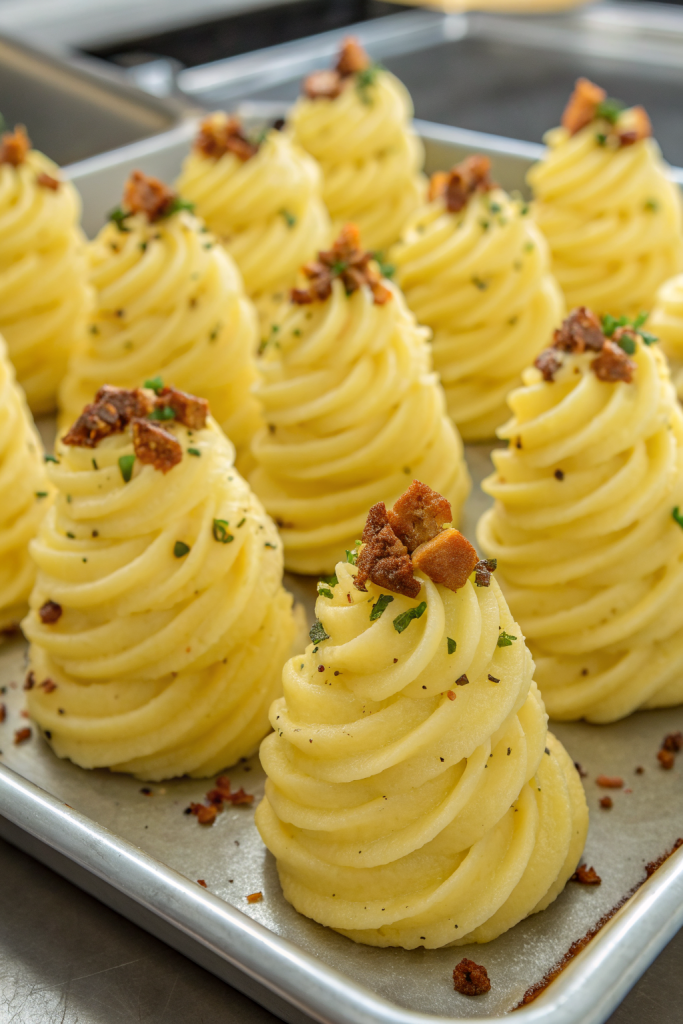
Duchess Potatoes Recipe tastes like the fanciest mashed potatoes you ever met, with a rich, buttery interior and crispy golden edges that feel straight out of a steakhouse. This side dish works perfectly for holiday dinners, date nights at home, or any time you want a showstopper on the table in under about 1 hour. I still remember the first time I piped these for friends and someone asked which restaurant catered dinner.
Why Duchess Potatoes Recipe Is Worth It
Duchess potatoes look restaurant-level fancy, yet the recipe uses simple pantry ingredients and basic techniques. You pipe mashed potatoes into swirls, bake them, and end up with creamy centers and crisp, frilly tops that impress everyone.
You also portion them individually, so plating feels easy and stress-free during busy dinners. Kids love the fun shape, adults love the flavor, and you get all the comfort of mashed potatoes with a little extra flair.
“These duchess potatoes disappeared faster than the roast—everyone fought over the crispy edges. ★★★★★”
Ingredients You Need
Potatoes
- 2 ½ pounds starchy potatoes
- Russet potatoes give the fluffiest texture.
- Yukon Gold potatoes add a buttery flavor and deeper color.
- You can mix half Russet and half Yukon for the best of both.
Dairy and Fat
- 6 tablespoons unsalted butter, melted and slightly cooled
- Use real butter, not margarine, for the best flavor.
- If you use salted butter, reduce added salt a bit.
- ½ cup heavy cream, warmed
- You can swap half-and-half in a pinch, but the texture turns slightly less rich.
- Whole milk works if you keep the potatoes on the drier side.
- 3 large egg yolks, room temperature
- Yolks give structure, shine, and that gorgeous golden color.
Seasonings
- 1 ¼ teaspoons kosher salt, plus more to taste
- ½ teaspoon freshly ground black pepper
- ¼ teaspoon ground nutmeg (optional but classic)
- ½ teaspoon garlic powder or 1–2 cloves roasted garlic, mashed
- 2 tablespoons finely grated Parmesan cheese (optional, but highly recommended)
Optional Add-Ins
- 1 tablespoon chopped fresh chives or parsley
- Extra grated Parmesan for sprinkling
- Paprika for a light dusting on top
Pantry Shortcuts & Brand Notes
Use pre-grated Parmesan from a good-quality brand if you want speed; just avoid the shelf-stable shaker style since it can taste chalky. Use garlic powder instead of fresh garlic when you want a smoother texture and less chopping. Use pre-cut parchment sheets to line your baking sheet and save cleanup time.
Equipment List
- Large pot for boiling potatoes
- Colander
- Potato ricer or masher
- A ricer gives the smoothest duchess potatoes with no lumps.
- Large mixing bowl
- Whisk or sturdy spatula
- Piping bag fitted with a large star tip (like Wilton 1M or Ateco 829)
- If you do not own a piping bag, use a large zip-top bag and snip a corner.
- Baking sheet
- Parchment paper or silicone baking mat
- Pastry brush (optional, for brushing with extra butter or egg wash)
Quick Tips & substitutions
- Use starchy potatoes like Russet or a Russet/Yukon mix for fluffy duchess potatoes.
- Dry the potatoes well after boiling so the mixture holds its shape when you pipe it.
- Warm the cream and melted butter so they blend smoothly into the potatoes.
- Add egg yolks after the potatoes cool slightly so the yolks do not scramble.
- Taste and season the mashed potatoes generously before piping; bland duchess potatoes disappoint.
- Swap heavy cream with half-and-half or whole milk if needed, but use a bit less so the mixture stays thick.
- Use ghee instead of butter if you want a deeper, nutty flavor.
- Replace Parmesan with Pecorino Romano for a sharper, saltier bite.
- Use dairy-free butter and unsweetened oat or almond milk for a dairy-light version, but keep the mixture thicker.
- Skip nutmeg if you dislike it; use a pinch of smoked paprika or white pepper instead.
How to Make Duchess Potatoes Recipe
Step 1: Prep and Boil the Potatoes
Peel the potatoes and cut them into even chunks, about 1 ½ inches thick. Place them in a large pot and cover with cold water by about 1 inch, then add a generous pinch of salt. Bring the water to a gentle boil over medium-high heat, then reduce to a simmer and cook until the potatoes feel very tender when pierced with a fork, about 15–20 minutes.
Drain the potatoes in a colander and let them sit for 3–5 minutes so steam escapes and excess moisture evaporates. This step keeps the mixture thick and pipeable. Spread the potatoes on a sheet pan for a minute if they seem very wet.
Step 2: Mash or Rice the Potatoes
Transfer the hot potatoes to a large bowl. Use a potato ricer for the smoothest texture, or mash them thoroughly with a masher until no lumps remain. Keep the texture light and fluffy; do not overwork them or they turn gluey.
If you own a stand mixer, use the paddle attachment on low speed and stop as soon as the potatoes look smooth. Scrape down the sides of the bowl so everything mixes evenly. Set the bowl aside for a few minutes so the potatoes cool slightly before you add egg yolks.
Step 3: Add Butter, Cream, and Seasonings
In a small saucepan or microwave-safe cup, gently warm the heavy cream and melted butter together until just warm, not boiling. Pour this mixture into the potatoes and stir until the potatoes look smooth and creamy. Add salt, pepper, nutmeg, garlic powder or roasted garlic, and Parmesan.
Taste and adjust seasoning; duchess potatoes need bold seasoning to stand out. Stir in chopped herbs if you use them. The mixture should feel creamy but thick enough to hold soft peaks.
Step 4: Add Egg Yolks
Whisk the egg yolks in a small bowl. Add a spoonful of warm potato mixture into the yolks and whisk to temper them, which keeps them from cooking too quickly. Pour the yolk mixture into the potatoes and stir until everything blends and looks glossy and smooth.
The potatoes should now look rich, silky, and thick. If the mixture seems too loose to pipe, chill it in the fridge for 10–15 minutes so it firms up slightly.
Step 5: Prep the Baking Sheet and Piping Bag
Line a baking sheet with parchment paper or a silicone baking mat. Fit a piping bag with a large star tip and fill it with the potato mixture, working in batches if needed. Push the potatoes down gently to remove air pockets, which helps the swirls pipe evenly.
If you use a zip-top bag, spoon the mixture into the bag, squeeze it into one corner, and snip off that corner to create an opening about ½ inch wide. You will not get the same ridged pattern as a star tip, but the potatoes still bake beautifully.
Step 6: Pipe the Duchess Potatoes
Pipe the potatoes onto the prepared baking sheet in mounds about 2–3 inches wide. Start in the center, pipe in a spiral outward, then build upward to create a tall swirl with a pointed top. Leave about 1–2 inches between each mound so hot air can circulate and crisp the edges.
Aim for equal size so they bake evenly. If any swirls look messy, scoop them up, return the mixture to the bag, and try again. This step feels a bit like playing with edible frosting.
Step 7: Chill the Swirls (Optional but Helpful)
Slide the baking sheet into the fridge for 15–20 minutes. Chilling helps the swirls hold their shape and encourages crisp edges in the oven. You can also chill them longer, up to a few hours, if you want to prep ahead.
If you chill them longer than 1 hour, cover the tray lightly with plastic wrap to prevent drying. Remove the wrap before baking.
Step 8: Brush and Bake
Preheat your oven to 400°F (200°C). If you want extra color and shine, whisk 1 egg yolk with a teaspoon of water and lightly brush the tops and ridges of each potato swirl. You can also drizzle or brush a bit of melted butter instead.
Bake the duchess potatoes for 18–25 minutes, until the edges turn deep golden and the tops look lightly browned. Rotate the pan halfway through baking so they color evenly. The centers stay creamy while the ridges crisp up beautifully.
Step 9: Serve
Let the duchess potatoes rest on the baking sheet for 3–5 minutes so they firm up slightly. Use a thin spatula to lift them onto a serving platter. Sprinkle with extra herbs or a little Parmesan if you like.
Serve them hot alongside your favorite main dishes. Watch them vanish faster than you thought possible.
Recipe Variations
- Gluten-free: The base recipe already avoids gluten; just confirm your Parmesan and any added seasonings use gluten-free labeling.
- Dairy-free: Use dairy-free butter and unsweetened oat or almond milk; skip Parmesan or use a dairy-free grated cheese alternative.
- Egg-free: Skip egg yolks and add 1–2 tablespoons extra melted dairy-free butter; the swirls spread a bit more but still taste great.
- Low carb: Use half potatoes and half steamed cauliflower, well-drained and riced; keep the mixture thicker so it pipes well.
- Herb lovers: Stir in chopped chives, parsley, thyme, or rosemary for a fresh, aromatic twist.
- Cheesy version: Add extra Parmesan, shredded cheddar, or Gruyère to the potato mixture before piping.
- Garlic-forward: Roast a whole head of garlic, squeeze out the cloves, and mash them into the potatoes for a mellow, sweet garlic flavor.
- Spiced version: Add a pinch of smoked paprika, cayenne, or chili flakes for a gentle kick.
Ways to Serve Duchess Potatoes Recipe
- Pair with roast chicken, turkey, or beef as a holiday side dish.
- Serve alongside pan-seared salmon or baked fish for a cozy weeknight dinner.
- Plate them with meatloaf or meatballs for a fun twist on classic comfort food.
- Use them as a base for a veggie plate with roasted carrots, green beans, and a crisp salad.
- Top a few swirls with sautéed mushrooms and herbs for a hearty vegetarian plate.
Storage Success
Store leftover duchess potatoes in an airtight container in the fridge for up to 3 days. Reheat them in a 350°F (175°C) oven on a parchment-lined baking sheet until hot and crisp on the edges again, about 10–15 minutes. You can also freeze them unbaked: pipe the swirls on a tray, freeze until solid, then transfer to a freezer bag and bake from frozen, adding a few extra minutes. This method turns duchess potatoes into a handy make-ahead side that still tastes fresh and special when you serve it.
Duchess Potatoes Recipe
Ingredients
Instructions
- Place the peeled, chunked potatoes in a large pot and cover with cold water by about 1 inch. Add a generous pinch of salt.
- Bring to a gentle boil over medium-high heat, then reduce to a simmer and cook until the potatoes are very tender when pierced with a fork, about 15–20 minutes.
- Drain the potatoes in a colander and let them sit for 3–5 minutes so steam escapes and excess moisture evaporates. If they seem very wet, spread them on a sheet pan for a minute to dry further.
- Transfer the hot potatoes to a large bowl. Rice them with a potato ricer for the smoothest texture, or mash thoroughly with a masher until no lumps remain.
- In a small saucepan or microwave-safe cup, gently warm the melted butter and heavy cream together until just warm, not boiling.
- Pour the warm butter and cream mixture into the potatoes and stir until smooth and creamy, keeping the texture light and fluffy.
- Add the kosher salt, black pepper, nutmeg (if using), garlic powder, and Parmesan. Taste and adjust seasoning so the potatoes are well flavored. Stir in chopped chives or parsley if using. The mixture should be creamy but thick enough to hold soft peaks.
- Let the potato mixture cool slightly so it is warm but not hot. In a small bowl, whisk the 3 egg yolks.
- Stir a spoonful of the warm potato mixture into the yolks to temper them, then pour the yolk mixture back into the potatoes and stir until everything looks glossy and smooth.
- If the mixture seems too loose to pipe, chill it in the refrigerator for 10–15 minutes to firm up slightly.
- Preheat the oven to 400°F (200°C). Line a baking sheet with parchment paper or a silicone baking mat.
- Fit a piping bag with a large star tip and fill it with the potato mixture, working in batches if needed. Gently push the potatoes down to remove air pockets.
- Pipe the potatoes onto the prepared baking sheet in swirls about 2–3 inches wide, starting in the center and spiraling outward, then upward to create tall mounds. Leave 1–2 inches between each swirl.
- For the best shape and crisp edges, chill the piped potatoes on the baking sheet for 15–20 minutes. If chilling longer than 1 hour, cover lightly with plastic wrap and remove it before baking.
- If desired, brush the tops and ridges lightly with the beaten egg yolk mixture or a bit of melted butter for extra color and shine. Dust lightly with paprika and sprinkle with extra Parmesan if you like.
- Bake for 18–25 minutes, rotating the pan halfway through, until the edges are deep golden and the tops lightly browned while the centers remain creamy.
- Let the duchess potatoes rest on the baking sheet for 3–5 minutes to firm slightly, then use a thin spatula to transfer them to a serving platter.
- Serve hot as an elegant side dish alongside roast meats, fish, or other favorite mains.
Notes
Approximate per serving (1 of about 8 servings): 230–260 calories; fat 15–18 g; saturated fat 9–10 g; carbohydrates 20–23 g; fiber 2–3 g; sugars 1–2 g; protein 4–6 g; sodium 260–320 mg. Values will vary based on potato type, butter and cream brands, cheese amount, and portion size.