
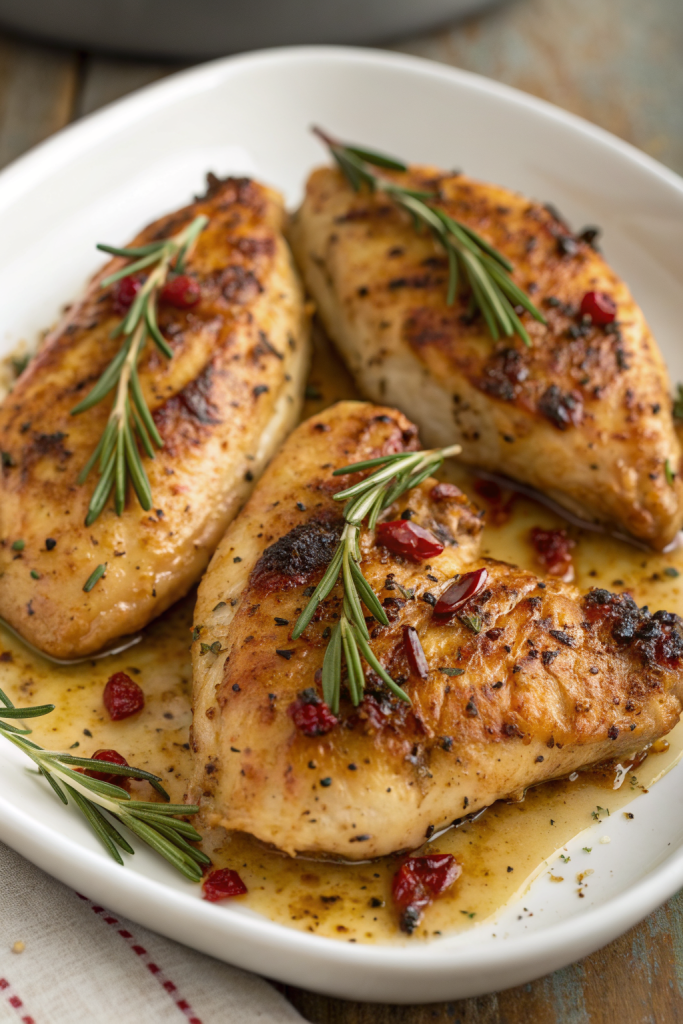
Rosemary Chicken Dijon Recipe tastes rich, tangy, and garlicky with crispy golden edges and a silky herb sauce, perfect for busy weeknights or casual dinner guests in about 35 minutes total. This recipe works for anyone who wants big restaurant flavor with simple ingredients and minimal cleanup. I first cooked a version of this on a tiny apartment stove in college, and it still saves my weeknight sanity.
Why Make This Rosemary Chicken Dijon Recipe at Home
You get juicy chicken with a bold Dijon kick, fresh rosemary aroma, and a creamy sauce that tastes like you ordered it from a bistro. You control the salt, the richness, and the quality of ingredients, so it fits your taste and budget.
You also cook everything in one skillet, which keeps cleanup easy. Leftovers taste even better the next day, so you win twice with the same batch.
This Rosemary Chicken Dijon Recipe tastes like a fancy restaurant meal but comes together in one skillet on a weeknight, ★★★★★
Ingredients You Need
Chicken
- 4 boneless, skinless chicken breasts
- Pound them to an even thickness so they cook evenly.
- Use thighs instead if you prefer darker, richer meat; just adjust cooking time.
Marinade and Sauce Base
-
3 tablespoons Dijon mustard
- Use a smooth Dijon, not whole grain, for a silky sauce.
- Choose a mid-range brand like Maille or Grey Poupon for consistent flavor.
-
2 tablespoons whole grain mustard
- Adds texture and pops of flavor.
- Skip it if you only have smooth Dijon and just add 1 extra tablespoon of Dijon.
-
3 tablespoons olive oil
- Use regular olive oil, not extra virgin, for cooking at higher heat.
- Avocado oil also works.
-
3 cloves garlic, minced
- Jarred minced garlic works as a shortcut, use about 1 tablespoon.
- Fresh garlic gives a sharper flavor.
-
2 tablespoons fresh rosemary, finely chopped
- Strip the leaves from the woody stems before chopping.
- Use 2 teaspoons dried rosemary if you do not have fresh, and crush it between your fingers.
-
1 tablespoon fresh lemon juice
- Bottled lemon juice works in a pinch, but fresh tastes brighter.
- Add extra at the end if you like more tang.
-
1 teaspoon kosher salt
- If you use table salt, start with 1/2 teaspoon and taste as you go.
-
1/2 teaspoon black pepper, freshly ground
Pan Sauce
-
1 tablespoon butter
- Salted or unsalted both work; adjust salt at the end.
-
1/2 cup chicken broth
- Use low sodium broth so you control the seasoning.
- Bouillon paste or cubes mixed with water work as a pantry shortcut.
-
1/2 cup heavy cream
- Half and half works, but the sauce will taste slightly thinner.
- Coconut cream works if you need dairy free, but flavor changes slightly.
-
1 teaspoon honey or maple syrup
- Balances the sharpness of the mustard.
- Skip it if you like a sharper Dijon flavor.
-
Extra chopped fresh rosemary for garnish, optional
Equipment List
- Large heavy skillet (10 to 12 inch, stainless steel or cast iron)
- Cutting board and sharp knife
- Small bowl and whisk or fork
- Tongs or spatula
- Meat thermometer
- Small plate or tray for resting the chicken
Tips & Mistakes
- Pound chicken breasts to an even thickness so they cook evenly and stay juicy.
- Pat chicken dry before seasoning so it browns instead of steaming.
- Do not crowd the pan or the chicken will turn pale and watery instead of golden.
- Heat the pan until the oil shimmers before you add the chicken so you get a good sear.
- Lower the heat after searing so the garlic and mustard do not burn.
- Taste the sauce before serving and adjust salt, pepper, and lemon juice so it matches your preference.
- Use a meat thermometer and pull chicken at 165°F so it stays moist.
- Let the chicken rest a few minutes before slicing so the juices stay inside.
- Scrape up browned bits from the pan into the sauce because they carry huge flavor.
- Do not boil the cream hard or the sauce can split; keep it at a gentle simmer.
How to Make Rosemary Chicken Dijon Recipe
Step 1: Prep the Chicken
Lay the chicken breasts on a cutting board and cover them with plastic wrap. Pound them gently with a meat mallet or rolling pin until they reach about 1/2 to 3/4 inch thickness. Pat them dry with paper towels and set them aside.
Step 2: Mix the Marinade
In a small bowl, whisk together Dijon mustard, whole grain mustard, olive oil, garlic, chopped rosemary, lemon juice, salt, and black pepper. Taste a tiny bit and adjust salt or lemon if you want. The mixture should taste bold and tangy.
Step 3: Coat the Chicken
Spoon about half of the mustard rosemary mixture over the chicken and rub it all over both sides. Save the other half of the mixture for the sauce. Let the chicken sit at room temperature for 10 to 15 minutes while you heat the pan, or chill it for up to 2 hours if you want to prep ahead.
Step 4: Sear the Chicken
Heat a large skillet over medium high heat and add a drizzle of olive oil. When the oil shimmers, place the chicken in the pan in a single layer. Sear each side for about 4 to 5 minutes until the outside turns deep golden and the internal temperature reaches 165°F, then move the chicken to a plate.
Step 5: Start the Sauce
Turn the heat down to medium. Add butter to the same skillet and let it melt while you scrape up the browned bits from the bottom with a wooden spoon. Pour in the chicken broth and stir until the pan looks clean and the liquid turns slightly darker.
Step 6: Add Mustard and Cream
Whisk in the remaining mustard rosemary mixture until it blends smoothly with the broth. Pour in the heavy cream and stir until the sauce looks uniform and creamy. Add the honey and stir again.
Step 7: Simmer and Thicken
Let the sauce simmer gently for 3 to 5 minutes, stirring often, until it thickens enough to coat the back of a spoon. Taste and adjust with extra salt, pepper, or lemon juice if you want more brightness. If the sauce thickens too much, splash in a bit more broth.
Step 8: Return the Chicken
Place the cooked chicken and any juices from the plate back into the skillet. Spoon the sauce over the top and let everything simmer together for 2 to 3 minutes so the flavors blend. Sprinkle extra chopped rosemary on top if you like, then serve hot with plenty of sauce.
Variations I've Tried
Use chicken thighs instead of breasts for a richer, more forgiving version that stays juicy even if you cook it a bit longer. Swap rosemary for thyme or tarragon when you want a slightly different herb profile. Stir in a spoonful of Greek yogurt at the end with the cream for extra tang and a bit more body.
Add sautéed mushrooms to the pan after you sear the chicken for an earthier flavor. Toss in a handful of baby spinach during the last minute of simmering so it wilts into the sauce. Use coconut cream and olive oil instead of butter and heavy cream for a dairy free twist that still tastes lush.
How to Serve Rosemary Chicken Dijon Recipe
Serve this Rosemary Chicken Dijon Recipe over fluffy rice, mashed potatoes, or buttered noodles so they soak up every drop of the sauce. Add a simple green side like steamed green beans, roasted broccoli, or a crisp salad. Spoon extra sauce over everything and watch it disappear faster than you planned.
How to store
- Store leftovers in an airtight container in the fridge for up to 3 to 4 days.
- Freeze portions in freezer safe containers for up to 2 months; label with the date so you keep track.
- Reheat gently in a covered skillet over low heat with a splash of broth or water until the chicken warms through and the sauce loosens.
- Reheat in the microwave in short bursts, stirring the sauce between bursts so it heats evenly and stays creamy.
Rosemary Chicken Dijon Recipe
Ingredients
Instructions
- Lay the chicken breasts on a cutting board and cover with plastic wrap. Pound gently with a meat mallet or rolling pin until they reach about 1/2 to 3/4 inch thickness. Pat dry with paper towels and set aside.
- In a small bowl, whisk together the Dijon mustard, whole grain mustard, olive oil, minced garlic, chopped rosemary, lemon juice, kosher salt, and black pepper until smooth and well combined.
- Spoon about half of the mustard-rosemary mixture over the chicken and rub it all over both sides to coat. Reserve the remaining half of the mixture for the sauce. Let the chicken marinate at room temperature for 10 to 15 minutes.
- Heat a large skillet over medium-high heat and add a drizzle of olive oil if needed. When the oil shimmers, place the chicken in the pan in a single layer. Sear for about 4 to 5 minutes per side, until deep golden and the internal temperature reaches 165°F. Transfer the chicken to a plate and set aside.
- Reduce the heat to medium. Add the butter to the same skillet and let it melt, scraping up the browned bits from the bottom of the pan with a wooden spoon.
- Pour in the chicken broth and stir, continuing to scrape up any browned bits, until the liquid is slightly reduced and the pan looks clean.
- Whisk in the reserved mustard-rosemary mixture until it blends smoothly with the broth. Pour in the heavy cream and stir until the sauce is uniform and creamy. Add the honey or maple syrup, if using, and stir again.
- Let the sauce simmer gently for 3 to 5 minutes, stirring often, until it thickens enough to coat the back of a spoon. Taste and adjust seasoning with more salt, pepper, or lemon juice if desired.
- Return the cooked chicken and any accumulated juices to the skillet. Spoon the sauce over the chicken and let it simmer for 2 to 3 minutes so the flavors blend. Garnish with extra chopped fresh rosemary if desired and serve hot with plenty of sauce.
Notes
Approximate per serving (4 servings): 420 calories; fat 27 g; saturated fat 11 g; carbohydrates 7 g; fiber 0 g; sugars 3 g; protein 36 g; sodium 740 mg. Values are estimates and will vary based on brands, add-ins, and portion size.