
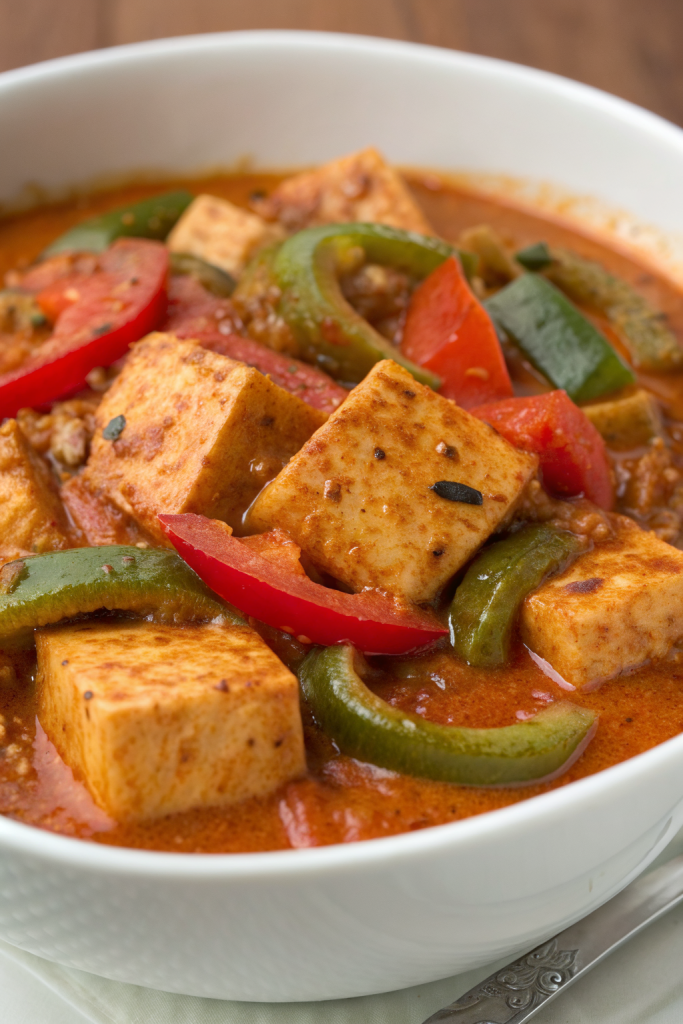
Vegan Paprikash Recipe tastes rich, smoky, creamy, and cozy, with tender veggies in a paprika-forward sauce that feels like a hug in a bowl. It works perfectly for busy weeknights or slow weekends, since you can finish it in about 40 minutes. I grew up on hearty comfort food, so I tested this vegan paprikash until it hit that same nostalgic spot without any dairy or meat.
Why Make This Vegan Paprikash Recipe at Home
You control the flavor, the creaminess, and the spice level, so the dish fits your taste instead of the other way around. You also skip heavy dairy and still enjoy a silky, paprika-rich sauce that feels indulgent but sits lighter.
Homemade vegan paprikash costs less than takeout, uses simple pantry ingredients, and reheats like a dream. You can cook it once and eat it a few times, which future-you will appreciate when hunger shows up with zero notice.
“This Vegan Paprikash Recipe tastes like classic comfort food with a smoky twist, and nobody at my table guessed it was dairy free. ★★★★★”
Ingredients You Need
Core ingredients
-
Neutral oil
- Use avocado, sunflower, or light olive oil. Avoid extra virgin olive oil, since strong flavor can fight the paprika.
-
Yellow onions
- They bring sweetness and depth. White onions work too, but skip red onions here.
-
Carrots
- They add natural sweetness and color. Slice them thin so they soften quickly.
-
Red bell peppers
- Classic paprikash flavor needs sweet peppers. Use fresh, firm peppers for best texture.
-
Garlic
- Fresh cloves beat jarred garlic for this recipe, since the sauce relies on aromatics.
-
Smoked paprika
- This ingredient carries the main flavor. I like the Spanish-style smoked paprika from La Chinata or Simply Organic for consistent quality.
-
Sweet Hungarian paprika
- This gives that classic paprikash taste. If you only have regular paprika, use it, but Hungarian sweet paprika tastes more authentic.
-
Tomato paste
- It adds umami and richness. Squeeze-tube tomato paste works great and stores easily in the fridge.
-
Vegetable broth
- Use low-sodium broth so you control the salt. Better Than Bouillon vegetable base works well and saves pantry space.
-
Soy sauce or tamari
- This adds depth and a subtle savory note. Use tamari for a gluten free version.
-
Bay leaf
- It rounds out the sauce. Pull it out before serving so nobody bites into it.
Creamy element
-
Full fat coconut milk or cashew cream
- Coconut milk from a can gives rich creaminess. If you dislike coconut flavor, use homemade cashew cream: blend 1 cup soaked cashews with 1 cup water until smooth.
-
Lemon juice or apple cider vinegar
- A splash of acid brightens the sauce and balances the richness. Add it at the end so the tang stays fresh.
Protein and bulk
-
Chickpeas or firm tofu
- Chickpeas keep things simple and pantry friendly. If you use tofu, press it, cube it, and brown it lightly before adding to the sauce.
-
Mushrooms
- Cremini or baby bella mushrooms add a meaty bite. Slice them thick so they keep texture in the sauce.
-
Potatoes or egg noodles (vegan)
- Serve the paprikash over mashed potatoes, boiled potatoes, or wide egg-free noodles. Gluten free pasta or rice also works.
Seasonings
-
Fine sea salt and black pepper
- Season in layers as you cook. Taste near the end and adjust.
-
Ground cumin
- A small amount deepens the smoky flavor. Do not overdo it or it will take over.
-
Sugar or maple syrup (optional, tiny pinch)
- A pinch balances acidity from tomato paste and lemon. You should not taste sweetness, just a rounder flavor.
Pantry shortcuts and substitutions
- Use frozen sliced peppers and onions if you want to save chopping time.
- Use canned coconut milk or a store bought plain, unsweetened vegan sour cream if you do not want to blend cashews.
- If you run out of smoked paprika, mix regular paprika with a tiny pinch of chipotle powder, but use less since chipotle tastes strong.
- Use any neutral broth powder or cube if you do not have liquid broth, just adjust salt.
Equipment list
- Large heavy-bottomed pot or Dutch oven
- Sharp chef’s knife and cutting board
- Wooden spoon or silicone spatula
- Measuring cups and spoons
- Small bowl and whisk for cashew cream if you use it
- Ladle for serving
Tips & Mistakes
- Use fresh paprika and smoked paprika, since old spices taste flat and dull.
- Toast paprika in the oil briefly, then add liquid quickly so it blooms without burning.
- Slice onions thin so they caramelize slightly and sweeten the sauce.
- Avoid high heat when you add coconut milk or cashew cream, since strong boiling can cause grainy texture.
- Salt in stages, not just at the end, to build flavor instead of a salty finish.
- Do not rush the simmer; give the sauce at least 15 minutes so flavors meld.
- Stir often after you add the creamy element so the sauce does not stick to the bottom.
- Taste before serving and adjust acid with a splash of lemon juice if the sauce feels heavy.
- Keep the sauce thick but pourable; add broth if it turns too thick or simmer longer if it looks too thin.
- Do not overcrowd the pot with mushrooms; let them brown a bit so they add deeper flavor.
How to Make Vegan Paprikash Recipe
Step 1: Sauté veggies and aromatics
Heat oil in a large stock pot or Dutch oven over medium heat. Once hot, add onions and carrots and cook until soft and lightly golden, about 8 minutes. Stir in garlic, smoked paprika, sweet paprika, cumin, and tomato paste and cook 2 minutes, until everything smells deeply aromatic. Season with a pinch of salt and pepper.
Step 2: Add peppers, mushrooms, and base flavors
Add sliced red bell peppers and mushrooms to the pot and stir well. Cook 6 to 8 minutes, until peppers soften and mushrooms release their liquid and start to brown. Stir in soy sauce, bay leaf, and a small pinch of sugar or maple syrup if you use it. Mix until the veggies look coated in a thick, brick-red paste.
Step 3: Build the sauce
Pour in vegetable broth while you stir, scraping the bottom of the pot to pull up any browned bits. Add chickpeas or browned tofu cubes and bring the mixture to a gentle simmer. Lower the heat so the sauce bubbles softly and cook 15 to 20 minutes, until the veggies turn very tender and the sauce thickens. Taste and adjust salt and pepper.
Step 4: Make it creamy
Lower the heat to low. Stir in coconut milk or cashew cream slowly while you stir the pot. Let the vegan paprikash heat gently for 3 to 5 minutes, until the sauce looks silky and coats the back of a spoon. Add lemon juice and stir again, then taste and tweak seasoning.
Step 5: Cook your base
While the sauce simmers, cook your potatoes, noodles, or rice. Boil potatoes in salted water until fork tender, or cook noodles according to package directions. Drain well so water does not thin the sauce when you plate. Keep the base warm until serving.
Step 6: Serve
Spoon a generous amount of potatoes or noodles into bowls. Ladle the vegan paprikash over the top so the sauce covers most of the base. Sprinkle with chopped fresh parsley or chives for color and freshness. Add a final crack of black pepper if you like a little extra bite.
Variations I've Tried
I swap chickpeas for white beans when I want a softer, creamier texture in each bite. I also tried a version with extra mushrooms and no beans, which tasted rich and earthy and worked great over mashed potatoes. On busy nights, I cut the veggies a bit smaller and use only coconut milk, which shortens the simmer time and still gives a thick, cozy sauce.
Sometimes I stir in a spoonful of vegan yogurt at the end for extra tang and creaminess. I also like a spicy version with a pinch of chili flakes or a small spoon of harissa, which plays nicely with the smoked paprika. When I cook for kids, I cut the smoked paprika slightly and lean on sweet paprika so the flavor stays gentle and mellow.
How to Serve Vegan Paprikash Recipe
Serve this Vegan Paprikash Recipe over fluffy mashed potatoes, wide egg-free noodles, or simple white rice for a classic comfort bowl. Add a side of steamed green beans, peas, or a crisp cucumber salad to bring some crunch and freshness. Top each bowl with chopped parsley, a dollop of vegan yogurt or sour cream, and maybe a squeeze of lemon for brightness. If you want a cozy drink with it, pour a mug of hot herbal tea or sparkling water with lemon.
How to store
- Store leftovers in an airtight container in the fridge for 4 days.
- Chill the paprikash completely before you freeze it, then store it in freezer-safe containers for up to 3 months.
- Reheat on the stove over low to medium heat and stir often; add a splash of water or broth if the sauce looks too thick.
- Reheat single portions in the microwave in short bursts, stirring between each round so the sauce heats evenly.
Vegan Paprikash Recipe
Ingredients
Instructions
- Heat the neutral oil in a large heavy-bottomed pot or Dutch oven over medium heat. Add the sliced onions and carrots and cook, stirring occasionally, until soft and lightly golden, about 8 minutes.
- Stir in the garlic, smoked paprika, sweet Hungarian paprika, cumin, and tomato paste. Cook for about 2 minutes, stirring constantly, until very fragrant. Season with a pinch of salt and pepper.
- Add the sliced red bell peppers and mushrooms to the pot and stir well to coat in the paprika mixture.
- Cook for 6 to 8 minutes, stirring occasionally, until the peppers soften and the mushrooms release their liquid and begin to brown slightly.
- Stir in the soy sauce or tamari, bay leaf, and sugar or maple syrup if using, until the veggies are coated in a thick, brick-red paste.
- Pour in the vegetable broth while stirring, scraping along the bottom of the pot to release any browned bits.
- Add the chickpeas (or browned tofu cubes) and bring the mixture to a gentle simmer.
- Reduce the heat so the sauce bubbles softly and simmer for 15 to 20 minutes, stirring occasionally, until the vegetables are very tender and the sauce has thickened. Taste and adjust salt and pepper as needed.
- Lower the heat to low. Slowly stir in the coconut milk or cashew cream, stirring constantly so it blends smoothly into the sauce.
- Let the paprikash heat gently for 3 to 5 minutes, without boiling hard, until the sauce looks silky and coats the back of a spoon.
- Stir in the lemon juice or apple cider vinegar, then taste and adjust seasoning, adding more salt, pepper, or acid if the sauce tastes heavy.
- While the sauce simmers, cook your potatoes, noodles, or rice. Boil potatoes in well-salted water until fork-tender or cook noodles/rice according to package directions, then drain well so excess water does not thin the sauce.
- To serve, spoon a generous amount of potatoes, noodles, or rice into bowls. Ladle the vegan paprikash over the top so the sauce mostly covers the base.
- Garnish with chopped fresh parsley or chives and a final crack of black pepper if desired. Serve warm.
- Cool leftover paprikash completely, then store in an airtight container in the refrigerator for up to 4 days.
- For longer storage, transfer cooled paprikash to freezer-safe containers and freeze for up to 3 months.
- Reheat gently on the stove over low to medium heat, stirring often and adding a splash of water or broth if the sauce is too thick, or reheat single portions in the microwave in short bursts, stirring between each round.
Notes
Approximate per serving (paprikash only, using chickpeas, coconut milk, and served without potatoes or noodles): 320 calories; fat 19 g; saturated fat 10 g; carbohydrates 30 g; fiber 8 g; sugars 9 g; protein 10 g; sodium 720 mg. Serving over potatoes, noodles, or rice will increase calories and carbohydrates. Values will vary based on specific products, substitutions, and portion sizes.