
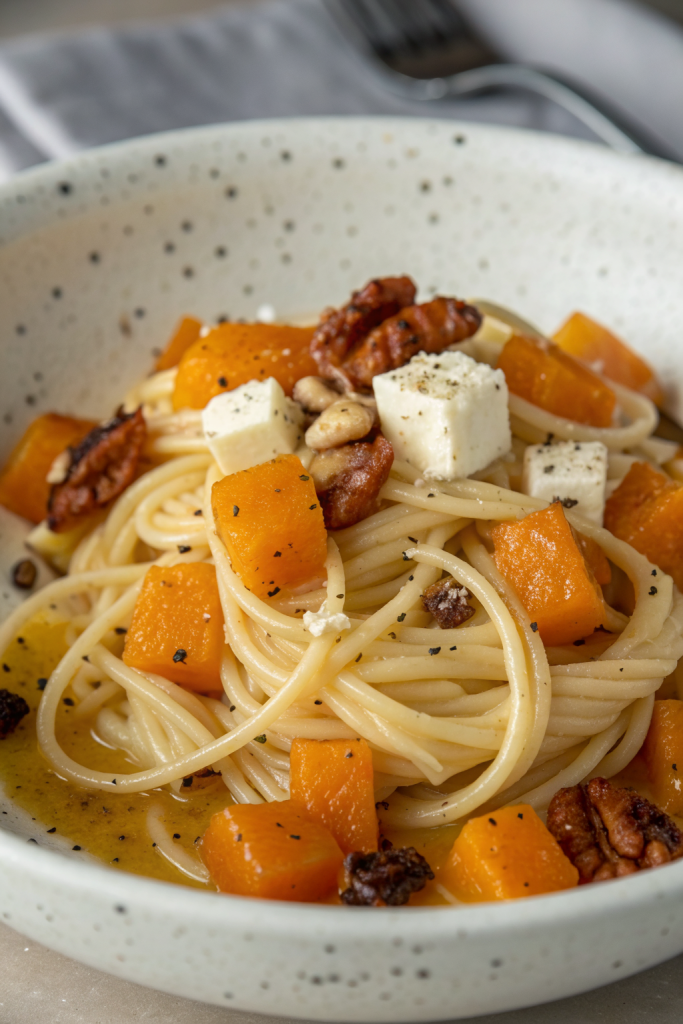
Baked Feta Butternut Squash Pasta Recipe tastes creamy, cozy, a little tangy, and perfectly sweet-savory from the roasted squash. It works well for busy weeknights, date nights at home, or a casual dinner party, and you can get it on the table in about 55 to 65 minutes. I tested versions of this dish so many times that my neighbors started “checking in” right around dinnertime with suspiciously empty containers.
Why Make This Baked Feta Butternut Squash Pasta Recipe at Home
You control the salt, the spice, and the creaminess, so the pasta fits your taste instead of the other way around. Roasting the butternut squash with feta concentrates the flavor and gives you a rich, silky sauce without heavy cream.
This recipe uses simple pantry staples and a few fresh ingredients, so you skip any fancy shopping trip. You also cook everything in just a couple of pans, which keeps cleanup manageable on a weeknight.
This Baked Feta Butternut Squash Pasta Recipe tastes like cozy fall comfort in a bowl, with restaurant-level flavor and weeknight-level effort. ★★★★★
Ingredients You Need
Pasta and main components
- Short pasta: 12 ounces rigatoni, penne, or fusilli
- Use whole wheat or chickpea pasta if you want more fiber and protein.
- Butternut squash: about 2 pounds, peeled, seeded, and cut into 1 inch cubes
- Frozen butternut squash works; roast it straight from frozen and add 5 to 10 minutes.
- Feta cheese: 8 ounces, in a block, not pre-crumbled
- Block feta melts creamier and tastes richer than pre-crumbled.
- Olive oil: 3 to 4 tablespoons
- Use extra virgin for best flavor; store brand usually works fine here.
Aromatics and flavor boosters
- Yellow onion: 1 medium, finely chopped
- Garlic: 4 to 6 cloves, minced
- Fresh sage: 6 to 8 leaves, chopped
- Fresh thyme: 1 tablespoon leaves, or 1 teaspoon dried
- Crushed red pepper flakes: 1 teaspoon, or to taste
- Ground black pepper: to taste
- Kosher salt or sea salt: to taste
Creaminess and sauce helpers
- Pasta cooking water: 1 to 1.5 cups, starchy and hot
- Lemon: zest and juice of 1 small lemon
- Optional: 2 to 4 tablespoons heavy cream or half and half
- You can swap in plain Greek yogurt; temper it with a little hot pasta water so it does not curdle.
- Optional: 2 tablespoons butter for extra richness
Topping and texture
- Freshly grated Parmesan or pecorino: 1/2 to 3/4 cup
- Toasted nuts or seeds:
- Chopped walnuts, pecans, or pumpkin seeds for crunch
- Fresh parsley or extra sage: chopped, for garnish
Pantry shortcuts and substitutions
- Use pre-cut fresh butternut squash from the produce section to save prep time.
- Replace butternut squash with cubed sweet potato if that fits what you have.
- Use feta in brine if possible; it tastes creamier and less chalky.
- If you avoid feta, try goat cheese or a plant-based feta-style cheese.
Equipment list
- Large baking dish or casserole pan (9×13 inches works well)
- Large pot for boiling pasta
- Large skillet or Dutch oven for combining everything
- Sharp chef’s knife and sturdy cutting board
- Colander
- Wooden spoon or silicone spatula
- Microplane or fine grater for lemon zest and Parmesan
Tips & Mistakes
- Roast the squash in a single layer so it caramelizes instead of steaming.
- Cut the squash into even cubes so everything cooks at the same rate.
- Place the feta block in the center of the pan so it softens and browns slightly without drying out.
- Salt the pasta water generously; it should taste like the sea.
- Scoop out at least 1.5 cups of pasta water before you drain the pasta, so you have enough for the sauce.
- Add pasta water gradually while you toss, so the sauce turns silky instead of watery.
- Taste the roasted squash before blending and adjust salt and pepper right away.
- Do not overcook the pasta; pull it when it still feels slightly firm so it finishes in the sauce.
- Stir the pasta gently with the sauce so you keep the squash pieces mostly intact if you like some texture.
- Add lemon juice at the end and taste; a little acid brightens the rich sauce a lot.
How to Make Baked Feta Butternut Squash Pasta Recipe
Step 1: Roast squash and feta
Preheat the oven to 400°F and position a rack in the center. Add the butternut squash cubes to a large baking dish, drizzle with 2 to 3 tablespoons olive oil, and season with salt, black pepper, and a pinch of red pepper flakes. Toss to coat and spread the squash into an even layer.
Nestle the feta block in the center of the squash and drizzle it with a little more olive oil. Sprinkle the chopped sage and thyme over everything. Roast 30 to 40 minutes, until the squash turns tender and caramelized on the edges and the feta looks soft and lightly golden.
Step 2: Cook the pasta
While the squash and feta roast, bring a large pot of salted water to a boil. Add the pasta and cook until just shy of al dente, usually 1 to 2 minutes less than the package suggests. Scoop out 1.5 cups of starchy pasta water and set it aside.
Drain the pasta and leave it in the colander. Keep the pot handy so you can use it again for the sauce. This saves you from washing an extra pan.
Step 3: Sauté veggies and aromatics
Heat 1 tablespoon olive oil in a large stock pot or Dutch oven over medium heat. Once hot, add onions and carrots; cook until soft, about 8 minutes. Stir in garlic, ginger, harissa, coriander, and turmeric; cook 2 minutes, until aromatic. Season with salt.
Now adjust this step for the actual pasta recipe. In the same pot, heat 1 to 2 tablespoons olive oil over medium heat. Add the chopped onion with a pinch of salt and cook 6 to 8 minutes, until it turns soft and lightly golden. Stir in the minced garlic and a pinch of red pepper flakes and cook 1 to 2 minutes, until the garlic smells fragrant.
Step 4: Blend or mash the squash and feta
Take the baking dish out of the oven. Transfer about two thirds of the roasted squash and all of the feta into the pot with the onions and garlic. Add 1/2 cup of the hot pasta water.
Use an immersion blender to blend the mixture until it turns smooth and creamy. Add more pasta water as needed until you reach a thick, pourable sauce. If you prefer more texture, mash with a potato masher instead and leave some small chunks of squash.
Step 5: Finish the sauce
Turn the heat to low. Stir in the lemon zest and juice, then taste and adjust salt and pepper. If you want extra richness, add the butter and stir until it melts into the sauce.
Swirl in the cream or tempered Greek yogurt if you use it, and stir until the sauce looks glossy and smooth. Add a handful of Parmesan and stir again. The sauce should coat the back of a spoon; thin it with a splash of pasta water if it feels too thick.
Step 6: Toss with pasta and remaining squash
Add the cooked pasta to the pot with the sauce. Gently fold in the remaining roasted squash cubes so they hold their shape. Toss everything over low heat for 1 to 2 minutes so the pasta absorbs some sauce.
Sprinkle in more Parmesan and a splash of pasta water if the mixture looks dry. Taste one more time and adjust salt, pepper, and red pepper flakes. The pasta should look glossy, creamy, and well coated.
Step 7: Garnish and serve
Transfer the pasta to a serving bowl or individual plates. Top with extra Parmesan, chopped parsley or sage, and toasted nuts or seeds. Finish with a light drizzle of olive oil and a tiny squeeze of lemon if you like extra brightness.
Serve hot while the sauce feels silky and the edges of the squash still taste caramelized. Expect second helpings to disappear quickly.
Variations I've Tried
-
Extra spicy version
Add a spoonful of Calabrian chili paste or a bit more red pepper flakes to the sauce. This version works nicely with salty feta and sweet squash. I like this one when I want a cozy dish with a little kick. -
Garlic herb version
Double the garlic and add fresh rosemary along with the sage and thyme. Finish with a big handful of chopped parsley and extra lemon zest. This version tastes very aromatic and pairs well with a simple green salad. -
Protein packed version
Stir in cooked shredded chicken, turkey, or crumbled Italian chicken sausage when you toss the pasta with the sauce. Chickpeas also work well if you want a vegetarian option. Add a splash more pasta water so the sauce still feels loose and creamy. -
Lighter version
Skip the cream and butter and thin the sauce with extra pasta water and lemon juice. Use whole wheat pasta and a little less feta. The dish still tastes comforting but sits a bit lighter. -
Gluten free version
Use your favorite gluten free short pasta and cook it just until al dente so it holds its shape. Stir gently when you toss it with the sauce. This version still gives you all the cozy flavor without the gluten.
How to Serve Baked Feta Butternut Squash Pasta Recipe
Serve this pasta hot in warm bowls so the sauce stays creamy and smooth. I like it with a simple green salad, roasted broccoli, or steamed green beans on the side. Garlic bread or warm crusty bread works great to scoop up any extra sauce. A cold sparkling water with lemon or a fruity iced tea balances the richness nicely.
How to store
- Fridge: Cool leftovers to room temperature, then store in an airtight container in the fridge for up to 3 to 4 days.
- Freezer: Freeze portions in freezer safe containers for up to 2 months; press plastic wrap directly on the surface to reduce ice crystals.
- Reheating on stove: Reheat in a skillet over low to medium heat with a splash of water or broth, stirring often until hot and creamy again.
- Reheating in microwave: Cover loosely and heat in 45 to 60 second bursts, stirring between each, and add a spoonful of water to loosen the sauce.
- Refreshing leftovers: Squeeze in a little lemon juice and sprinkle fresh herbs and Parmesan on top to wake the flavors back up.
Baked Feta Butternut Squash Pasta Recipe
Ingredients
Instructions
- Preheat the oven to 400°F (200°C) and position a rack in the center. Add the butternut squash cubes to a large baking dish and drizzle with 2 to 3 tablespoons of olive oil. Season with salt, black pepper, and a pinch of red pepper flakes, then toss to coat and spread into an even layer.
- Nestle the feta block in the center of the squash and drizzle it with a little more olive oil. Sprinkle the chopped sage and thyme evenly over the feta and squash.
- Roast for 30 to 40 minutes, until the squash is tender and caramelized on the edges and the feta is soft and lightly golden.
- While the squash and feta roast, bring a large pot of generously salted water to a boil. Add the pasta and cook until just shy of al dente, 1 to 2 minutes less than the package directions.
- Scoop out about 1 1/2 cups of the hot, starchy pasta water and set aside. Drain the pasta and leave it in the colander, keeping the pot handy for making the sauce.
- In the same pot, heat 1 to 2 tablespoons olive oil over medium heat. Add the chopped onion and a pinch of salt and cook, stirring occasionally, until soft and lightly golden, 6 to 8 minutes.
- Stir in the minced garlic and a pinch of red pepper flakes and cook for 1 to 2 minutes, just until the garlic is fragrant but not browned.
- Remove the baking dish from the oven. Transfer about two-thirds of the roasted squash and all of the feta into the pot with the onions and garlic. Add about 1/2 cup of the hot pasta water.
- Use an immersion blender to blend the mixture until smooth and creamy, adding more pasta water as needed until you have a thick, pourable sauce. Alternatively, mash with a potato masher if you prefer a chunkier texture.
- Reduce the heat to low. Stir in the lemon zest and juice, then taste and season with additional salt and black pepper as needed.
- If using, add the butter and stir until melted and incorporated. Swirl in the heavy cream or half-and-half, if using, and stir in a handful of grated Parmesan until the sauce looks glossy and smooth. Thin with a splash of pasta water if it seems too thick.
- Add the cooked pasta to the pot with the sauce. Gently fold in the remaining roasted squash cubes so they mostly hold their shape.
- Toss over low heat for 1 to 2 minutes, adding a little more pasta water and Parmesan as needed until the pasta is well coated and looks creamy and glossy. Adjust salt, black pepper, and red pepper flakes to taste.
- Transfer the pasta to a serving bowl or individual plates. Top with extra Parmesan, chopped parsley or sage, and toasted nuts or seeds, if using.
- Finish with a light drizzle of olive oil and a small squeeze of lemon if you like extra brightness. Serve hot while the sauce is silky and the squash edges are still caramelized.
Notes
Approximate per serving (1/6 of recipe): 520–580 calories; fat 24–30 g; saturated fat 11–14 g; carbohydrates 60–70 g; fiber 5–7 g; sugars 6–10 g; protein 18–22 g; sodium 750–950 mg. Values will vary based on exact pasta shape, feta brand, added cream or butter, and toppings.