
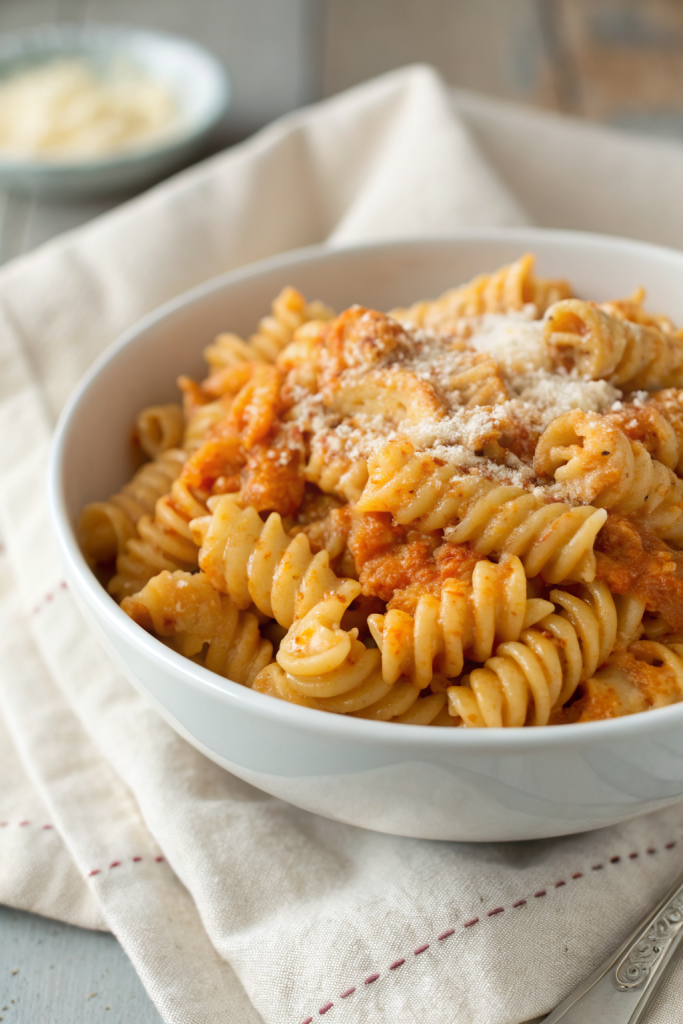
Butternut Squash Pasta Sauce Recipe tastes creamy, cozy, and slightly sweet with a savory kick that hugs every noodle. It works perfectly for busy weeknights or casual date nights and takes about 45 minutes from start to finish. I first cooked a version of this on a cold Chicago night when my heat barely worked, and this sauce basically did the job instead.
Why You Should Try This Butternut Squash Pasta Sauce Recipe
This sauce gives you all the comfort of mac and cheese with a lighter, veggie-forward twist. Roasted or sautéed butternut squash blends with aromatics and spices to make a silky, golden sauce that clings to pasta in the best way.
It suits picky eaters, meal preppers, and anyone who wants a cozy bowl of pasta without a heavy cream overload. You can keep it mild for kids or add a little heat for spice lovers.
“This Butternut Squash Pasta Sauce Recipe tastes like fall in a bowl, super creamy without loads of cream, and it turns simple pasta into something special. ★★★★★”
Ingredients You’ll Need
Main ingredients
- 1 medium butternut squash
- About 2 to 2½ pounds whole, or 4 cups cubed
- You can use pre-cut squash from the produce section to save time.
- 2 tablespoons olive oil
- 1 tablespoon unsalted butter
- 1 large yellow onion, diced
- 1 medium carrot, diced
- 3 to 4 garlic cloves, minced
- 1 teaspoon fresh grated ginger
- 1 to 2 teaspoons harissa paste
- Use mild if you prefer gentle heat, or substitute ½ teaspoon red pepper flakes.
- 1 teaspoon ground coriander
- ½ teaspoon ground turmeric
- ½ teaspoon smoked paprika
- ½ teaspoon dried thyme or Italian seasoning
- 3 cups low-sodium vegetable broth or chicken broth
- I like Kitchen Basics or Pacific for good flavor.
- ½ cup canned coconut milk or heavy cream
- Coconut milk keeps it dairy-light and adds subtle sweetness.
- ¼ cup grated Parmesan or Pecorino Romano
- Use nutritional yeast instead for a dairy-free option.
- 1 to 2 teaspoons maple syrup
- Balances the natural squash sweetness and acidity.
- 1 to 2 tablespoons lemon juice
- Salt and black pepper to taste
Pasta and mix-ins
- 12 to 16 ounces pasta
- Short shapes like rigatoni, penne, shells, or orecchiette catch the sauce nicely.
- 2 tablespoons pasta cooking water, as needed
- Optional add-ins:
- 2 cups baby spinach or chopped kale
- ½ cup toasted walnuts or pecans
- Crispy chickpeas or cooked Italian sausage for extra protein
Pantry shortcuts and substitutions
- Use frozen cubed butternut squash if you want to skip peeling and chopping.
- Substitute sweet potato for squash for a slightly different flavor but similar texture.
- Swap harissa with a mix of tomato paste and a pinch of chili powder if you do not have it.
- Use onion powder and garlic powder in a pinch: 1 teaspoon onion powder and ½ teaspoon garlic powder.
Equipment list
- Large stock pot or Dutch oven
- Large skillet if you roast or brown the squash separately
- Blender or immersion blender
- Cutting board and sharp chef’s knife
- Wooden spoon or silicone spatula
- Measuring cups and spoons
- Colander for draining pasta
Tips & Tricks
- Cut the squash into evenly sized cubes so they cook at the same rate.
- Salt each layer: veggies, sauce, and pasta water, so the final dish tastes well seasoned.
- Use starchy pasta water to thin the sauce and help it cling to the noodles.
- Blend the sauce until completely smooth for a velvety texture; add broth a little at a time to control thickness.
- Taste before serving and adjust with salt, lemon juice, or a tiny splash of maple syrup.
- Stir in greens at the end so they wilt gently and keep a nice color.
- Toast nuts in a dry skillet for a few minutes to add crunch and a nutty aroma.
- Make a double batch of sauce and freeze half for an easy future dinner.
How to Make Butternut Squash Pasta Sauce Recipe
Step 1: Sauté veggies and aromatics
Heat oil in a large stock pot or Dutch oven over medium heat. Once hot, add onions and carrots; cook until soft, about 8 minutes. Stir in garlic, ginger, harissa, coriander, and turmeric; cook 2 minutes, until aromatic. Season with salt.
Step 2: Cook the squash
Add the cubed butternut squash to the pot and stir to coat it in the spices and aromatics. Pour in the broth and bring the mixture to a gentle simmer. Cover the pot and cook 15 to 20 minutes, until the squash pieces feel very tender when you poke them with a fork. Keep the heat at a steady simmer so the liquid reduces slightly and the flavor concentrates.
Step 3: Blend the sauce
Turn off the heat and let the mixture cool for a couple of minutes so it does not steam-burn you. Use an immersion blender directly in the pot and blend until the sauce turns very smooth and creamy. If you use a regular blender, work in batches and vent the lid slightly, then return the blended sauce to the pot. Stir in the butter, coconut milk or cream, Parmesan, maple syrup, and lemon juice until everything melts and combines.
Step 4: Cook the pasta
While the squash simmers, bring a large pot of salted water to a boil. Add your pasta and cook it until al dente, following the package time. Scoop out at least 1 cup of pasta water, then drain the pasta. Keep the pasta in the pot or return it after draining so you can coat it with sauce.
Step 5: Adjust sauce thickness and seasoning
Check the consistency of the butternut squash pasta sauce and add a splash of broth or pasta water if it looks too thick. Taste and adjust with more salt, pepper, lemon juice, or a touch more maple syrup if you want extra balance. If you like a cheesy flavor, stir in a bit more Parmesan or nutritional yeast. Keep the sauce over low heat so it stays warm but does not bubble aggressively.
Step 6: Combine pasta and sauce
Pour enough sauce over the cooked pasta to coat it generously. Toss gently over low heat and add a splash of pasta water if the mixture looks tight. Stir in spinach or kale at this stage so the greens wilt into the hot pasta. Top each bowl with extra cheese, toasted nuts, or a spoonful of crispy chickpeas for texture.
What to Serve with Butternut Squash Pasta Sauce Recipe
Serve this Butternut Squash Pasta Sauce Recipe with a simple green salad and a bright lemony dressing to cut through the richness. Garlic bread or warm focaccia makes a great side and helps scoop up every bit of sauce. You can add roasted broccoli, green beans, or a tray of mixed roasted vegetables for extra color and nutrition. A tall glass of sparkling water with citrus slices or a chilled herbal iced tea pairs nicely and keeps the meal light.
Storage Options
- Store leftover butternut squash pasta sauce in an airtight container in the fridge for up to 4 days.
- Freeze the sauce in smaller containers or freezer bags for up to 3 months, and label with the date.
- Reheat gently on the stove over low heat, and whisk in a splash of broth or milk to loosen the texture.
- Reheat sauced pasta in a skillet with a bit of water or broth so the pasta softens and the sauce turns creamy again.
Butternut Squash Pasta Sauce Recipe
Ingredients
Instructions
- Heat the olive oil in a large stock pot or Dutch oven over medium heat. Add the diced onion and carrot and cook, stirring occasionally, until softened, about 8 minutes.
- Stir in the garlic, grated ginger, harissa paste, ground coriander, turmeric, smoked paprika, and dried thyme or Italian seasoning. Cook for about 2 minutes, until very fragrant. Season lightly with salt.
- Add the cubed butternut squash and stir to coat it in the aromatics and spices. Pour in the broth and bring the mixture to a gentle simmer. Cover and cook for 15–20 minutes, until the squash is very tender when pierced with a fork.
- Turn off the heat and let the mixture cool slightly. Use an immersion blender to blend directly in the pot until completely smooth and creamy. Alternatively, carefully blend in batches in a regular blender, venting the lid, then return the sauce to the pot.
- Stir in the butter, coconut milk or cream, Parmesan, maple syrup, and lemon juice until melted and well combined. Taste and season with more salt and black pepper as needed.
- While the squash simmers, bring a large pot of salted water to a boil. Cook the pasta until al dente according to package directions. Reserve at least 1 cup of pasta water, then drain the pasta.
- Check the consistency of the butternut squash sauce and thin with a splash of broth or reserved pasta water if it seems too thick. Adjust seasoning with additional salt, pepper, lemon juice, or a touch more maple syrup to balance the flavors.
- Add enough sauce to the cooked pasta to coat it generously, tossing over low heat. Add a splash of pasta water if the mixture looks tight. Stir in spinach or kale, if using, and let it wilt into the hot pasta.
- Serve the pasta hot, topped with extra grated cheese, toasted nuts, and crispy chickpeas or sausage if desired.
Notes
Approximate per serving (1 of 4, prepared with 12 oz pasta, vegetable broth, coconut milk, and Parmesan, without optional mix-ins): 520 calories; fat 20 g; saturated fat 9 g; carbohydrates 71 g; fiber 7 g; sugars 9 g; protein 16 g; sodium 690 mg. Values are estimates and will vary based on specific ingredients, add-ins, and portion size.