
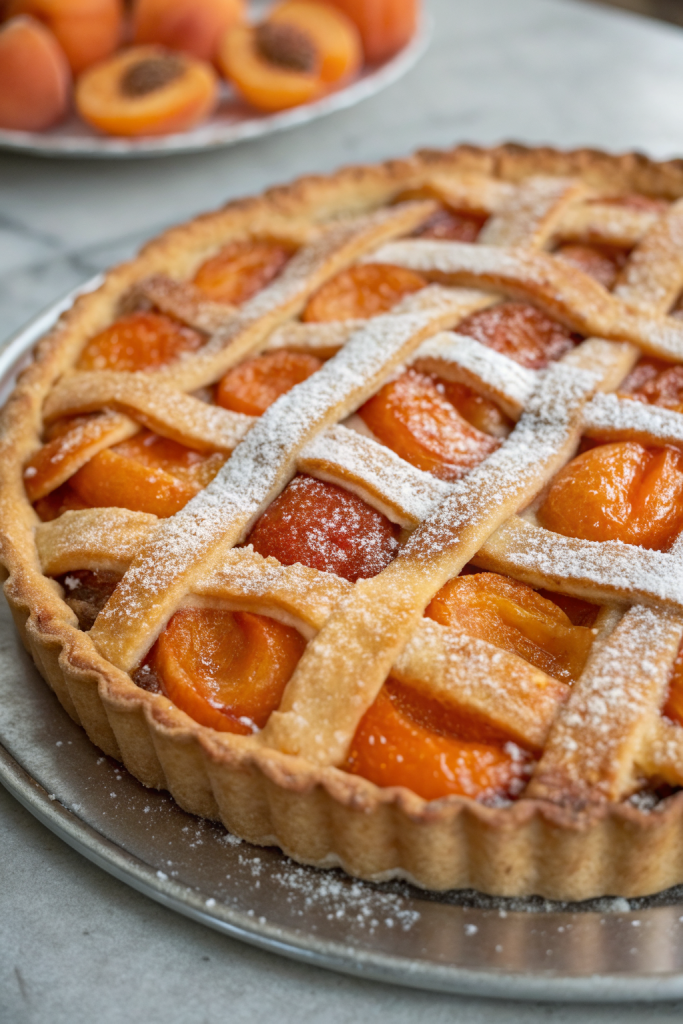
Classic Apricot Pie with Flaky Butter Crust tastes bright, buttery, and just tart enough to keep each bite interesting, not cloying. It works best for bakers who want a classic fruit pie that feels special but still fits into a weekend afternoon, with a total time of about 2½ hours including chilling and baking. I grew up in a house where summer meant sticky apricot fingers and flour on the counter, so this pie always feels like home to me.
Why Classic Apricot Pie with Flaky Butter Crust Is Worth It
Classic Apricot Pie with Flaky Butter Crust hits that perfect spot between sweet and tangy, with jammy fruit tucked into a shattering, buttery shell. The apricots soften into a thick, sunny filling that slices cleanly but still feels juicy and soft.
You also mix the dough in minutes and chill it while you prep the fruit, so the recipe fits into a relaxed afternoon baking session. The pie looks impressive enough for guests but stays simple enough for a casual family dessert with vanilla ice cream.
“This Classic Apricot Pie with Flaky Butter Crust tastes like a bakery showstopper but bakes up with weeknight effort. ★★★★★”
Ingredients You Need
Pie Crust Ingredients (Flaky Butter Crust)
- 2½ cups (300 g) all-purpose flour (use unbleached if possible; King Arthur or Gold Medal both work great)
- 1 tablespoon granulated sugar
- 1 teaspoon fine sea salt
- 1 cup (2 sticks / 226 g) cold unsalted butter, cut into ½-inch cubes (use a good-quality butter like Kerrygold or Plugrá for extra flavor)
- ½ cup (120 ml) ice water, plus 1–2 tablespoons extra as needed
- 1 tablespoon apple cider vinegar or white vinegar (helps keep the crust tender)
Apricot Filling
- 6–7 cups fresh apricots, pitted and sliced (about 2½–3 pounds; slightly firm fruit works best)
- ¾–1 cup granulated sugar, to taste (use ¾ cup for very ripe, sweet apricots; bump up to 1 cup for tart fruit)
- ¼ cup light brown sugar, packed (adds caramel depth)
- ¼ cup cornstarch (or ⅓ cup tapioca starch for a clearer, glossy filling)
- ½ teaspoon fine sea salt
- 1 teaspoon pure vanilla extract
- ½ teaspoon almond extract (optional but highly recommended; it pairs beautifully with apricots)
- 1 tablespoon fresh lemon juice (brightens the flavor and balances sweetness)
- 1 teaspoon lemon zest (optional, but adds a nice citrus note)
Egg Wash & Topping
- 1 large egg
- 1 tablespoon milk or heavy cream
- 1–2 tablespoons coarse sugar or turbinado sugar, for sprinkling on top
Pantry Shortcuts & Sub Notes
- Use frozen apricots if fresh ones stay out of season; thaw them fully and drain off excess liquid before mixing with sugar.
- Use a store-bought refrigerated pie crust in a pinch; still use the apricot filling and egg wash instructions to keep the flavor on point.
- Swap half the apricots with sliced peaches for a mixed stone fruit pie that still uses the same thickener and bake time.
Equipment List
- 9-inch standard pie dish (glass or metal; avoid very deep-dish pans for this amount of filling)
- Large mixing bowls
- Pastry cutter, two forks, or a food processor for the crust
- Rolling pin
- Bench scraper or thin spatula (helps move dough easily)
- Measuring cups and spoons
- Microplane or small grater (for lemon zest)
- Sharp knife and cutting board
- Small bowl and pastry brush (for egg wash)
- Aluminum foil and/or pie shield (to protect crust edges)
- Cooling rack
Quick Tips & substitutions
- Chill the butter and even the flour for 15–20 minutes before mixing the crust to keep it extra flaky.
- Use a glass pie dish if possible, so you can check that the bottom crust browns nicely.
- Taste an apricot slice before mixing the filling and adjust sugar based on how tart the fruit tastes.
- Use tapioca starch instead of cornstarch if you want a clearer, slightly bouncier filling texture.
- Slice apricots into wedges about ½ inch thick so they hold shape but still soften nicely.
- Keep the dough cold; if it softens while you roll, slide it into the fridge for 10 minutes.
- Vent the top crust generously with slits or a lattice to let steam escape and prevent a soggy interior.
- Place the pie dish on a parchment-lined baking sheet to catch drips and keep your oven clean.
- Bake until the filling bubbles in the center, not just at the edges, so the starch thickens fully.
- Cool the pie at least 3 hours before slicing so the filling sets and slices hold shape.
How to Make Classic Apricot Pie with Flaky Butter Crust
Step 1: Mix the Flaky Butter Crust
Add flour, sugar, and salt to a large bowl and whisk to combine. Toss in the cold butter cubes and cut them into the flour with a pastry cutter or your fingertips until you see pea-sized bits and some larger, flat shards.
Stir the vinegar into the ice water. Drizzle about ½ cup of the ice water over the flour mixture and toss gently with a fork until the dough starts to clump. Add an extra tablespoon or two of water only if dry flour remains at the bottom of the bowl.
Press the dough together with your hands and divide it into two equal discs. Wrap each disc tightly in plastic wrap or a reusable wrap and chill them in the fridge for at least 1 hour, or up to 2 days.
Step 2: Prepare the Apricot Filling
Place the sliced apricots in a large bowl. Add granulated sugar, brown sugar, cornstarch (or tapioca starch), salt, lemon juice, lemon zest, vanilla, and almond extract.
Stir gently until the apricot slices coat evenly and no dry pockets of starch remain. Let the mixture sit for 10–15 minutes while you roll the crust so the fruit starts to release some juices.
Step 3: Roll Out the Bottom Crust
Lightly flour your work surface and rolling pin. Unwrap one disc of dough and place it on the floured surface; tap it a few times with the rolling pin to soften slightly.
Roll from the center outward, turning the dough a quarter turn every few rolls, until you get a circle about 12 inches wide. Dust lightly with flour as needed to prevent sticking, but keep the dough as soft and supple as possible.
Loosely roll the dough around the rolling pin and unroll it over your 9-inch pie dish. Ease the dough into the corners of the dish with your fingers instead of stretching it, and let the excess hang over the edges.
Step 4: Fill the Pie
Give the apricot filling a quick stir. Spoon the fruit into the crust and scrape in most of the juices, but leave behind a tablespoon or two if the mixture looks very watery.
Mound the fruit slightly higher in the center since it will cook down in the oven. Chill the filled bottom crust in the fridge while you roll the top crust so the butter stays cold.
Step 5: Roll and Add the Top Crust
Roll the second disc of dough into another 12-inch circle. You can keep it whole for a classic double crust or slice it into strips for a lattice.
If you use a full top crust, drape it over the fruit and trim the excess dough from both crusts, leaving about 1 inch overhang. Fold the edges under themselves to seal, then crimp with your fingers or a fork. Cut several slits in the top to vent steam.
If you choose a lattice, cut the rolled dough into strips about ¾–1 inch wide. Lay half the strips across the pie in one direction, then weave the remaining strips over and under to form a lattice. Trim, fold, and crimp the edges as with a full crust.
Step 6: Chill the Assembled Pie
Place the assembled pie in the fridge for 20–30 minutes while you heat the oven. This quick chill firms the butter and helps the crust hold its shape.
Preheat the oven to 425°F (220°C) with a rack in the lower third. Set a parchment-lined baking sheet on the rack to heat up with the oven; this helps crisp the bottom crust.
Step 7: Add Egg Wash and Sugar
Beat the egg with the milk or cream in a small bowl until smooth. Brush the mixture lightly over the top crust and edges; coat evenly but avoid pooling in crevices.
Sprinkle coarse sugar over the top for sparkle and crunch. Slide the chilled pie onto the hot baking sheet in the oven.
Step 8: Bake the Pie
Bake at 425°F (220°C) for 20 minutes to set the crust and encourage browning. Reduce the oven temperature to 375°F (190°C) and continue baking for 35–45 minutes.
Tent the edges with foil or use a pie shield if they brown too quickly. Bake until the crust looks deeply golden and the filling bubbles vigorously in the center of the pie.
Step 9: Cool and Slice
Transfer the baked pie to a cooling rack. Let it cool at room temperature for at least 3 hours so the filling thickens and slices stay neat.
Slice with a sharp knife, wiping the blade between cuts if the filling clings. Serve the Classic Apricot Pie with Flaky Butter Crust slightly warm or at room temperature.
Recipe Variations
- Use a gluten-free 1:1 baking flour in the crust and tapioca starch in the filling for a gluten-free Classic Apricot Pie with Flaky Butter Crust.
- Swap the butter with a high-fat vegan butter and brush the crust with a mix of plant milk and maple syrup for a vegan version.
- Cut the sugar by ¼ cup and add extra lemon juice for a lower-sugar, more tart pie.
- Add ½ teaspoon ground cardamom or cinnamon to the filling for a warm spice twist.
- Mix in a cup of sliced strawberries or raspberries with the apricots for a mixed fruit pie.
Ways to Serve Classic Apricot Pie with Flaky Butter Crust
- Serve warm slices with a scoop of vanilla ice cream or dairy-free vanilla frozen dessert.
- Pair with a dollop of lightly sweetened whipped cream or coconut whipped cream.
- Plate with a spoonful of Greek yogurt and a drizzle of honey for a brunch-style dessert.
- Enjoy a chilled slice straight from the fridge with a hot cup of coffee or herbal tea.
Storage Success
Let the Classic Apricot Pie with Flaky Butter Crust cool completely before you cover it, so condensation does not make the crust soggy. Keep the pie loosely covered at room temperature for up to 1 day, then move it to the fridge for another 2–3 days. Reheat individual slices in a 325°F (165°C) oven or toaster oven for 10–15 minutes to crisp the crust again. Freeze leftover slices tightly wrapped for up to 2 months and reheat them straight from the freezer until hot and bubbly.
Classic Apricot Pie with Flaky Butter Crust
Ingredients
Instructions
- In a large bowl, whisk together the flour, granulated sugar, and salt.
- Add the cold butter cubes and cut them into the flour with a pastry cutter or your fingertips until the mixture has pea-sized pieces of butter and some larger flat shards.
- Stir the vinegar into the ice water. Drizzle about 1/2 cup of the ice water over the flour mixture and toss gently with a fork until the dough starts to clump together, adding an extra tablespoon or two of water only if dry flour remains at the bottom of the bowl.
- Press the dough together with your hands, divide it into two equal discs, wrap each tightly, and chill for at least 1 hour and up to 2 days.
- Place the sliced apricots in a large bowl. Add the granulated sugar, brown sugar, cornstarch, salt, lemon juice, lemon zest, vanilla, and almond extract if using.
- Stir gently until the apricots are evenly coated and no dry pockets of starch remain. Let the mixture sit for 10–15 minutes while you roll out the crust.
- Lightly flour your work surface and rolling pin. Unwrap one disc of dough, place it on the floured surface, and tap it a few times with the rolling pin to soften slightly.
- Roll from the center outward, turning the dough a quarter turn every few rolls, until you have a circle about 12 inches wide, dusting lightly with flour as needed to prevent sticking.
- Loosely roll the dough around the rolling pin and unroll it over a 9-inch pie dish. Ease the dough into the corners without stretching it and let the excess hang over the edges.
- Give the apricot filling a quick stir. Spoon the fruit into the bottom crust and scrape in most of the juices, leaving behind a tablespoon or two if the mixture looks very watery.
- Mound the fruit slightly higher in the center. Chill the filled crust in the refrigerator while you roll out the top crust.
- Roll the second disc of dough into another 12-inch circle. For a classic double crust, drape it over the fruit.
- Trim the excess dough from both crusts, leaving about 1 inch overhang. Fold the edges under to seal, then crimp with your fingers or a fork.
- Cut several slits in the top crust to vent steam. If making a lattice, cut the dough into strips, weave them over the filling, then trim, fold, and crimp the edges in the same way.
- Chill the assembled pie in the refrigerator for 20–30 minutes.
- Meanwhile, preheat the oven to 425°F (220°C) with a rack in the lower third. Place a parchment-lined baking sheet on the rack to heat.
- In a small bowl, beat the egg with the milk or heavy cream. Brush the mixture lightly over the top crust and edges, avoiding pools in crevices.
- Sprinkle the top with coarse or turbinado sugar. Place the chilled pie on the hot baking sheet in the oven.
- Bake at 425°F (220°C) for 20 minutes, then reduce the oven temperature to 375°F (190°C) and continue baking for 35–45 minutes, tenting the edges with foil if they brown too quickly, until the crust is deeply golden and the filling bubbles in the center.
- Transfer the pie to a cooling rack and let it cool at room temperature for at least 3 hours so the filling can set.
- Slice with a sharp knife, wiping the blade between cuts if needed. Serve slightly warm or at room temperature, on its own or with vanilla ice cream or whipped cream.
Notes
Approximate per serving (1 of 8 slices): 420–460 calories; fat 22–25 g; saturated fat 13–15 g; carbohydrates 54–58 g; fiber 3–4 g; sugars 26–30 g; protein 5–6 g; sodium 260–320 mg. Values will vary based on exact sugar amount, butter brand, and crust thickness.