
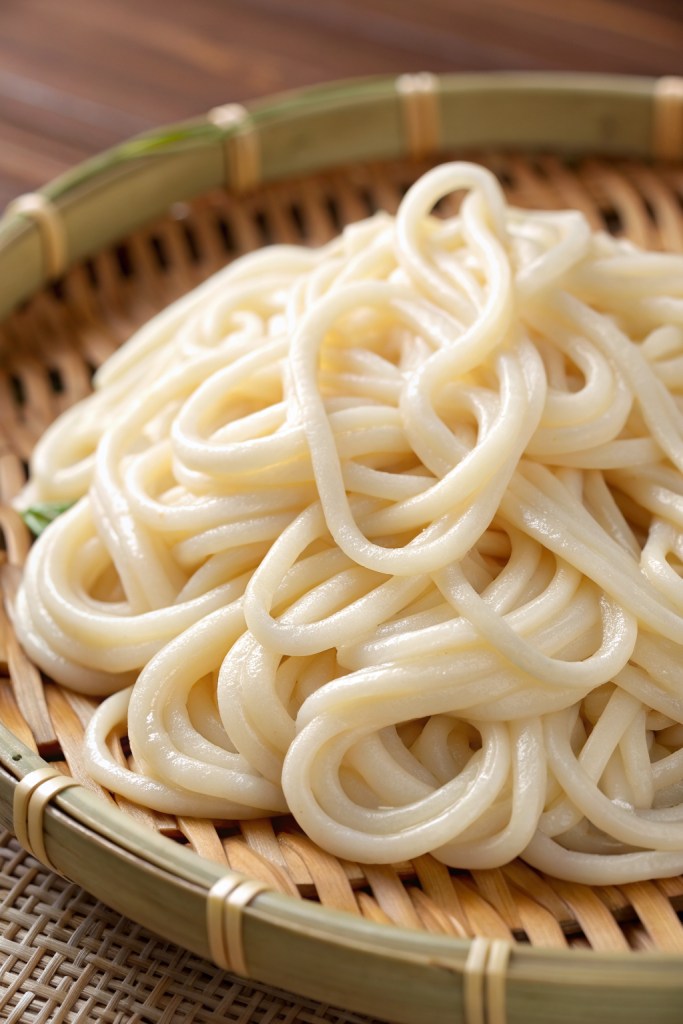
Homemade Udon Noodles Recipe gives you thick, chewy, slurpable noodles that taste bouncy, wheaty, and wildly better than anything from a packet. This recipe suits anyone who loves Japanese comfort food and wants a from-scratch project that takes about 1 hour of active time plus resting. I still remember the first time I kneaded udon dough with my feet in my tiny apartment kitchen and laughed at how ridiculous yet satisfying it felt.
Why Make This Homemade Udon Noodles Recipe at Home
Homemade udon noodles taste springy, chewy, and fresh in a way dried or frozen noodles never match. You control the texture, salt level, and thickness, so the noodles fit your favorite broth or stir fry.
You also use simple pantry ingredients: flour, salt, and water. The process feels relaxing and oddly fun, especially when you knead the dough in a bag with your feet like a noodle-making dance party.
“These homemade udon noodles turned out thick, chewy, and restaurant-level delicious, and my whole family slurped them in silence. ★★★★★”
Ingredients You Need
For the udon noodle dough
- All-purpose flour, 3 cups (360 g)
- Use a higher protein flour like bread flour for extra chew.
- Use unbleached flour if possible for better flavor.
- Kosher salt, 1 tablespoon
- Use fine sea salt if you prefer, but reduce slightly since it tastes saltier.
- Water, 1 cup (240 ml), room temperature
- Start with 3/4 cup and add more a tablespoon at a time until the dough comes together.
Pantry shortcuts and substitutions
- Use bread flour for very bouncy, chewy noodles.
- Use half all-purpose flour and half bread flour for a nice balance of tenderness and chew.
- Use a stand mixer with a dough hook if you do not want to knead by hand or with your feet.
- If you only have table salt, use 2 to 2 1/2 teaspoons instead of a full tablespoon.
For cooking the noodles
- Water, a large pot full, well salted
- Neutral oil, 1 teaspoon (optional, to keep cooked noodles from sticking)
Optional simple broth to serve with the noodles
You can pair this Homemade Udon Noodles Recipe with a quick, light broth.
- Low sodium vegetable or chicken broth, 4 cups
- Soy sauce, 2 to 3 tablespoons
- Mirin or a mild sweetener like sugar or honey, 1 to 2 teaspoons
- Green onions, thinly sliced, for topping
- Toasted sesame oil, a few drops, for aroma
- Any quick veggies: sliced mushrooms, spinach, napa cabbage, or bok choy
Equipment list
- Large mixing bowl
- Measuring cups and spoons or a kitchen scale
- Zip top bag or thick plastic bag for foot kneading
- Clean kitchen towel or plastic wrap
- Rolling pin
- Sharp knife or pizza cutter
- Large cutting board or clean counter
- Large pot for boiling noodles
- Colander or strainer
- Tongs or chopsticks
Tips & Mistakes
- Use enough salt in the dough, since it strengthens the gluten and improves chew.
- Rest the dough at least 30 to 60 minutes, so the gluten relaxes and the dough rolls out easily.
- Knead longer than you think, about 8 to 10 minutes, to build a smooth, elastic dough.
- Avoid adding too much water; the dough should feel firm and slightly stiff, not sticky.
- Dust with flour lightly when you roll and cut, so the noodles do not glue themselves together.
- Cut the noodles slightly thicker than you think, since they swell as they cook.
- Boil in plenty of water and stir often, so the noodles do not clump.
- Rinse cooked noodles briefly under cool water if you want a cleaner, less starchy bite.
- Do not overcook; pull a noodle and taste after 8 minutes, then every minute until it feels chewy.
- Cook noodles just before serving, since they taste best fresh and hot.
How to Make Homemade Udon Noodles Recipe
Step 1: Mix the dough
Add flour and salt to a large mixing bowl and whisk to combine. Pour in about 3/4 cup of the water and mix with your hand or chopsticks until shaggy clumps form. Add more water a tablespoon at a time until the dough holds together in a rough ball.
Turn the dough onto a lightly floured surface and press it together. Knead by hand for 2 to 3 minutes until it forms a rough, stiff ball. Place the dough in a zip top bag, press out the air, and seal it.
Step 2: Knead with your feet
Wrap the bag in a clean kitchen towel. Place it on the floor and gently step on it with clean feet, pressing and flattening the dough. Fold the dough over on itself inside the bag and repeat the stepping.
Continue this foot kneading for about 5 to 7 minutes until the dough feels smooth and very firm. This method uses your body weight and saves your arms. It also gives you a fun story to tell anyone who eats your Homemade Udon Noodles Recipe.
Step 3: Rest the dough
Shape the dough into a ball, keep it in the bag, and seal again. Let the dough rest at room temperature for 30 to 60 minutes. This rest period softens the dough and makes rolling much easier.
If your kitchen feels very warm, rest the dough closer to 30 minutes. If it feels cool, go closer to 60 minutes. You can also rest it in the fridge for a few hours, then bring it back to room temperature before rolling.
Step 4: Divide and roll
Remove the dough from the bag and place it on a lightly floured surface. Cut it into two equal pieces so you handle smaller portions. Keep one piece covered with a towel while you work with the other.
Use a rolling pin to roll the dough into a rectangle about 1/8 inch thick. Rotate the dough often and dust with a little flour so it does not stick. Aim for an even thickness so the noodles cook at the same rate.
Step 5: Fold and cut the noodles
Dust the surface of the dough with flour. Fold the rectangle into thirds like a letter, short side over the center, then the other side over that. This fold makes cutting easier and keeps the strips more uniform.
Use a sharp knife or pizza cutter to slice the folded dough into strips about 1/4 inch wide for classic thick udon. Gently unfold the strips into long noodles and toss them with a little flour so they do not stick. Repeat with the second half of the dough.
Step 6: Boil the noodles
Bring a large pot of water to a strong boil and salt it generously. Shake excess flour off the noodles and add them to the pot, stirring right away so they separate. Keep the water at a steady boil and stir every couple of minutes.
Cook for 8 to 12 minutes, depending on thickness, until the noodles taste chewy but cooked through. Pull one noodle, rinse it quickly under cool water, and bite it to check. When they reach your favorite texture, drain them in a colander.
Step 7: Rinse and prep for serving
Rinse the noodles briefly under cool water to remove extra starch and stop the cooking. Toss them with a teaspoon of neutral oil if you plan to hold them for a few minutes. This step keeps them from sticking in a big clump.
If you want hot noodles in hot broth, dip them in hot water again for 20 to 30 seconds right before serving. This quick reheat keeps the texture bouncy. Then you can slide them into your bowl of broth or sauce.
Step 8: Sauté veggies and aromatics
Heat oil in a large stock pot or Dutch oven over medium heat. Once hot, add onions and carrots; cook until soft, about 8 minutes. Stir in garlic, ginger, harissa, coriander, and turmeric; cook 2 minutes, until aromatic. Season with salt.
You can pour in broth after the aromatics soften and simmer for 10 to 15 minutes. Taste and adjust soy sauce or salt. Add your cooked Homemade Udon Noodles Recipe to this flavorful pot right before serving.
Variations I've Tried
I swap a portion of the flour with whole wheat flour, up to 25 percent, for a slightly nuttier flavor and a bit more bite. I also tried a mix of all-purpose flour and bread flour, which gave a very chewy, restaurant style udon texture. When I want quick stir fry noodles, I roll the dough a little thinner and cut narrower strips, so they soak up sauce more easily.
I also serve these noodles cold with a soy dipping sauce in warmer months. In that case, I rinse the noodles very well under cold water and chill them. The chew stays strong and the cold sauce feels refreshing.
How to Serve Homemade Udon Noodles Recipe
Serve your Homemade Udon Noodles Recipe in a hot soy based broth with green onions, sliced mushrooms, and a soft boiled egg on top. Add blanched bok choy, spinach, or napa cabbage for color and crunch. You can also stir fry the cooked noodles with a simple mix of soy sauce, garlic, and sesame oil, then toss in veggies like bell peppers and snap peas.
Kids usually love these thick noodles with a mild broth and a sprinkle of sesame seeds. If you want a lighter meal, serve the noodles chilled with a dipping sauce and some cucumber slices on the side.
How to store
- Store cooked udon noodles in an airtight container in the fridge for up to 3 days.
- Toss the noodles with a tiny bit of neutral oil before chilling, so they do not stick.
- Freeze uncooked, cut noodles on a floured tray until firm, then transfer to a freezer bag and keep up to 2 months.
- Reheat cooked noodles by dipping them in simmering broth or boiling water for 30 to 60 seconds until hot and chewy again.
- Avoid microwaving plain noodles for too long, since they can turn tough; if you use a microwave, heat them in broth or sauce and stir often.
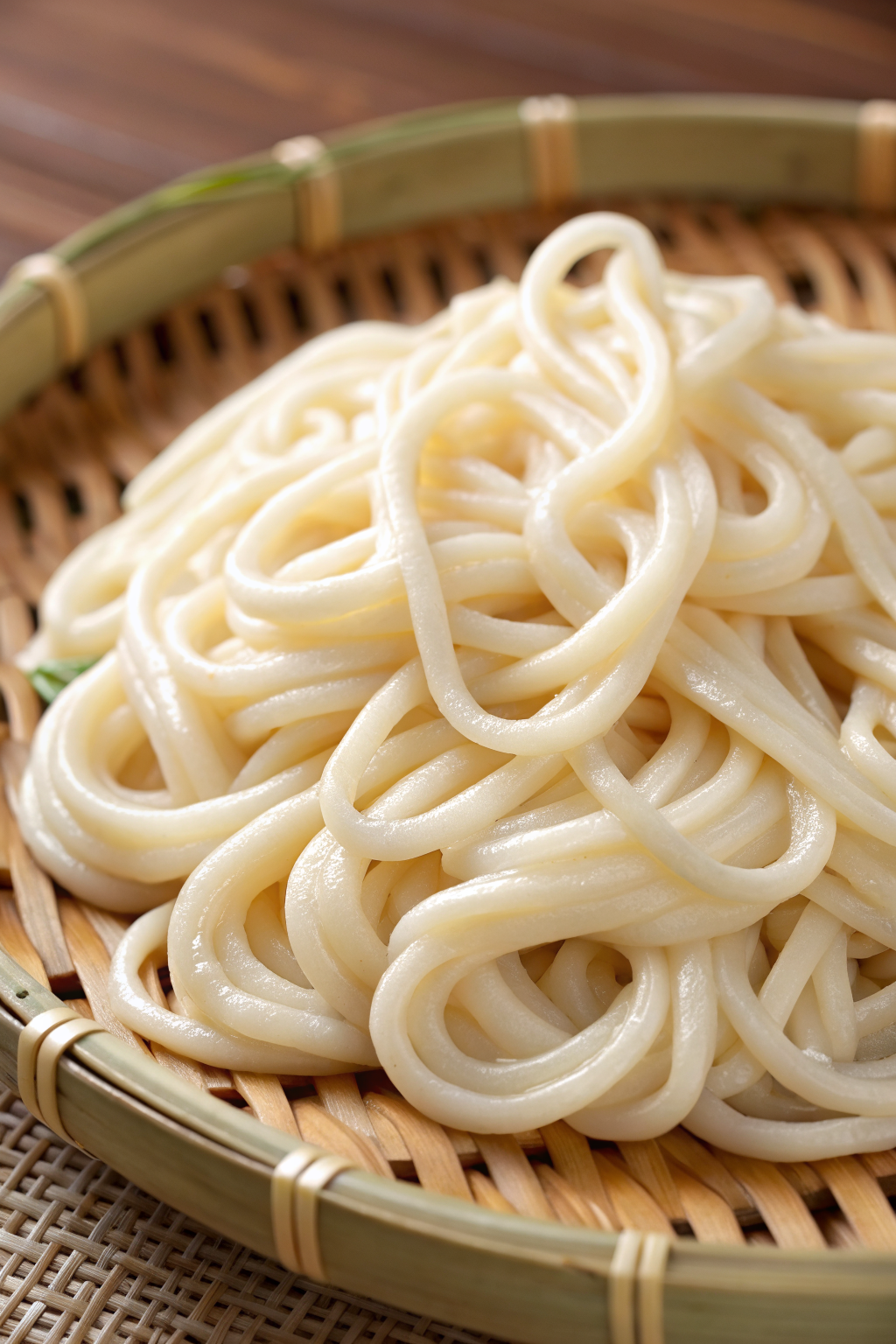
Homemade Udon Noodles Recipe
Ingredients
Instructions
- Add the flour and salt to a large mixing bowl and whisk to combine. Pour in about 3/4 cup of the water and mix with your hand or chopsticks until shaggy clumps form. Add more water a tablespoon at a time until the dough holds together in a rough ball.
- Turn the dough onto a lightly floured surface and press it together. Knead by hand for 2 to 3 minutes until it forms a rough, stiff ball. Place the dough in a zip top bag, press out the air, and seal it.
- Wrap the bag in a clean kitchen towel, place it on the floor, and gently step on it with clean feet, pressing and flattening the dough. Fold the dough over on itself inside the bag and repeat, kneading with your feet for about 5 to 7 minutes, until the dough feels smooth and very firm.
- Shape the dough into a ball, keep it in the bag, seal again, and let rest at room temperature for 30 to 60 minutes so the dough softens and becomes easier to roll.
- Remove the dough from the bag and place it on a lightly floured surface. Cut it into two equal pieces and keep one piece covered with a towel while you work with the other.
- Use a rolling pin to roll the dough into a rectangle about 1/8 inch thick, rotating often and dusting lightly with flour so it does not stick.
- Dust the surface of the rolled dough with flour, then fold the rectangle into thirds like a letter. Use a sharp knife or pizza cutter to slice the folded dough into strips about 1/4 inch wide. Gently unfold the strips into long noodles and toss with a little flour so they do not stick. Repeat with the remaining dough.
- Bring a large pot of salted water to a strong boil. Shake excess flour off the noodles and add them to the pot, stirring right away so they separate.
- Keep the water at a steady boil and stir every couple of minutes. Cook for 8 to 12 minutes, depending on thickness, until the noodles are chewy but cooked through. Taste a noodle to check for doneness.
- Drain the noodles in a colander and rinse briefly under cool water to remove extra starch and stop the cooking. Toss with a teaspoon of neutral oil if you need to hold them for a few minutes.
- To make a simple broth, combine the broth, soy sauce, and mirin or other sweetener in a pot. Bring to a simmer for 10 to 15 minutes, then taste and adjust seasoning with more soy sauce or salt as needed. Add any quick-cooking vegetables and simmer until just tender.
- For sautéed veggies and aromatics, heat oil in a large stock pot or Dutch oven over medium heat. Add onions and carrots and cook until soft, about 8 minutes. Stir in garlic, ginger, harissa, coriander, and turmeric; cook about 2 minutes, until aromatic. Season with salt to taste.
- Add the cooked udon noodles to the hot broth or to the pot with sautéed vegetables and aromatics just before serving. Top with green onions and a few drops of toasted sesame oil if desired.
Notes
Approximate per serving (noodles only, based on 4 servings): 320 calories; fat 1 g; saturated fat 0 g; carbohydrates 66 g; fiber 2 g; sugars 0 g; protein 9 g; sodium 890 mg (from salted dough and cooking water, actual absorbed sodium will be somewhat lower). Adding broth, oil, and toppings will change the values. Values are estimates and will vary based on brands, exact amounts, and portion size.
Leave a Reply