

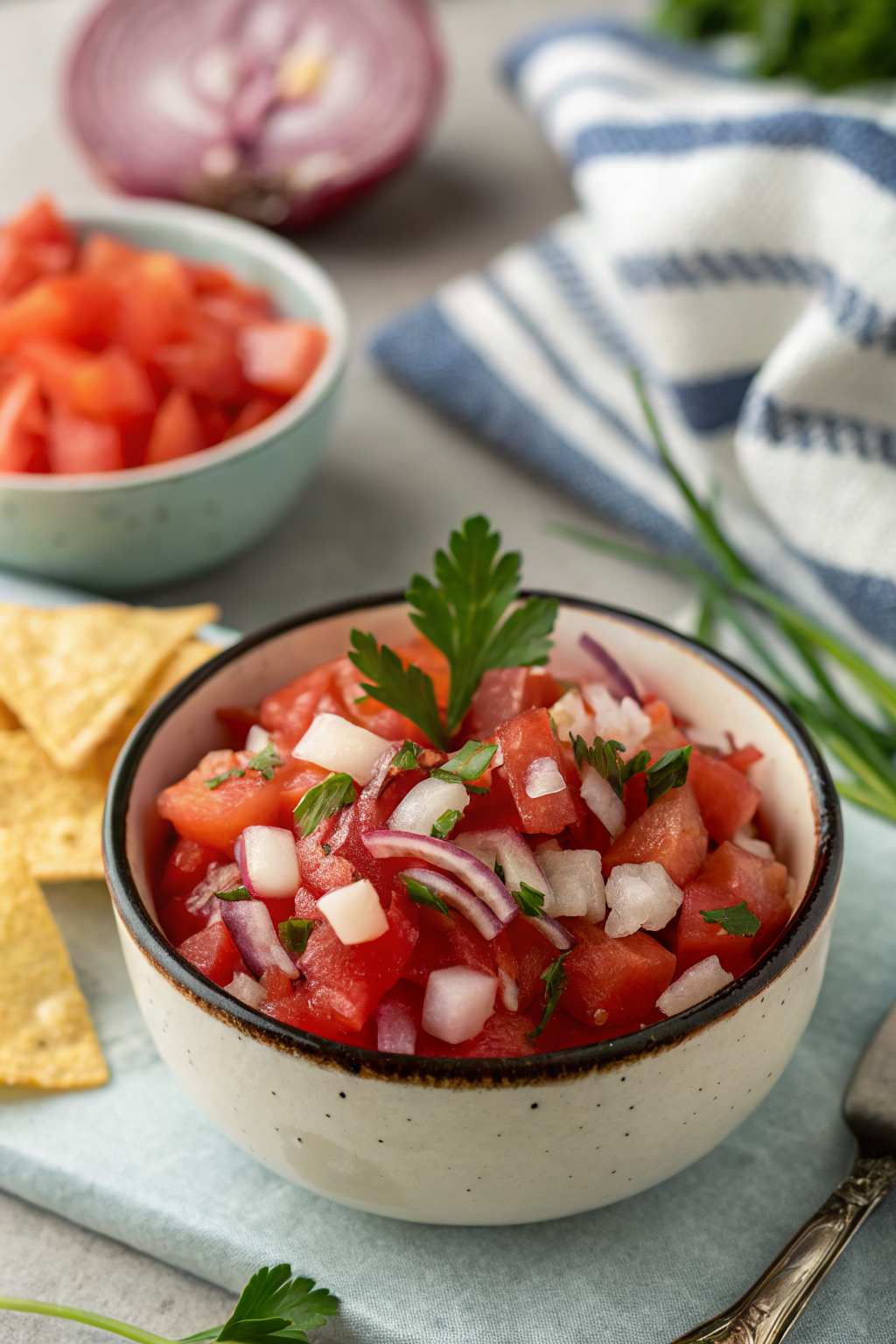
How To Make The Best Pico De Gallo tastes bright, fresh, salty, and a little spicy, like summer in a bowl with a tortilla chip as the spoon. It works for busy home cooks who want a quick, healthy salsa in under 15 minutes from start to finish. I’ve made some version of this salsa at least once a week for years, and my cutting boards can confirm it.
Why This Best Pico De Gallo Recipe Is Worth It
You mix just a handful of ingredients and end up with a salsa that tastes like you chopped it at a taco stand. It upgrades basic tacos, eggs, grilled chicken, and even a bowl of plain rice without much effort or cost.
You control the heat, the salt, and the texture, so it always matches your taste. Fresh pico de gallo also uses simple, real ingredients, which means big flavor without heavy sauces or mystery seasonings.
“This tastes exactly like my favorite taqueria salsa, but brighter and fresher my family now asks for it every single taco night. ★★★★★”
Ingredients You Need
Fresh ingredients:
- Ripe Roma tomatoes (about 5–6 medium)
- Roma tomatoes stay less watery than beefsteak tomatoes.
- Use vine tomatoes in a pinch, but scoop out more seeds.
- White onion (½ medium), very finely diced
- White onion gives a sharper flavor than yellow.
- Use red onion for a slightly sweeter bite and pretty color.
- Fresh jalapeños (1–2 peppers), seeded and minced
- Use serrano peppers for more heat.
- Keep some seeds if you like it spicy.
- Fresh cilantro (about ½ cup leaves, chopped)
- Use both leaves and tender stems for more flavor.
- If you hate cilantro, use flat-leaf parsley and a pinch of dried oregano.
- Fresh lime juice (from 1–2 limes)
- Use bottled 100% lime juice only if you run out of fresh limes.
- Taste and adjust; limes vary in tartness.
- Garlic (1 small clove), very finely minced or grated
- Use a microplane for a smooth, even garlic flavor.
- Skip garlic if you want a super classic, clean pico.
Pantry staples:
- Kosher salt
- Use fine sea salt if you prefer, but start with a smaller amount.
- Black pepper (optional, freshly ground)
- Pinch of sugar (optional, balances acidity if tomatoes taste flat)
Optional add-ins:
- Diced cucumber for crunch
- Diced avocado for a chunky salsa fresca
- A tiny splash of orange juice for a subtle sweetness
Equipment:
- Sharp chef’s knife (this matters more than any fancy gadget)
- Cutting board (use one with a groove if your tomatoes run juicy)
- Medium mixing bowl
- Spoon or spatula for mixing
- Citrus juicer or reamer (optional but handy)
- Small tasting spoon (you need to taste and adjust like a pro)
Quick Tips & substitutions
- Use the ripest, firm tomatoes you can find; soft and mealy tomatoes give a mushy pico de gallo.
- Seed the tomatoes and jalapeños to avoid watery salsa; keep some seeds if you love heat.
- Rinse chopped onion under cold water, then drain, to mellow sharpness without losing crunch.
- Chop everything small and even so each bite tastes balanced.
- Add lime juice and salt in stages; taste after each mix so you never oversalt.
- Use red onion and serrano peppers when you want a punchier, more intense flavor.
- Skip cilantro and use parsley plus a pinch of dried oregano if cilantro tastes soapy to you.
- Stir in diced avocado right before serving so it stays bright and creamy.
- Chill the pico de gallo for 15–20 minutes before serving to let flavors blend.
- Use bottled lime juice only in emergencies, and add extra cilantro and salt to boost flavor.
How To Make Pico De Gallo
Step 1: Prep and dice the tomatoes
Rinse the tomatoes, then slice them in half lengthwise. Scoop out most of the seeds and watery pulp with a spoon or your fingers. Dice the tomato flesh into small, even pieces, about ¼-inch, and add them to a mixing bowl.
Step 2: Finely chop onion and jalapeño
Peel and finely dice the onion; aim for tiny pieces so it blends rather than dominates. Rinse the diced onion under cold water in a small strainer, then shake off excess water and add it to the bowl. Slice the jalapeños in half, scrape out seeds and membranes if you want mild heat, then mince them very finely and add to the bowl.
Step 3: Add cilantro, garlic, and lime
Chop the cilantro, including tender stems, into small pieces and add it to the bowl. Mince or grate the garlic into a paste so it spreads evenly and does not clump. Squeeze fresh lime juice over the mixture, starting with the juice of one lime.
Step 4: Season and mix
Sprinkle in kosher salt, a little black pepper if you like, and a tiny pinch of sugar if your tomatoes taste bland. Gently fold everything together with a spoon so you keep the tomato pieces intact. Taste a chipful and adjust salt and lime until the pico de gallo tastes bright and balanced.
Step 5: Rest and serve
Cover the bowl and chill the pico de gallo in the fridge for about 15–20 minutes. This short rest lets the salt draw out tomato juices and helps the flavors meld. Give it one last stir and taste check, then serve with chips, tacos, or anything that needs a hit of freshness.
Recipe Variations
- Extra spicy: Use serrano peppers instead of jalapeños, or keep some seeds and ribs in the mix.
- Mild version: Use only one jalapeño, fully seeded, or swap in a small poblano pepper.
- Low carb focus: Skip the sugar and pair with grilled meats, lettuce wraps, or cauliflower rice.
- No cilantro: Use flat-leaf parsley and a pinch of dried oregano or ground cumin.
- Fruit twist: Add diced mango, pineapple, or peach for a sweet-and-spicy salsa.
- Avocado pico: Fold in diced avocado right before serving for a chunkier, creamy texture.
- Onion swap: Use red onion for a sweeter crunch or green onions for a milder bite.
- Smoky style: Add a pinch of smoked paprika or a bit of minced chipotle in adobo.
Ways to Serve Pico De Gallo
- Spoon over tacos, burrito bowls, quesadillas, and nachos.
- Top scrambled eggs, omelets, breakfast burritos, or chilaquiles.
- Serve with tortilla chips, pita chips, or crisp veggie sticks.
- Add to grilled chicken, steak, shrimp, or fish for instant freshness.
- Stir into cooked rice or quinoa with black beans for a quick side.
- Use as a topping for baked potatoes or sweet potatoes with a little cheese.
Storage Success
Store pico de gallo in an airtight container in the fridge, and use it within 2–3 days for the best flavor and texture. The tomatoes release more juice as it sits, so give it a good stir before serving and taste for salt and lime again. If it looks a bit watery, spoon some liquid off the top or use that flavorful juice as a quick dressing over rice or salads. Add any avocado or extra fruit right before serving so everything stays fresh and bright.
How To Make The Best Pico De Gallo
Ingredients
Instructions
- Rinse the Roma tomatoes, slice them in half lengthwise, and scoop out most of the seeds and watery pulp. Dice the tomato flesh into small, even 1/4-inch pieces and add them to a medium mixing bowl.
- Peel and very finely dice the white onion. Rinse the diced onion under cold water in a small strainer, then shake off excess water and add the onion to the bowl with the tomatoes.
- Slice the jalapeños in half, scrape out the seeds and membranes for milder heat if desired, then mince the peppers very finely. Add the minced jalapeños to the bowl.
- Chop the cilantro, including tender stems, into small pieces and add it to the bowl. Mince or grate the garlic into a paste so it distributes evenly, then add it as well. Squeeze in the juice of 1 lime to start.
- Season the mixture with kosher salt, a little black pepper if using, and a small pinch of sugar only if the tomatoes taste flat. Gently fold everything together with a spoon, keeping the tomato pieces as intact as possible.
- Taste the pico de gallo with a chip and adjust with more lime juice and salt until it tastes bright, fresh, and balanced.
- Cover the bowl and chill the pico de gallo in the refrigerator for 15–20 minutes to let the flavors meld. Stir once more, taste and adjust seasoning if needed, then serve with chips, tacos, eggs, grilled meats, or over rice.
Notes
Approximate per 1/4-cup serving (about 6 servings total): 15–20 calories; fat 0 g; saturated fat 0 g; carbohydrates 4 g; fiber 1 g; sugars 2 g; protein 1 g; sodium 150–220 mg (depending on salt used). Values are estimates and will vary based on exact tomato size, amount of lime juice, salt level, and any optional add-ins like avocado or fruit.
Leave a Reply