
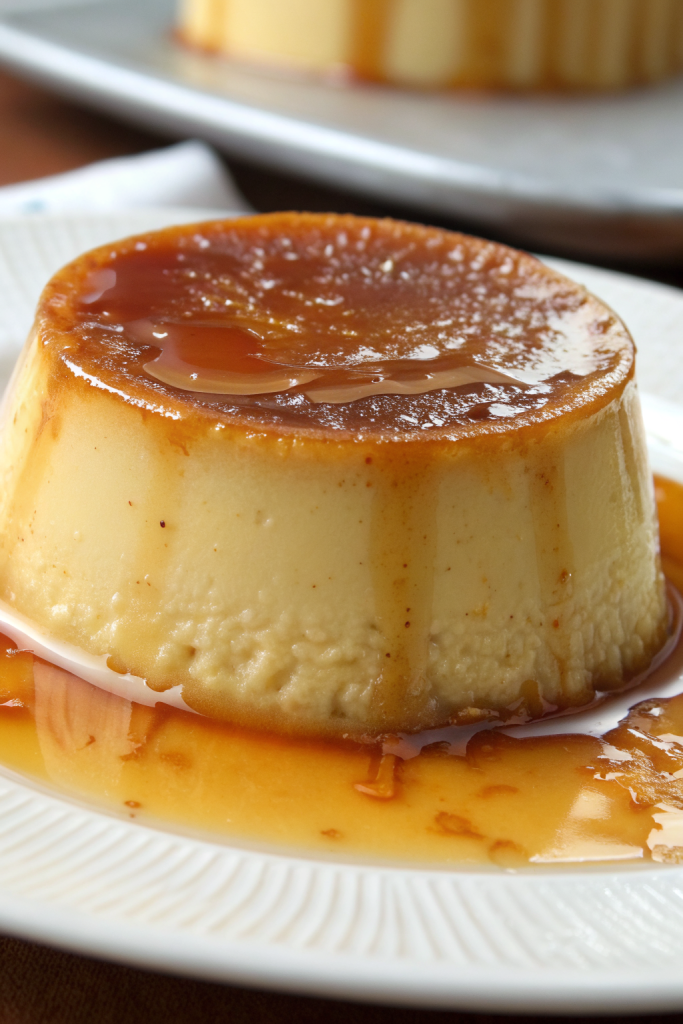
Japanese Silky Custard Purin Recipe tastes like a cross between crème caramel and flan, but lighter, silkier, and gently sweet with a deep caramel top. It works perfectly for anyone who loves custard desserts and wants a make-ahead treat in about 1 hour total time, mostly hands off. I first fell in love with purin in a tiny Tokyo coffee shop, and I have chased that same wobble ever since.
Why Make This Japanese Silky Custard Purin Recipe at Home
Homemade purin gives you that ultra-smooth, barely-set custard that many store-bought cups never quite match. You control the sweetness, the wobble level, and the caramel color, so each batch fits your taste.
You also skip additives and keep the ingredient list short and simple. Once you learn the method, you can whip up a tray of purin with ingredients you probably already keep in your kitchen.
This Japanese Silky Custard Purin Recipe tastes incredibly smooth, gently sweet, and restaurant-level fancy while staying totally doable at home. ★★★★★
Ingredients You Need
For the caramel
- 1/2 cup (100 g) granulated sugar
- 2 tablespoons water
- 1 tablespoon hot water, to loosen the caramel at the end
I like standard white granulated sugar here, not brown sugar, because it gives a clean caramel flavor and a clear color. Use a light-colored saucepan so you see the color change easily.
For the custard
- 2 cups (480 ml) whole milk, room temperature
- 1/2 cup (120 ml) heavy cream, room temperature
- 3 large eggs, room temperature
- 2 large egg yolks, room temperature
- 1/2 cup (100 g) granulated sugar
- 1 teaspoon vanilla extract or 1/2 vanilla bean, scraped
- Small pinch of fine sea salt
Whole milk and cream give the signature silky texture. If you need a lighter version, swap the cream for more whole milk, but the custard will feel a bit less rich. Avoid skim milk, since it makes the purin watery and less smooth.
You can use vanilla extract, vanilla paste, or a scraped vanilla bean. I like vanilla paste when I want those pretty specks without the cost of a whole bean. Use fine sea salt, not coarse salt, so it dissolves quickly and seasons the custard evenly.
Equipment
- 4 to 6 heatproof ramekins or small pudding cups
- 4 larger ramekins (6 ounce) give thicker purin
- 6 smaller ramekins (4 ounce) give daintier portions
- 1 medium light-colored saucepan for caramel
- 1 medium saucepan for heating milk mixture
- 1 large heatproof bowl
- Fine mesh strainer
- Whisk
- Kettle or small pot for hot water
- Large baking dish or roasting pan for the water bath
- Aluminum foil
- Kitchen towel
I prefer ceramic ramekins because they hold heat gently and help the custard set evenly. Glass works too, but watch the baking time closely since glass can hold heat longer.
Tips & Mistakes
- Warm the milk and cream gently and stop before it boils, or you risk a grainy texture.
- Strain the custard through a fine mesh sieve so you catch any egg bits and keep the purin ultra smooth.
- Stir the caramel gently and watch the color closely, since it can jump from golden to bitter very quickly.
- Swirl the pan instead of stirring aggressively once the sugar starts to color, so you avoid crystallized caramel.
- Pour the hot caramel into ramekins right away, because it firms up fast and turns too thick to spread.
- Use room temperature eggs so they blend smoothly into the warm milk without shocking and curdling.
- Whisk the custard gently and avoid whipping in lots of air, or you get bubbles and a sponge-like texture.
- Tap the filled ramekins lightly on the counter to pop surface bubbles before baking.
- Keep the water bath hot but not boiling, since boiling water can overcook the edges and cause cracks.
- Cover the pan loosely with foil to prevent a skin from forming on top of the purin.
- Chill the purin at least 4 hours, ideally overnight, or it will taste too loose and eggy.
- Slide a thin knife around the edge before unmolding so the custard releases cleanly with the caramel.
How to Make Japanese Silky Custard Purin Recipe
Step 1: Make the caramel
Add 1/2 cup sugar and 2 tablespoons water to a light-colored saucepan. Set the pan over medium heat and stir gently until the sugar dissolves and the mixture turns clear. Stop stirring and swirl the pan occasionally while the syrup cooks.
Watch the color shift from pale yellow to amber. When it reaches a deep amber color and smells nutty, turn off the heat. Quickly add 1 tablespoon hot water and swirl carefully, since it can bubble up.
Immediately pour the caramel into the bottom of your ramekins, dividing it evenly. Tilt and swirl each ramekin so the caramel coats the bottom in a thin layer. Set the ramekins aside while you prepare the custard.
Step 2: Heat the milk mixture
Add the milk and cream to a medium saucepan. Warm over medium-low heat until small bubbles form around the edges and steam rises, about 3 to 5 minutes. Take the pan off the heat.
Stir in the vanilla and a pinch of salt. If you use a vanilla bean, add the seeds and pod while heating, then remove the pod before you mix the custard. Let the milk mixture sit a minute so it cools slightly before you add eggs.
Step 3: Mix the egg base
In a large heatproof bowl, whisk the eggs, egg yolks, and sugar until the mixture looks smooth and slightly lighter in color. Whisk just enough to combine and dissolve the sugar, but do not whip in lots of air. You want a silky mixture, not a foamy one.
Slowly pour a small amount of the warm milk mixture into the egg mixture while you whisk constantly. This step gently warms the eggs so they do not scramble. Keep adding the milk mixture in a thin stream until it all combines.
Step 4: Strain and rest the custard
Place a fine mesh strainer over a clean bowl or large measuring cup. Pour the custard through the strainer to catch any cooked egg bits or foam. This step makes a huge difference in the final texture.
Skim off any remaining bubbles on the surface with a spoon. Let the custard sit for 5 minutes so more bubbles rise and you can remove them. Smooth custard going into the ramekins means smooth purin coming out.
Step 5: Prepare the water bath
Heat your oven to 300°F (150°C). Place a kitchen towel in the bottom of a large baking dish or roasting pan and set the caramel-lined ramekins on top. The towel keeps the ramekins from sliding and helps them heat gently.
Heat water in a kettle or pot until it steams and small bubbles form, just under a simmer. Pour the custard into the ramekins, leaving a little space at the top. Tap each ramekin lightly on the counter to release any bubbles.
Slide the baking dish into the oven rack. Carefully pour the hot water into the baking dish around the ramekins until it reaches about halfway up their sides. Cover the whole pan loosely with foil so steam can escape a bit.
Step 6: Bake the purin
Bake at 300°F (150°C) for about 30 to 40 minutes, depending on the size of your ramekins. Start checking at 25 minutes. The custard should look set around the edges but still jiggle in the center like soft jelly.
Gently shake one ramekin with tongs. If the whole thing sloshes like liquid, give it more time. If only the center trembles and the edges stay firm, you hit the sweet spot.
Step 7: Cool and chill
Carefully lift the ramekins out of the water bath and set them on a cooling rack. Let them cool to room temperature, about 45 to 60 minutes. Do not rush this step, since sudden temperature changes can cause cracks.
Once cool, cover each ramekin with plastic wrap. Chill in the fridge at least 4 hours, but overnight gives the best flavor and texture. The caramel will soften and turn into a sauce while the custard firms up.
Step 8: Unmold and serve
To unmold, run a thin knife around the inside edge of each ramekin. Place a small plate on top, hold both tightly, and flip. Give the ramekin a gentle shake until the purin drops onto the plate with the caramel sauce flowing over it.
If the caramel sticks a bit, tap the bottom of the ramekin or warm it briefly by dipping the base in warm water. That little bit of heat loosens the caramel and helps it slide out. Spoon any extra caramel from the ramekin over the top.
Variations I've Tried
I sometimes swap a quarter of the milk for strong, cooled coffee to make a coffee purin that tastes like a silky latte dessert. Matcha purin also tastes amazing: sift 1 to 2 teaspoons of matcha powder into the sugar before you whisk in the eggs so it blends smoothly. For a deeper vanilla flavor, I use both vanilla bean and a splash of vanilla extract.
You can also make a lighter caramel by stopping the color at a softer golden stage, which gives a milder flavor. For a slightly firmer purin that still feels silky, add one extra egg white to the custard mixture. Kids usually love a milder caramel and a slightly firmer texture because it feels less wobbly.
How to Serve Japanese Silky Custard Purin Recipe
Serve Japanese silky custard purin cold, straight from the fridge, with the caramel sauce pooling around the base. I like to add a small dollop of lightly sweetened whipped cream and a few fresh berries for color and brightness. You can also keep it simple and serve it plain with just a spoon and a quiet moment.
If you pack lunches, tuck a chilled purin cup into an insulated bag as a special dessert. The gentle sweetness and smooth texture make it a great finish after a savory meal or a cozy afternoon snack with hot green tea or milk tea.
How to store
- Store purin covered in the fridge for up to 3 days for the best texture and flavor.
- Keep each ramekin wrapped tightly so the custard does not absorb fridge odors.
- Avoid freezing, since freezing and thawing can break the smooth texture and cause weeping.
- If the top looks a little watery after chilling, gently tilt off excess liquid and spoon the caramel back over before serving.
- Serve purin straight from the fridge and avoid reheating, since heat can overcook the custard and ruin the silky texture.
Japanese Silky Custard Purin Recipe
Ingredients
Instructions
- Add the 1/2 cup sugar and 2 tablespoons water to a light-colored saucepan over medium heat, stirring gently until the sugar dissolves and the mixture is clear.
- Stop stirring and swirl the pan occasionally as the syrup cooks, watching it change from pale yellow to a deep amber color with a nutty aroma.
- Turn off the heat, carefully add 1 tablespoon hot water, and swirl; the caramel will bubble up, so handle cautiously.
- Immediately divide the hot caramel among the ramekins, tilting and swirling each so the bottoms are coated in a thin, even layer. Set aside to firm while you prepare the custard.
- In a medium saucepan, gently heat the whole milk and heavy cream over medium-low heat until small bubbles form around the edges and steam rises, 3 to 5 minutes; do not let it boil.
- Remove from the heat and stir in the vanilla extract and a pinch of fine sea salt. Let the mixture cool slightly so it is warm but not scalding.
- In a large heatproof bowl, whisk together the eggs, egg yolks, and 1/2 cup sugar until smooth and slightly lighter in color, whisking just enough to dissolve the sugar without incorporating too much air.
- Slowly pour a small amount of the warm milk mixture into the egg mixture while whisking constantly to temper the eggs, then gradually add the rest in a thin stream, whisking until fully combined.
- Set a fine mesh strainer over a clean bowl or large measuring cup and pour the custard through the strainer to remove any cooked egg bits and foam.
- Skim off any remaining bubbles from the surface with a spoon and let the custard rest for about 5 minutes so more bubbles rise and can be removed.
- Preheat the oven to 300°F (150°C). Line the bottom of a large baking dish or roasting pan with a kitchen towel and place the caramel-lined ramekins on top.
- Pour the strained custard into the ramekins over the set caramel, leaving a little space at the top. Gently tap each ramekin on the counter to release surface bubbles.
- Heat water in a kettle or pot until steaming with small bubbles (just under a simmer), then pour it into the baking dish around the ramekins until the water reaches about halfway up the sides of the ramekins. Cover the pan loosely with aluminum foil.
- Bake the purin at 300°F (150°C) for 30 to 40 minutes, checking from 25 minutes. The custard should be set around the edges but still jiggle in the center like soft jelly when a ramekin is gently shaken.
- Carefully remove the ramekins from the water bath and place them on a cooling rack. Let cool to room temperature, about 45 to 60 minutes.
- Cover each ramekin with plastic wrap and chill in the refrigerator for at least 4 hours, preferably overnight, until fully set and the caramel has turned into a sauce.
- To unmold, run a thin knife around the inside edge of each ramekin, place a plate on top, invert, and gently shake until the purin releases and the caramel sauce flows over it. Spoon any remaining caramel from the ramekin over the custard and serve cold.
Notes
Approximate per serving (1 of 6): 245 calories; fat 13 g; saturated fat 7 g; carbohydrates 26 g; fiber 0 g; sugars 25 g; protein 7 g; sodium 80 mg. Values are estimates and will vary based on exact ingredients, brands, and portion size.