
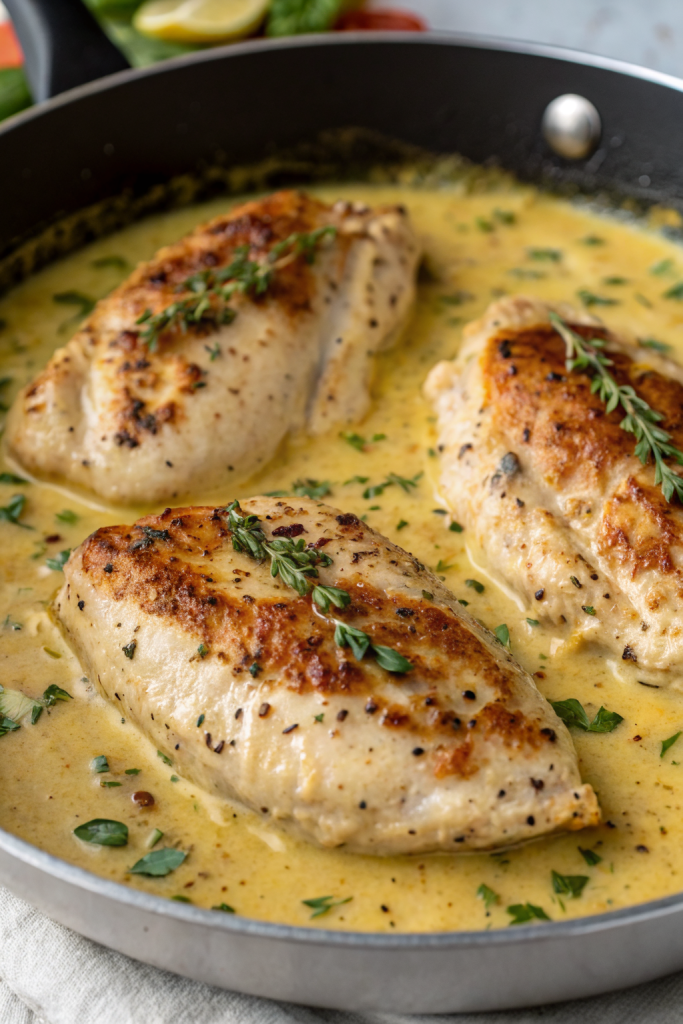
Pan Seared Chicken with Lemon Mustard Sauce Recipe tastes bright, savory, and a little tangy, with crispy golden edges and a silky pan sauce that begs for bread or mashed potatoes. It works perfectly for busy weeknights or casual dinner guests, and you can get it on the table in about 30 minutes. I first cooked a version of this in my tiny college apartment, and my smoke alarm still holds a grudge.
Why Make This Pan Seared Chicken with Lemon Mustard Sauce Recipe at Home
You control the flavor, the salt, and the quality of the chicken, so the dish tastes fresher than anything from a takeout box. The sauce uses simple pantry ingredients, so you can cook this on a random Tuesday without a special grocery run.
Pan searing keeps the chicken juicy inside and crisp outside, while the lemon mustard sauce cuts through the richness in the best way. Cleanup stays easy because everything happens in one skillet, which means more time eating and less time scrubbing.
“This Pan Seared Chicken with Lemon Mustard Sauce Recipe tastes like a restaurant dish that somehow snuck into my weeknight rotation and refuses to leave, in the best possible way. ★★★★★”
Ingredients You Need
Chicken
- 4 small boneless skinless chicken breasts
- Pound them to an even 1/2 inch thickness so they cook evenly.
- Use thighs if you prefer darker meat; cook a couple minutes longer.
- 1 1/2 teaspoons kosher salt
- 1 teaspoon black pepper
- 1 teaspoon garlic powder
- 1 teaspoon onion powder
- 1 tablespoon olive oil
- 1 tablespoon butter
I like air-chilled chicken because it browns better and releases less water. If you use very large chicken breasts, slice them horizontally into cutlets before pounding.
Lemon Mustard Sauce
- 3 cloves garlic, minced
- 1 small shallot, finely minced
- 1 cup low sodium chicken broth
- Use a good quality boxed broth; I like Kitchen Basics or Pacific.
- 2 tablespoons Dijon mustard
- Use smooth Dijon; grainy mustard can work but gives a different texture.
- 1 tablespoon whole grain mustard (optional, for texture and extra tang)
- 1 large lemon, zested and juiced
- You need about 3 tablespoons lemon juice and 1 teaspoon zest.
- 1/3 cup heavy cream
- Use half and half for a lighter sauce, though it thickens a bit less.
- 1 teaspoon honey or maple syrup
- This softens the sharpness of the mustard and lemon.
- 2 tablespoons cold butter, cut into small cubes
- 2 tablespoons chopped fresh parsley
- Extra salt and pepper to taste
If you do not have shallot, use 2 tablespoons very finely minced yellow onion. If you avoid dairy, skip the cream and finish with a splash of extra broth plus a drizzle of olive oil.
Pantry shortcuts and substitutions
- Garlic: Use 1 teaspoon garlic paste or 3/4 teaspoon garlic powder in the sauce if you do not have fresh cloves.
- Broth: Use bouillon paste mixed with water; Better Than Bouillon works nicely.
- Mustard: If you only have yellow mustard, use 1 tablespoon yellow plus 1 tablespoon Dijon or spicy brown if possible.
Equipment
- Large heavy skillet, 10 to 12 inches
- Stainless steel or cast iron browns the chicken best.
- Meat mallet or rolling pin
- Tongs
- Small whisk
- Cutting board and sharp knife
- Small bowl for mixing sauce ingredients
Tips & Mistakes
- Pound chicken to an even thickness so it cooks evenly and stays juicy.
- Pat chicken very dry before seasoning so it browns instead of steaming.
- Heat the pan until the oil shimmers; add chicken only when the pan feels hot.
- Do not crowd the skillet; cook in batches if needed so the chicken sears properly.
- Avoid flipping the chicken over and over; let each side sit until it releases easily.
- Use medium to medium high heat; very high heat burns the outside before the inside cooks.
- Scrape up browned bits when you add broth; those bits add huge flavor to the lemon mustard sauce.
- Taste the sauce before serving; adjust salt, pepper, and lemon juice so the flavor pops.
- Add cream off a strong boil so it does not curdle.
- Slide the chicken back into the sauce at the end and coat it well so every bite carries flavor.
How to Make Pan Seared Chicken with Lemon Mustard Sauce Recipe
Step 1: Prep and season the chicken
Place the chicken breasts between two sheets of parchment or plastic wrap. Pound them gently with a meat mallet or rolling pin until they reach about 1/2 inch thickness. Pat them dry on both sides with paper towels, then season both sides with salt, pepper, garlic powder, and onion powder.
Let the chicken sit at room temperature for 10 to 15 minutes while you prep the sauce ingredients. This short rest helps the chicken cook more evenly and brown better.
Step 2: Sear the chicken
Heat the olive oil and 1 tablespoon butter in a large skillet over medium high heat. When the oil shimmers and a tiny piece of chicken sizzles on contact, add the chicken in a single layer.
Cook the first side without moving it for 4 to 5 minutes, until the underside looks deep golden and releases easily from the pan. Flip and cook the second side for another 3 to 4 minutes, until the internal temperature reaches 165°F. Transfer the chicken to a plate and tent loosely with foil.
If your skillet looks very dry or dark, lower the heat slightly and add a splash of broth to loosen the browned bits before you move on. Keep those flavorful bits in the pan; they will season the sauce.
Step 3: Sauté aromatics
Lower the heat to medium. Add the minced shallot to the skillet and cook for about 2 minutes, stirring often, until it softens and turns translucent. Add the minced garlic and cook 30 to 45 seconds, just until fragrant.
If the pan looks too dry, add a teaspoon of butter or a drizzle of oil so the aromatics do not burn. Stir constantly so the garlic stays light and does not turn bitter.
Step 4: Build the lemon mustard base
Pour in the chicken broth while you scrape the bottom of the pan with a wooden spoon. Loosen all the browned bits and stir them into the liquid. Add the Dijon mustard, whole grain mustard if using, lemon zest, and honey.
Whisk until the mustard fully dissolves into the broth. Let the mixture simmer gently for 3 to 4 minutes so it reduces slightly and the flavors concentrate. Taste and adjust with a pinch of salt or a little extra honey if the sauce tastes too sharp.
Step 5: Finish the sauce with cream and butter
Lower the heat to medium low. Stir in the heavy cream and let the sauce simmer gently for 2 to 3 minutes, until it thickens enough to lightly coat the back of a spoon. Keep the sauce at a gentle bubble, not a hard boil.
Turn off the heat. Add the cold butter cubes and whisk until they melt and the sauce turns glossy and smooth. Stir in the lemon juice and chopped parsley, then taste again and adjust seasoning.
If the sauce tastes too tangy, add a splash more cream or a small knob of butter. If it tastes too rich, add a teaspoon or two of extra lemon juice.
Step 6: Return chicken to the pan
Place the seared chicken and any juices from the plate back into the skillet. Spoon the lemon mustard sauce over each piece so they all get coated. Turn the heat to low and let the chicken warm in the sauce for 2 to 3 minutes.
This short time in the skillet lets the flavors sink into the chicken without overcooking it. Sprinkle a little extra parsley on top for color.
Step 7: Adjust consistency and serve
If the sauce looks too thick, stir in a tablespoon or two of broth until you like the texture. If it looks too thin, let it simmer on low for another minute, stirring often.
Serve the chicken hot with extra sauce spooned over the top. Keep a spoon handy at the table because people usually want more sauce than they expect.
Variations I've Tried
I swap heavy cream for coconut cream and use chicken thighs when I want a dairy free version with a slightly richer feel. I also tried adding a spoonful of Greek yogurt off the heat, which gave the sauce a tangy, almost creamy salad dressing vibe that tasted great over greens.
Sometimes I stir in a handful of baby spinach at the end and let it wilt in the sauce, which turns this into a one pan protein and veggie situation. I also like to add a pinch of smoked paprika and a little extra honey for a sweet smoky twist that pairs nicely with roasted potatoes.
How to Serve Pan Seared Chicken with Lemon Mustard Sauce Recipe
Serve this Pan Seared Chicken with Lemon Mustard Sauce Recipe over fluffy rice, mashed potatoes, or buttered noodles so they can soak up all that tangy sauce. Add a simple side like steamed green beans, roasted broccoli, or a crisp salad with cucumbers and cherry tomatoes.
I also like to spoon leftover sauce over roasted vegetables or spoon it into a baked potato for a quick lunch. Pair the dish with sparkling water, iced tea, or a citrusy lemonade to echo the lemon in the sauce.
How to store
- Fridge: Cool the chicken and sauce to room temperature within 1 hour, then store in an airtight container in the refrigerator for up to 3 days.
- Freezer: Slice the chicken, cover it with sauce in a freezer safe container, and freeze for up to 2 months; label with the date so you do not forget it.
- Reheating on stove: Warm the chicken and sauce in a covered skillet over low heat with a splash of broth or water, stirring occasionally, until heated through.
- Reheating in microwave: Place portions in a microwave safe dish, cover loosely, and heat in 45 second bursts at medium power, stirring the sauce between bursts so it heats evenly.
- Leftover tips: If the sauce thickens too much after chilling, thin it with a spoonful of broth or water while you reheat until it reaches a silky texture again.
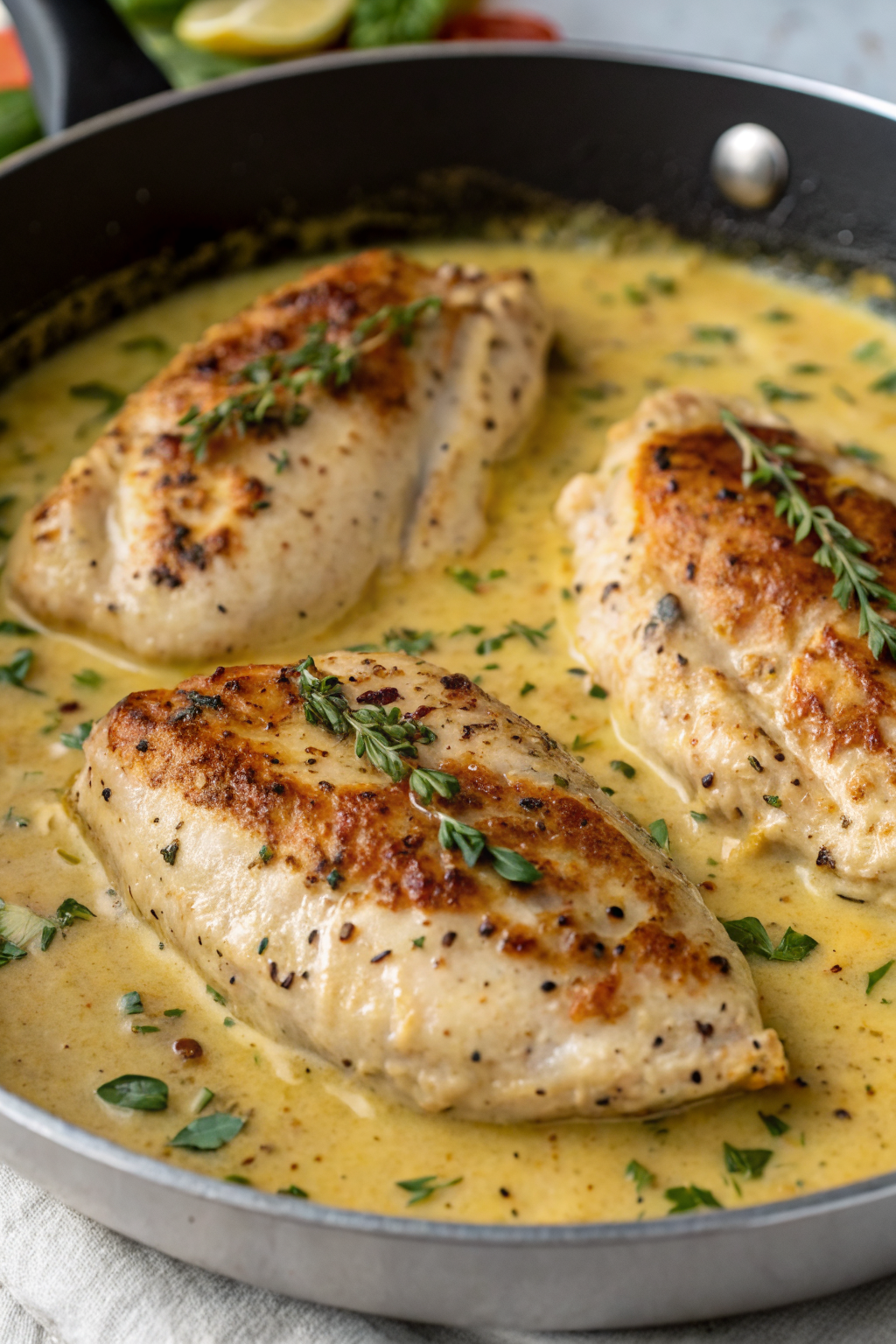
Pan Seared Chicken with Lemon Mustard Sauce Recipe
Ingredients
Instructions
- Place the chicken breasts between two sheets of parchment or plastic wrap and pound gently to an even 1/2 inch thickness.
- Pat the chicken dry on both sides with paper towels, then season both sides with kosher salt, black pepper, garlic powder, and onion powder. Let sit at room temperature for 10 to 15 minutes.
- Heat the olive oil and 1 tablespoon butter in a large skillet over medium-high heat until the oil shimmers.
- Add the chicken in a single layer and cook without moving for 4 to 5 minutes, until deep golden and it releases easily from the pan.
- Flip and cook the second side for 3 to 4 minutes, or until the internal temperature reaches 165°F. Transfer the chicken to a plate and tent loosely with foil.
- Lower the heat to medium and add the minced shallot to the skillet. Cook for about 2 minutes, stirring often, until softened and translucent.
- Add the minced garlic and cook for 30 to 45 seconds, stirring constantly, just until fragrant.
- Pour in the chicken broth, scraping up the browned bits from the bottom of the pan.
- Stir in the Dijon mustard, whole grain mustard if using, lemon zest, and honey or maple syrup. Whisk until the mustard dissolves and let the mixture simmer for 3 to 4 minutes to reduce slightly.
- Lower the heat to medium-low and stir in the heavy cream. Simmer gently for 2 to 3 minutes, until the sauce thickens enough to lightly coat the back of a spoon.
- Turn off the heat, add the cold butter cubes, and whisk until melted and the sauce is glossy and smooth.
- Stir in the lemon juice and chopped parsley, then taste and adjust salt and pepper as needed.
- Return the chicken and any accumulated juices to the skillet, spooning the sauce over each piece. Warm on low for 2 to 3 minutes so the flavors meld without overcooking.
- If the sauce is too thick, thin with a tablespoon or two of broth; if too thin, simmer briefly to reduce. Serve hot with extra sauce spooned over the chicken.
Notes
Approximate per serving (1 of 4): 410 calories; fat 25 g; saturated fat 11 g; carbohydrates 10 g; fiber 0 g; sugars 4 g; protein 36 g; sodium 820 mg. Values will vary based on brands, exact sizes of chicken breasts, and any substitutions.
Leave a Reply