

Pasta Con Zucchini with Ricotta and Parmesan tastes creamy, garlicky, and a little bit sweet from the sautéed zucchini, with salty Parmesan tying everything together. It works perfectly for busy weeknights, date nights at home, or a cozy solo dinner, and you can get it on the table in about 30 minutes. I first cooked a version of this in my tiny college apartment, and it still feels like the kind of pasta that gives you a hug without judging your sink full of dishes.
Why Make This Pasta Con Zucchini with Ricotta and Parmesan at Home
You control the texture of the zucchini, the creaminess of the ricotta, and the saltiness of the Parmesan, so the pasta tastes exactly how you like it. Restaurants often drown zucchini in oil or cream, while this version stays light, fresh, and still tastes rich.
You also use simple pantry ingredients and one main pan, so cleanup stays easy. The recipe works with regular grocery store brands, so you skip specialty shopping and still get a restaurant-level bowl of pasta.
“This Pasta Con Zucchini with Ricotta and Parmesan tastes like a cozy Italian trattoria dinner that somehow only took half an hour in my tiny kitchen. ★★★★★”
Ingredients You Need
Pasta
- 12 ounces short pasta
- I like rigatoni, penne, or fusilli because the ridges catch the ricotta sauce.
- Use whole wheat or chickpea pasta if you want extra fiber and protein.
Zucchini and aromatics
-
3 medium zucchini, sliced into half-moons
- Small, firm zucchini taste sweeter and hold their shape better.
- Yellow squash also works if your store runs low on zucchini.
-
1 small yellow onion, finely chopped
-
3 to 4 garlic cloves, minced
-
1 small lemon, zested and juiced
- Bottled lemon juice works in a pinch, but fresh zest adds brighter flavor.
Cheeses and dairy
-
1 cup whole milk ricotta
- I like Galbani or BelGioioso, but any whole milk ricotta with a short ingredient list works.
- If your ricotta looks watery, drain it in a fine mesh strainer for 10 to 15 minutes.
-
1 cup freshly grated Parmesan cheese
- Use a wedge and grate it yourself so it melts smoothly.
- Pre-grated shelf-stable Parmesan often contains anti-caking agents that make the sauce grainy.
-
2 to 3 tablespoons unsalted butter
-
2 to 3 tablespoons olive oil
Seasoning
-
1 teaspoon kosher salt, plus more for pasta water
-
½ teaspoon freshly ground black pepper
-
½ teaspoon red pepper flakes
- Adjust to taste or skip if you prefer a milder pasta.
-
¼ cup fresh basil leaves, torn or sliced
- Flat leaf parsley or mint also taste great with zucchini.
Pantry shortcuts and swaps
- Use frozen zucchini slices if you cannot find fresh; pat them dry before sautéing.
- Stir in ¼ teaspoon garlic powder if your garlic cloves look old or tiny.
- Add a splash of pasta water instead of cream to keep the sauce light yet silky.
Equipment
- Large pot for boiling pasta
- Large skillet or wide sauté pan
- Tongs or a pasta spoon
- Fine mesh strainer or colander
- Microplane or small grater for lemon zest and Parmesan
- Measuring cups and spoons
Tips & Mistakes
- Salt the pasta water generously so the noodles taste seasoned, not bland.
- Cook the pasta just to al dente, since it finishes in the pan with the zucchini and sauce.
- Slice zucchini evenly so it cooks at the same rate and does not turn mushy.
- Avoid crowding the pan with zucchini; cook in two batches if needed so it browns instead of steaming.
- Keep the heat at medium to medium high so the garlic turns fragrant but not burned.
- Stir ricotta off the heat with a splash of hot pasta water so it turns creamy and smooth, not grainy.
- Taste and adjust salt and lemon at the end; the cheese adds salt, so season in stages.
- Save at least 1 cup of pasta water; it rescues a sauce that looks too thick or dry.
- Do not boil the sauce after you add ricotta, or it can curdle and turn clumpy.
- Add herbs at the very end so they stay bright and fresh, not dark and wilted.
How to Make Pasta Con Zucchini with Ricotta and Parmesan
Step 1: Sauté veggies and aromatics
Bring a large pot of salted water to a boil. While the water heats, warm olive oil in a large skillet over medium heat. Add the onion with a pinch of salt and cook until soft and lightly golden, about 5 to 7 minutes. Stir in the garlic and red pepper flakes and cook 1 to 2 minutes, until the garlic smells fragrant.
Add the zucchini to the skillet in an even layer. Sprinkle with a little more salt and black pepper. Cook, stirring every couple of minutes, until the zucchini turns tender with some golden spots, about 8 to 10 minutes. Squeeze in half the lemon juice and stir, then turn the heat to low.
Step 2: Cook the pasta
Add pasta to the boiling water and stir so it does not stick. Cook until al dente, following the package time but start checking 1 to 2 minutes early. Scoop out at least 1 cup of starchy pasta water and set it aside. Drain the pasta.
Step 3: Build the ricotta and Parmesan sauce
In a medium bowl, add ricotta, half of the grated Parmesan, lemon zest, a pinch of salt, and a few grinds of black pepper. Stir in a small splash of hot pasta water, about 2 tablespoons, until the mixture looks creamy and loose. Taste and adjust seasoning with more salt, pepper, or lemon juice.
Add butter to the skillet with the zucchini and let it melt over low heat. Stir the zucchini so it gets glossy and coated.
Step 4: Combine pasta and zucchini
Add the drained pasta straight into the skillet with the zucchini. Toss everything together over low heat. Spoon the ricotta mixture into the pan and toss quickly, adding small splashes of pasta water until the sauce coats the pasta and looks silky. Keep the heat low so the ricotta stays creamy.
Sprinkle in most of the remaining Parmesan and toss again. Add more pasta water if the sauce thickens too much. Taste and adjust with more salt, pepper, or lemon juice.
Step 5: Finish with herbs and serve
Turn off the heat and stir in the fresh basil. The residual heat warms the herbs without dulling their flavor. Plate the Pasta Con Zucchini with Ricotta and Parmesan and top each serving with a little extra Parmesan and a pinch of red pepper flakes if you like heat. Serve right away while the sauce still feels loose and creamy.
Variations I've Tried
I sometimes add a handful of peas or chopped asparagus tips with the zucchini for extra green veggies. You can stir in cooked chicken, rotisserie chicken, or sautéed shrimp if you want more protein. A spoonful of pesto in the ricotta mixture gives the pasta a herby, slightly nutty twist.
You can swap half the ricotta with cottage cheese that you blend until smooth if you want more protein and a lighter feel. I also like a version with a handful of toasted walnuts or pine nuts on top for crunch. Gluten free pasta works well here too, just cook it gently and avoid overcooking so it does not break.
How to Serve Pasta Con Zucchini with Ricotta and Parmesan
Serve Pasta Con Zucchini with Ricotta and Parmesan in warm bowls so the sauce stays creamy and loose. Add a simple side salad with crisp lettuce, cucumbers, and a lemony vinaigrette to balance the richness. Garlic bread or warm focaccia tastes great on the side and helps scoop up every last bit of sauce.
A cold sparkling water with lemon or lime pairs nicely and keeps the meal light. If you cook this for guests, set out extra Parmesan, red pepper flakes, and fresh herbs so everyone can finish their bowl the way they like.
How to store
- Cool leftovers to room temperature, then store in an airtight container in the fridge for up to 3 days.
- Reheat gently on the stove over low heat with a splash of water or milk, stirring often until the sauce loosens and turns creamy again.
- You can freeze portions in freezer safe containers for up to 2 months, though the zucchini softens more after thawing.
- Thaw frozen pasta overnight in the fridge, then reheat on the stove with a bit of water and fresh Parmesan to refresh the flavor.
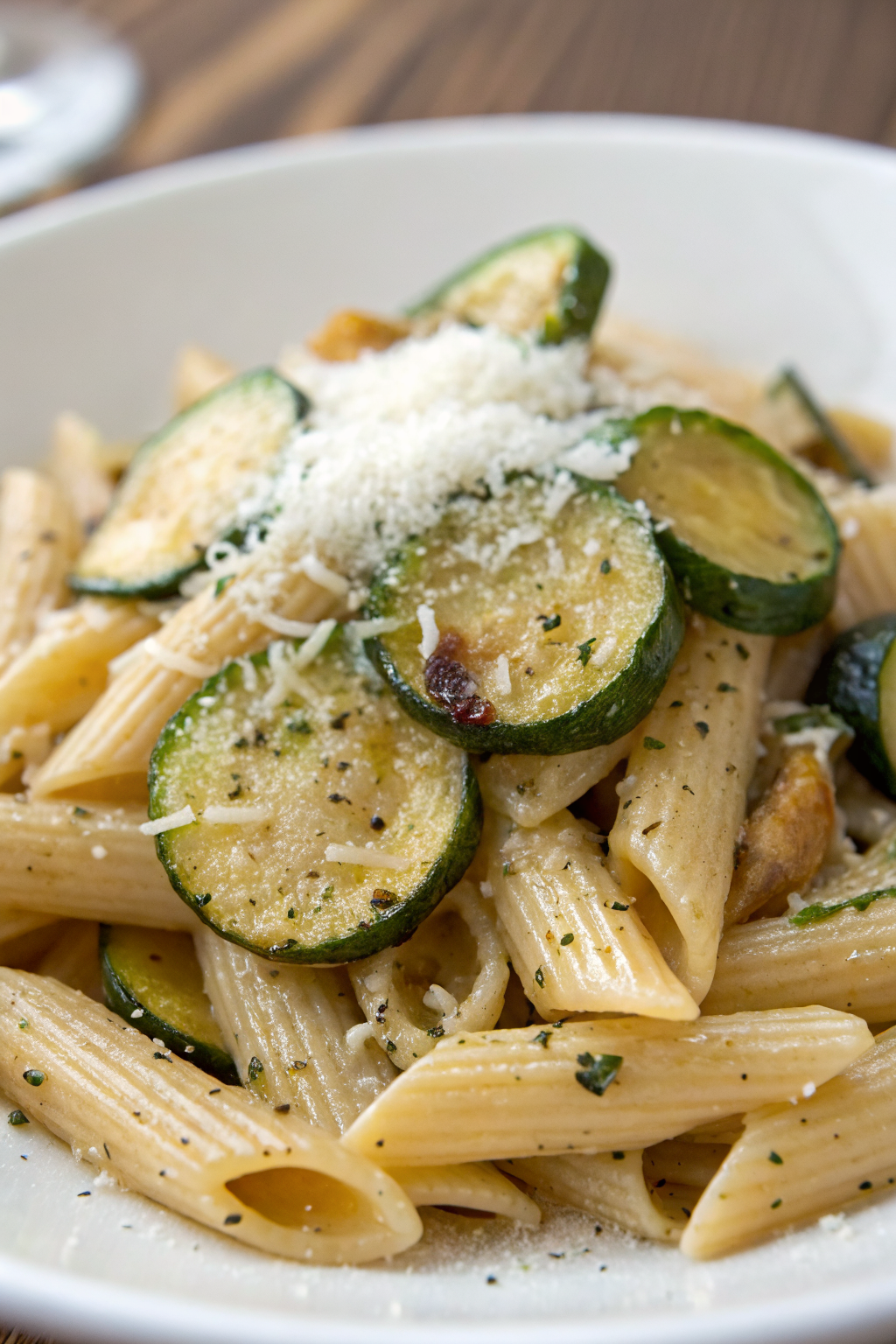
Pasta Con Zucchini with Ricotta and Parmesan
Ingredients
Instructions
- Bring a large pot of generously salted water to a boil. In a large skillet, warm the olive oil over medium heat. Add the chopped onion with a pinch of salt and cook until soft and lightly golden, about 5 to 7 minutes.
- Stir in the minced garlic and red pepper flakes and cook for 1 to 2 minutes, until the garlic is fragrant but not browned.
- Add the sliced zucchini to the skillet in an even layer. Season with a little more salt and the black pepper. Cook, stirring every couple of minutes, until the zucchini is tender with some golden spots, about 8 to 10 minutes. Squeeze in about half of the lemon juice, stir, then reduce the heat to low.
- Add the pasta to the boiling water and cook until al dente according to package directions, starting to check 1 to 2 minutes early. Before draining, scoop out at least 1 cup of the starchy pasta water and set aside, then drain the pasta.
- In a medium bowl, combine the ricotta, half of the grated Parmesan, the lemon zest, a pinch of salt, and a few grinds of black pepper. Stir in about 2 tablespoons of hot pasta water until the mixture looks creamy and loose. Taste and adjust with more salt, pepper, or lemon juice if needed.
- Add the butter to the skillet with the zucchini and let it melt over low heat, stirring so the zucchini becomes glossy and coated.
- Add the drained pasta to the skillet with the zucchini. Toss together over low heat. Spoon in the ricotta mixture and toss quickly, adding small splashes of reserved pasta water until the sauce coats the pasta and looks silky. Keep the heat low so the ricotta stays creamy and does not curdle.
- Sprinkle in most of the remaining Parmesan and toss again, adding more pasta water if the sauce becomes too thick. Taste and adjust seasoning with additional salt, black pepper, or lemon juice.
- Turn off the heat and stir in the fresh basil. Plate the pasta and top each serving with a little extra Parmesan and a pinch of red pepper flakes if you like heat. Serve immediately while the sauce is still loose and creamy.
Notes
Approximate per serving (4 servings): 620 calories; fat 30 g; saturated fat 14 g; carbohydrates 64 g; fiber 4 g; sugars 7 g; protein 25 g; sodium 720 mg. Values will vary based on specific ingredients, brands, and portion sizes.
Leave a Reply