
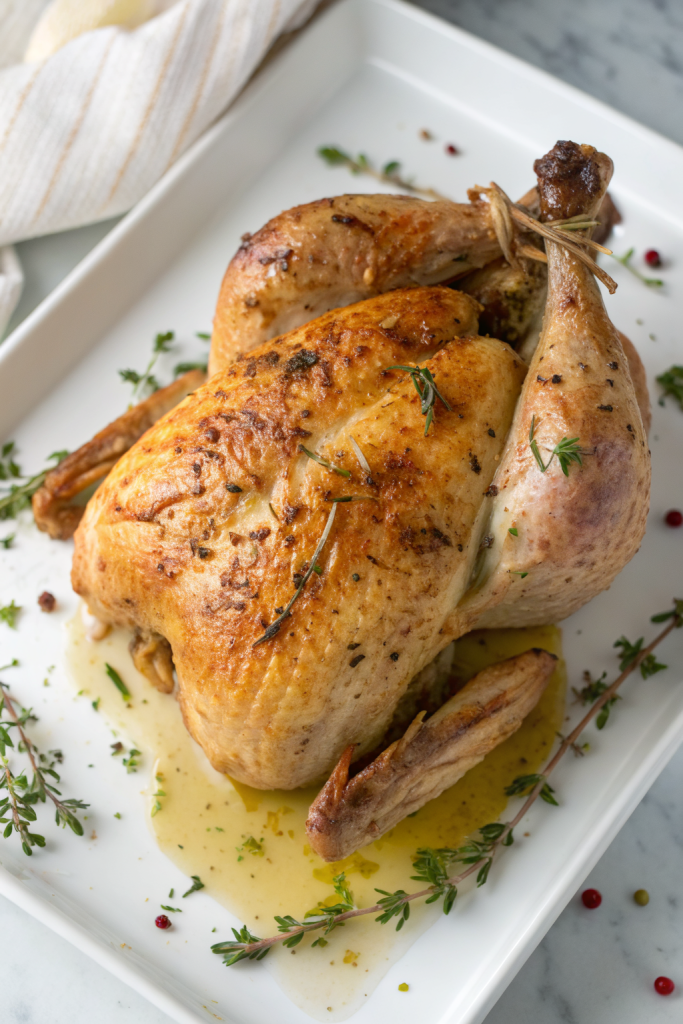
Tasty Roast Turkey Recipe hits that perfect spot between crispy, herby skin and juicy, well-seasoned meat, with drippings that make the kind of gravy people talk about all year. It works for holiday dinners, Sunday suppers, or meal prep, and you can get it on the table in about 3½–4 hours including roasting and resting time. I still remember the first time my family stopped buying pre-cooked turkey after tasting this version, and my ego has never quite recovered in a good way.
Why Tasty Roast Turkey Recipe Is Worth It
This roast turkey delivers deeply seasoned meat from breast to drumstick, not just salty skin. Dry brining and simple aromatics keep the bird juicy, so you slice tender pieces instead of sawing through cardboard.
You also use everyday pantry staples, so you skip fancy ingredients and still get big flavor. The leftovers taste amazing in sandwiches, soups, and salads, so you win for several meals with one roasting session.
“Juiciest turkey we’ve ever had, and the crispy skin nearly caused a fork duel at the table. ★★★★★”
Ingredients You Need
Turkey
- 1 whole turkey, 12–14 pounds, thawed if frozen (Butterball or store brand both work)
- 2–3 tablespoons kosher salt (Diamond Crystal; use less if you use Morton)
- 1 tablespoon black pepper, freshly ground
- 1–2 teaspoons smoked paprika or sweet paprika
- 1 teaspoon garlic powder
- 1 teaspoon onion powder
Aromatics & Flavor Boosters
- 1 large onion, quartered (yellow or white)
- 1 head garlic, halved crosswise
- 1 lemon, quartered
- 1 apple, quartered (any crisp variety; Honeycrisp or Gala work well)
- 4–6 sprigs fresh thyme
- 4 sprigs fresh rosemary
- 4 sprigs fresh sage
- 2 bay leaves
You can swap fresh herbs with 1½ teaspoons dried thyme and 1 teaspoon dried rosemary if needed.
Butter & Basting Mixture
- 1 cup (2 sticks) unsalted butter, softened
- 2 tablespoons olive oil or avocado oil
- 1 tablespoon fresh thyme leaves, chopped
- 1 tablespoon fresh rosemary, chopped
- 1 tablespoon fresh sage, chopped
- Zest of 1 lemon
- 1 teaspoon kosher salt
- ½ teaspoon black pepper
If you want a dairy-free version, use a vegan butter stick or all olive oil.
Roasting Pan Add-Ins (for flavorful drippings)
- 2 carrots, cut into chunks
- 2 celery stalks, cut into chunks
- 1 onion, thickly sliced
- 1–2 cups low-sodium chicken or turkey broth (boxed stock works great)
Optional Gravy (from drippings)
- Pan drippings from the turkey
- 2–3 tablespoons all-purpose flour (or cornstarch for gluten-free)
- 1–2 cups additional broth, as needed
- Salt and pepper to taste
Equipment List
- Large roasting pan with rack (sturdy enough for a 14-pound bird)
- Paper towels
- Small bowl for herb butter
- Basting brush or spoon
- Meat thermometer (instant-read works best)
- Aluminum foil
- Cutting board (large)
- Sharp carving knife and carving fork
Quick Tips & substitutions
- Pat the turkey very dry so the skin turns crisp and golden.
- Dry brine the turkey with salt in the fridge 12–24 hours for deeper flavor and juicier meat.
- Use softened butter, not melted, so it clings to the skin and under the skin.
- Slide your fingers gently under the breast skin to tuck herb butter directly onto the meat.
- Swap fresh herbs with dried if needed; use one-third the amount when you use dried.
- Use vegan butter and oil if you want a dairy-free turkey.
- Choose low-sodium broth so the drippings do not turn overly salty.
- Tent the turkey loosely with foil if the skin browns too fast during roasting.
- Always use a meat thermometer; pull the turkey when the breast hits 160°F and the thigh hits 170–175°F.
- Let the turkey rest at least 30 minutes before carving so the juices settle.
How to Make Tasty Roast Turkey Recipe
Step 1: Prep and dry brine the turkey
Remove the turkey from its packaging and take out the neck and giblets from the cavity. Pat the turkey very dry with paper towels, including inside the cavity. Mix kosher salt, black pepper, smoked paprika, garlic powder, and onion powder in a small bowl.
Sprinkle this mixture all over the turkey, including a light sprinkle inside the cavity. Place the turkey on a rack set over a sheet pan and keep it uncovered in the fridge for 12–24 hours. This step seasons the meat and dries the skin so it roasts up crisp.
Step 2: Bring turkey to room temp and preheat oven
Take the turkey out of the fridge about 45–60 minutes before roasting so it loses the chill. This helps it cook more evenly and reduces the risk of dry breast meat. Preheat your oven to 425°F and move the rack to the lower third position.
While the turkey sits, chop your aromatics and herbs, and set up the roasting pan. Line the bottom of the pan with carrots, celery, and sliced onion, then pour in 1 cup of broth. Set the roasting rack in the pan over the vegetables.
Step 3: Mix the herb butter
In a bowl, mix softened butter, olive oil, chopped thyme, rosemary, sage, lemon zest, salt, and pepper. Stir until the mixture looks smooth and spreadable. Taste a tiny bit and adjust salt or herbs if you want stronger flavor.
Keep the herb butter at room temperature so it spreads easily. If your kitchen runs cold, warm the bowl in your hands for a minute or two.
Step 4: Stuff the cavity with aromatics
Place the turkey on the roasting rack breast side up. Stuff the cavity with onion quarters, garlic halves, lemon wedges, apple quarters, herb sprigs, and bay leaves. Do not pack it too tightly; leave some space for air to circulate.
Tuck the wing tips under the turkey so they do not burn. Tie the legs loosely with kitchen twine if you want a tidy look and more even cooking.
Step 5: Butter under and over the skin
Gently slide your fingers under the skin over the turkey breasts and loosen it without tearing. Scoop some herb butter and spread it directly onto the breast meat under the skin. This step keeps the lean breast juicy and flavorful.
Spread the remaining herb butter all over the outside of the turkey, including legs and thighs. Coat every visible surface so the skin browns evenly and tastes rich.
Step 6: Start roasting at high heat
Place the turkey in the preheated 425°F oven. Roast at this higher temperature for 20–30 minutes until the skin starts to turn golden. This step kickstarts browning and gives you that deep, roasted flavor.
Keep an eye on the skin; if it darkens too quickly at the tips, tent those spots with small pieces of foil. You do not need to baste yet because the butter still clings to the skin.
Step 7: Lower heat and continue roasting
Reduce the oven temperature to 325°F without opening the door for too long. Roast the turkey until it reaches 160°F in the thickest part of the breast and 170–175°F in the thigh. Use your meat thermometer and check in a few spots to confirm.
A 12–14 pound turkey usually takes about 2½–3 hours total, including the initial high-heat phase. Add more broth to the pan if the vegetables start to burn or the drippings dry out.
Step 8: Baste occasionally
After the first hour at 325°F, start basting every 30–40 minutes. Spoon pan drippings over the breast and legs to keep the surface moist and flavorful. Quick basting works best so you do not lose too much oven heat.
If the breast browns faster than the rest, tent just the breast area with foil and keep roasting. This trick protects the white meat while the dark meat finishes cooking.
Step 9: Rest the turkey
When the turkey hits the target temperatures, take it out of the oven and place the pan on a sturdy surface. Lift the turkey carefully onto a large cutting board or platter. Tent it loosely with foil and let it rest 30–45 minutes.
This rest time allows the juices to redistribute so the meat stays moist when you slice it. Use the rest window to make gravy, finish side dishes, and set the table.
Step 10: Make simple gravy from drippings
Skim excess fat from the pan drippings and pour the remaining liquid through a strainer into a saucepan. Heat over medium and whisk in flour to make a smooth paste. Cook 1–2 minutes while you whisk so the flour loses its raw taste.
Slowly whisk in broth until the gravy reaches your desired thickness. Season with salt and pepper, then keep it warm on low heat until serving. Use cornstarch mixed with cold water instead of flour if you want a gluten-free gravy.
Step 11: Carve and serve
Place the rested turkey on a large cutting board. Remove the legs and thighs first, then slice the breast meat against the grain into even slices. Take your time and use a sharp knife so the slices stay neat and juicy.
Arrange the meat on a warm platter and spoon a little hot gravy over the top if you like. Serve extra gravy on the side so everyone can sauce their plate to taste.
Recipe Variations
- Gluten-free: Use gluten-free broth and thicken the gravy with cornstarch instead of flour.
- Dairy-free: Swap butter with vegan butter or all olive oil in the herb mixture.
- Low carb: Skip the apple in the cavity and use extra onion and lemon instead.
- Herb twist: Use oregano and marjoram in place of sage for a Mediterranean vibe.
- Citrus version: Add orange zest to the butter and tuck orange slices in the cavity.
- Spiced version: Add ½ teaspoon cayenne or chipotle powder to the dry rub for gentle heat.
- Garlic lover’s version: Double the garlic powder and add extra garlic cloves to the pan.
Ways to Serve Tasty Roast Turkey Recipe
- Serve thick slices with mashed potatoes, gravy, and roasted green beans.
- Pile leftovers into a toasted sandwich with lettuce, tomato, and a swipe of mayo or mustard.
- Add chopped turkey to a cozy noodle soup with carrots and celery.
- Toss shredded turkey into a grain bowl with rice, roasted veggies, and a yogurt-based sauce.
- Use sliced turkey over a big salad with crunchy lettuce, cucumbers, and a bright vinaigrette.
Storage Success
Let the turkey cool until it reaches room temp, then slice or shred the meat and store it in airtight containers. Keep it in the fridge for up to 4 days, and add a spoonful of gravy or broth to the container to keep the meat moist. Reheat portions gently in a covered skillet over low heat or in the microwave with a splash of liquid. Freeze extra turkey in freezer bags for up to 2–3 months and label the bags so future you knows the treasure inside.
Tasty Roast Turkey Recipe
Ingredients
Instructions
- Remove the turkey from its packaging, take out the neck and giblets, and pat the turkey very dry inside and out with paper towels.
- In a small bowl, combine the kosher salt, black pepper, paprika, garlic powder, and onion powder. Sprinkle this mixture all over the turkey, including a light sprinkle inside the cavity.
- Place the turkey on a rack set over a sheet pan and refrigerate uncovered for 12–24 hours to dry brine and help the skin crisp.
- About 45–60 minutes before roasting, remove the turkey from the fridge to take off the chill. Preheat the oven to 425°F and position the rack in the lower third of the oven.
- Line the bottom of a large roasting pan with the carrots, celery, and sliced onion. Pour in 1 cup of broth and set the roasting rack over the vegetables.
- In a bowl, mix the softened butter, olive oil, chopped thyme, rosemary, sage, lemon zest, kosher salt, and black pepper until smooth and spreadable.
- Place the turkey breast side up on the roasting rack. Stuff the cavity with the onion quarters, garlic halves, lemon wedges, apple quarters, herb sprigs, and bay leaves, leaving some space for air to circulate.
- Tuck the wing tips under the turkey and tie the legs loosely with kitchen twine if desired.
- Gently loosen the skin over the turkey breasts with your fingers, being careful not to tear it. Spread some of the herb butter directly onto the breast meat under the skin.
- Spread the remaining herb butter all over the outside of the turkey, coating the breasts, legs, and thighs thoroughly.
- Transfer the turkey to the preheated oven and roast at 425°F for 20–30 minutes, until the skin begins to turn golden. Tent any areas that brown too quickly with small pieces of foil.
- Reduce the oven temperature to 325°F and continue roasting until the turkey reaches 160°F in the thickest part of the breast and 170–175°F in the thigh, about 2½–3 hours total for a 12–14 pound turkey. Add more broth to the pan if the vegetables or drippings start to dry out.
- After the first hour at 325°F, baste the turkey every 30–40 minutes with the pan drippings. Tent the breast loosely with foil if it browns faster than the legs and thighs.
- When the turkey reaches the target temperatures, remove it from the oven and carefully transfer it to a large cutting board or platter. Tent loosely with foil and let rest for 30–45 minutes.
- For gravy, skim excess fat from the pan drippings and strain the liquid into a saucepan. Heat over medium and whisk in the flour to form a smooth paste. Cook for 1–2 minutes, then slowly whisk in broth until the gravy reaches your desired thickness. Season with salt and pepper.
- To serve, carve the rested turkey by removing the legs and thighs first, then slicing the breast meat against the grain into even slices. Arrange on a platter and serve with the warm gravy.
Notes
Approximate per serving (about 4 ounces cooked turkey with some skin, without gravy): 320 calories; fat 20 g; saturated fat 8 g; carbohydrates 2 g; fiber 0 g; sugars 1 g; protein 32 g; sodium 580 mg. Values are estimates and will vary based on turkey size, how much skin is eaten, added salt, and portion size.