
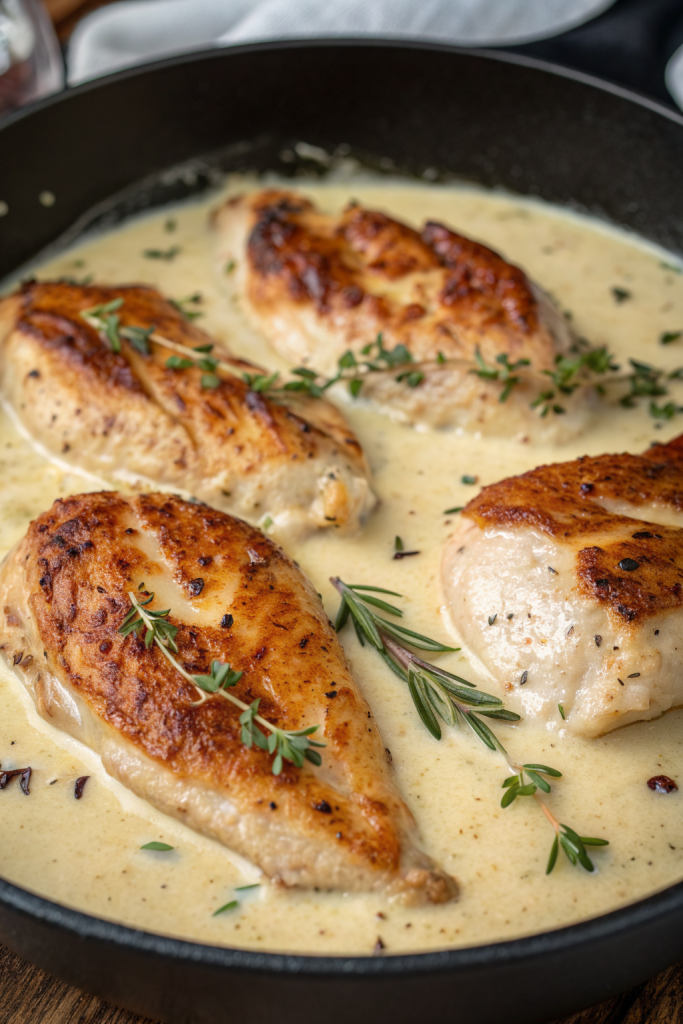
Rosemary Dijon Chicken Recipe hits that perfect spot between cozy comfort food and bright, herby flavor, and it works on a busy weeknight in about 35 minutes start to finish. It suits anyone who wants juicy chicken with a punchy mustard-herb sauce that tastes like you fussed, even if you just kicked off your shoes and cooked in sweatpants. I first made this on a Tuesday when I felt tired and grumpy, and it completely turned my mood around by the second bite.
Why Make This Rosemary Dijon Chicken Recipe at Home
This Rosemary Dijon Chicken Recipe gives you tender, juicy chicken with a tangy, garlicky, herby crust and a silky pan sauce. It tastes like something from a small bistro, but you cook it in one skillet with simple pantry ingredients.
You control the salt, the quality of the chicken, and the amount of Dijon, so the flavor fits your taste. Clean-up stays easy, the ingredients stay budget friendly, and the leftovers taste just as good the next day.
“This Rosemary Dijon Chicken Recipe tastes like a restaurant special but comes together faster than takeout, and my whole family licked their plates clean. ★★★★★”
Ingredients You Need
Chicken
- 4 boneless skinless chicken breasts
- Pound them to an even 1/2 to 3/4 inch thickness so they cook evenly.
- Use thighs instead if you prefer richer flavor and extra juiciness.
Marinade and Sauce
-
3 tablespoons Dijon mustard
- Choose a smooth Dijon like Maille or Grey Poupon for a balanced tang.
- Avoid whole grain mustard here, since the seeds can burn in the skillet.
-
2 tablespoons whole-milk Greek yogurt or mayonnaise
- Yogurt gives a slight tang and keeps the chicken extra tender.
- Mayonnaise works great if you want a richer, creamier finish and you already keep it in the fridge.
-
2 tablespoons olive oil
- Use regular olive oil, not extra virgin, since you cook it over medium-high heat.
-
2 tablespoons fresh lemon juice
- Bottle lemon juice works in a pinch, but fresh gives brighter flavor.
-
3 to 4 cloves garlic, finely minced or grated
- Use jarred minced garlic if you want a shortcut, just reduce slightly since it tastes stronger.
-
1 tablespoon fresh rosemary, very finely chopped
- Strip the leaves from the woody stems before chopping.
- Use 1 teaspoon dried rosemary if you do not have fresh, and crush it between your fingers to wake up the flavor.
-
1 teaspoon kosher salt
- If you use table salt, reduce to about 3/4 teaspoon since it tastes saltier.
-
1/2 teaspoon black pepper
-
1 teaspoon honey or maple syrup
- This tiny bit of sweetness balances the sharpness of the Dijon and lemon.
For Cooking and Pan Sauce
- 1 tablespoon olive oil, for the skillet
- 1 tablespoon butter, optional but tasty for richness
- 1/2 cup low-sodium chicken broth
- Use bouillon paste mixed with water if you keep that in the pantry.
- 1 to 2 teaspoons Dijon mustard, to finish the sauce
- 1 teaspoon chopped fresh rosemary, optional garnish
- Lemon wedges, optional for serving
Equipment
- Cutting board and sharp knife
- Meat mallet or rolling pin to pound the chicken
- Medium bowl for marinade
- Large skillet (stainless steel or cast iron works best)
- Tongs or a spatula
- Instant-read thermometer, very helpful for perfect doneness
Tips & Mistakes
- Pound the chicken to even thickness so it cooks evenly and stays juicy.
- Dry the chicken with paper towels before marinating so the mustard mixture sticks well.
- Do not skimp on the salt, since Dijon and lemon need enough seasoning to taste balanced.
- Use fresh rosemary when possible, and chop it very fine so no one bites into a woody chunk.
- Avoid very high heat, since the mustard and honey can scorch and turn bitter.
- Do not crowd the skillet, or the chicken will steam instead of brown; cook in two batches if needed.
- Pull the chicken at 160 to 165 degrees Fahrenheit and let it rest a few minutes so the juices settle.
- Scrape up the browned bits in the pan with broth to build a flavorful sauce instead of letting them burn.
- Taste the sauce before serving and adjust with a pinch of salt, a squeeze of lemon, or a tiny drizzle of honey.
- Store leftovers promptly so the chicken stays tender and safe to eat the next day.
How to Make Rosemary Dijon Chicken Recipe
Step 1: Prep the Chicken
Place the chicken breasts on a cutting board and cover them with plastic wrap. Pound them gently with a meat mallet or rolling pin until they reach an even thickness. Pat them dry with paper towels so the marinade sticks well.
Step 2: Mix the Marinade
In a medium bowl, whisk together Dijon mustard, Greek yogurt or mayonnaise, olive oil, lemon juice, garlic, rosemary, salt, pepper, and honey. Taste a tiny bit and adjust the salt or honey if needed. The mixture should taste tangy, garlicky, and slightly herby with a hint of sweetness.
Step 3: Coat the Chicken
Add the chicken breasts to the bowl and toss them in the Rosemary Dijon mixture until they look fully coated. Make sure the marinade covers every surface and gets into any little crevices. Let the chicken sit at room temperature for 15 to 20 minutes while you heat the skillet, or cover and chill up to 4 hours if you plan ahead.
Step 4: Sear the Chicken
Heat a large skillet over medium to medium-high heat and add the olive oil. When the oil shimmers and a drop of marinade sizzles on contact, place the chicken breasts in the pan. Leave a little space between each piece so they brown properly.
Cook the chicken on the first side for 5 to 6 minutes without moving it, until a golden crust forms. Flip the chicken and cook another 4 to 6 minutes, depending on thickness. Check the internal temperature with an instant-read thermometer; you want 160 to 165 degrees Fahrenheit.
Transfer the chicken to a plate and tent it loosely with foil while you make the sauce. The chicken will rest and stay juicy.
Step 5: Build the Pan Sauce
Turn the heat down to medium. If the skillet looks very dry, add a small splash of olive oil or a pat of butter.
Pour in the chicken broth and scrape the bottom of the pan with a wooden spoon to loosen the browned bits. Whisk in 1 to 2 teaspoons Dijon mustard and let the sauce simmer for 2 to 3 minutes until it thickens slightly and reduces.
Taste the sauce and adjust with a pinch of salt, a squeeze of lemon, or a tiny drizzle of honey if it tastes too sharp. Stir in a teaspoon of chopped fresh rosemary if you want extra herb flavor.
Step 6: Finish and Serve
Return the chicken and any accumulated juices to the skillet. Spoon the sauce over the top and let the chicken sit in the sauce for 1 to 2 minutes over low heat.
Turn off the heat, slice the chicken if you like, and spoon more Rosemary Dijon sauce over each portion. Garnish with extra rosemary and lemon wedges on the side. Serve hot while the sauce still feels silky and glossy.
Variations I've Tried
Use boneless skinless chicken thighs instead of breasts for extra rich, juicy results and a little more forgiveness on cook time. Swap half the Dijon with whole grain mustard for a bit of texture, and cook over slightly lower heat so the seeds do not burn. Add a splash of chicken broth and a spoonful of Greek yogurt at the end to make a creamier Rosemary Dijon sauce that clings to the chicken.
Stir in a handful of chopped spinach or kale to the pan sauce and let it wilt for a built-in veggie side. Add a pinch of red pepper flakes to the marinade if you like a gentle kick of heat. Toss cubed potatoes in a little olive oil, salt, and rosemary and roast them, then spoon the Dijon sauce over both the chicken and potatoes.
How to Serve Rosemary Dijon Chicken Recipe
Serve Rosemary Dijon Chicken Recipe with fluffy mashed potatoes, steamed rice, or buttered noodles so they soak up the extra sauce. Add a simple side salad with crisp lettuce, cucumber, and a light vinaigrette to keep the plate fresh and bright. Roasted carrots, green beans, or broccoli pair nicely with the herby mustard flavor. If you pack lunches, slice the leftover chicken and tuck it into a grain bowl with rice, cucumber, tomatoes, and a spoonful of extra sauce.
How to store
- Cool the Rosemary Dijon Chicken to room temperature within 1 hour, then store it in an airtight container in the fridge for up to 3 to 4 days.
- Freeze cooked chicken in a freezer-safe container or bag for up to 2 months, and label it with the date so you keep track.
- Reheat gently in a covered skillet over low heat with a splash of broth until warm, or use the microwave at 50 percent power in short bursts so the chicken stays tender.
- If you froze it, thaw overnight in the fridge before reheating, and add a spoonful of fresh Dijon or lemon to perk up the flavor after warming.
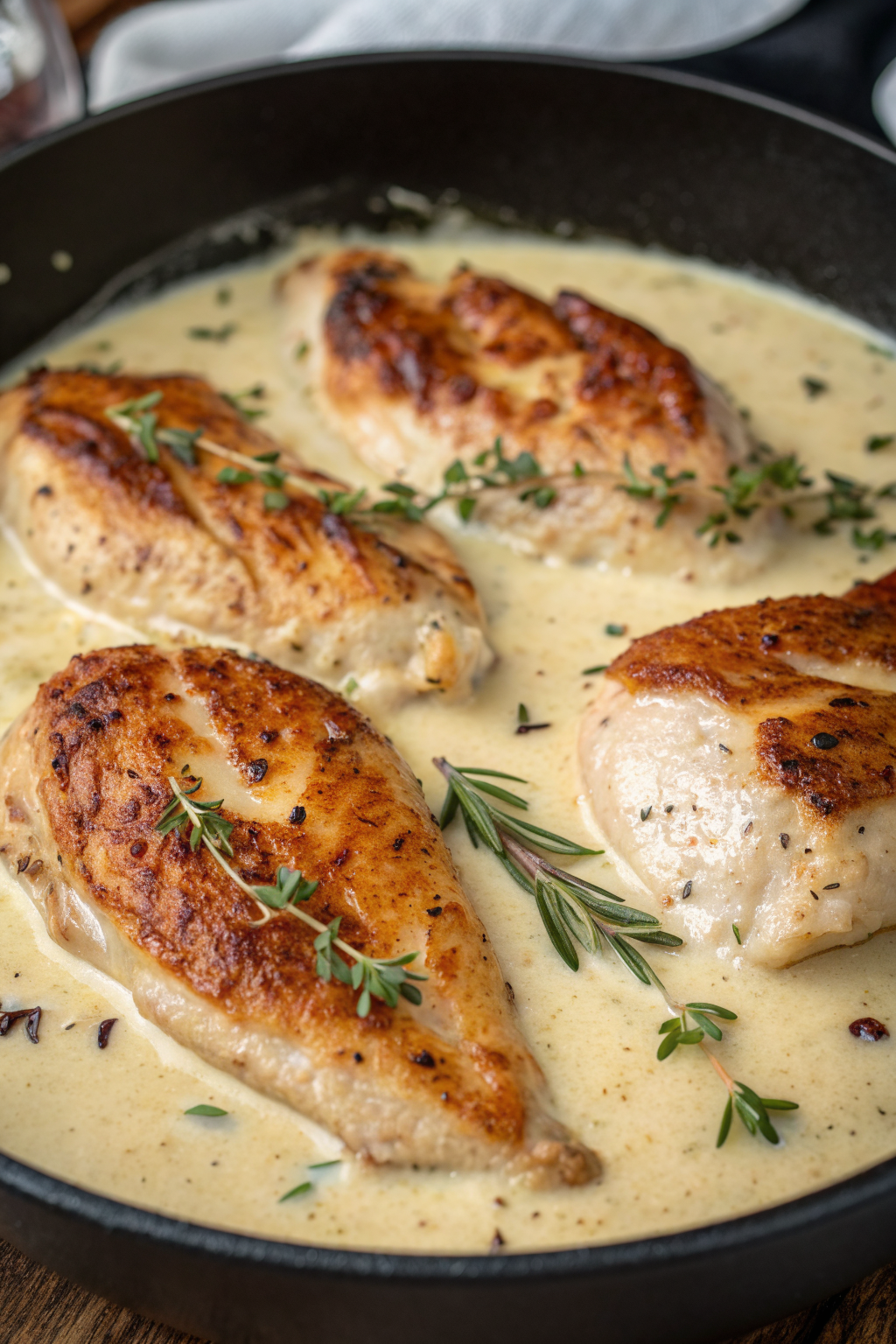
Rosemary Dijon Chicken Recipe
Ingredients
Instructions
- Place the chicken breasts on a cutting board, cover with plastic wrap, and pound to an even 1/2 to 3/4 inch thickness. Pat dry with paper towels.
- In a medium bowl, whisk together 3 tablespoons Dijon mustard, Greek yogurt or mayonnaise, 2 tablespoons olive oil, lemon juice, garlic, 1 tablespoon chopped rosemary, salt, pepper, and honey or maple syrup. Taste and adjust seasoning if needed.
- Add the chicken breasts to the bowl and toss until fully coated with the Rosemary Dijon mixture. Let sit at room temperature for 15 to 20 minutes, or cover and refrigerate for up to 4 hours.
- Heat a large skillet over medium to medium-high heat and add 1 tablespoon olive oil. When the oil shimmers, place the marinated chicken breasts in the skillet, leaving space between each piece.
- Cook the chicken for 5 to 6 minutes on the first side without moving, until a golden crust forms. Flip and cook another 4 to 6 minutes, until the internal temperature reaches 160 to 165°F (71 to 74°C). Transfer the chicken to a plate and tent loosely with foil.
- Reduce the heat to medium. If the skillet looks dry, add the butter or a small splash of olive oil. Pour in the chicken broth and scrape up the browned bits from the bottom of the pan with a wooden spoon.
- Whisk in 1 to 2 teaspoons Dijon mustard and simmer for 2 to 3 minutes, until the sauce reduces slightly and thickens. Taste and adjust with a pinch of salt, a squeeze of lemon, or a tiny drizzle of honey if needed. Stir in chopped rosemary if using.
- Return the chicken and any accumulated juices to the skillet. Spoon the sauce over the chicken and let it warm in the sauce for 1 to 2 minutes over low heat.
- Turn off the heat. Slice the chicken if desired, spoon more Rosemary Dijon sauce over each portion, garnish with extra rosemary and lemon wedges, and serve hot.
Notes
Approximate per serving (1 of 4): 310 calories; fat 16 g; saturated fat 4 g; carbohydrates 5 g; fiber 0 g; sugars 3 g; protein 37 g; sodium 580 mg. Values are estimates and will vary based on exact ingredients, brands, and portion sizes.
Leave a Reply