
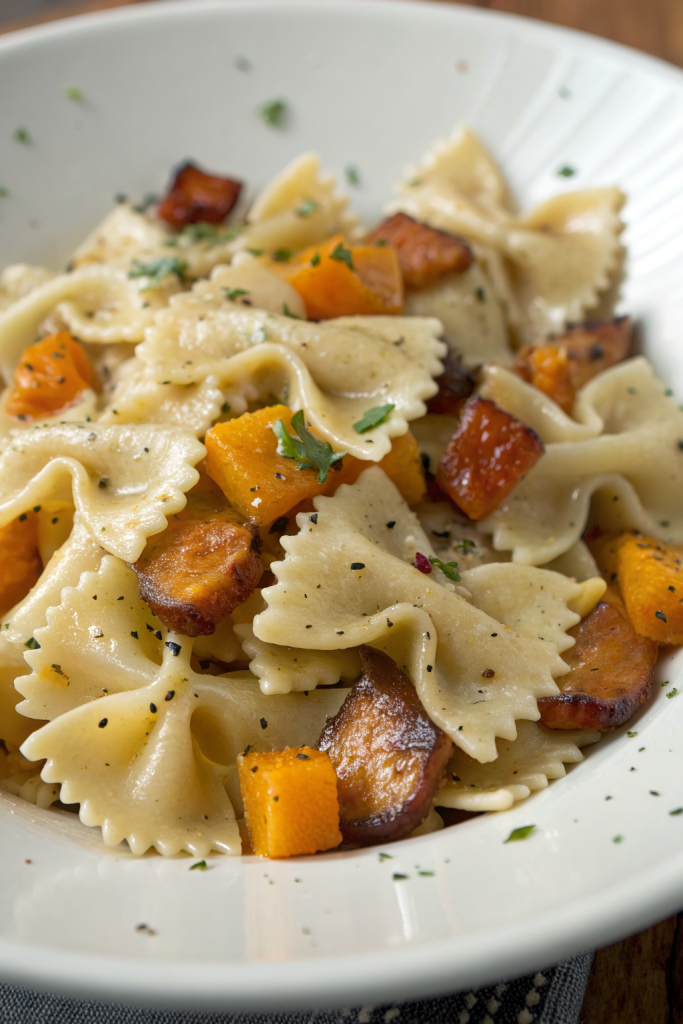
Creamy Butternut Squash Pasta with Sausage and Spinach tastes rich and cozy, with a velvety sauce that clings to every noodle and little pops of savory sausage in each bite. It works perfectly for busy weeknights or casual dinner guests and comes together in about 40–45 minutes. I first made a version of this on a Tuesday when my fridge looked sad, and it still felt like a restaurant meal on the couch.
Why Creamy Butternut Squash Pasta with Sausage and Spinach Is Worth It
This pasta hits that sweet spot between comfort food and “I ate a vegetable.” The butternut squash sauce tastes creamy and slightly sweet, the sausage adds salty richness, and the spinach sneaks in greens without turning dinner into a salad lecture.
You cook everything in one big pot and one pan, so cleanup stays reasonable. The recipe uses simple ingredients from a regular grocery store, but the final bowl tastes like you simmered it all afternoon.
“This Creamy Butternut Squash Pasta with Sausage and Spinach tastes like fall in a bowl, but my kids just call it ‘orange mac and cheese’ and inhale it. ★★★★★”
Ingredients You Need
Pasta
- 12–16 oz short pasta (rigatoni, penne, fusilli, or shells work best)
- Kosher salt for the pasta water
Butternut squash sauce
- 2 tbsp olive oil or butter
- 1 small onion, diced (yellow or sweet onion works best)
- 2 cloves garlic, minced
- 3 cups butternut squash, peeled and cubed (fresh or frozen both work; frozen saves time)
- 2–2 ½ cups low-sodium chicken broth (or vegetable broth)
- ½–¾ cup heavy cream or half-and-half
- ½ cup finely grated Parmesan or Pecorino Romano (buy a wedge if possible; it melts better than pre-shredded)
- ¼ tsp ground nutmeg
- ½–1 tsp smoked paprika or sweet paprika
- ¼–½ tsp red pepper flakes (optional, for heat)
- Freshly ground black pepper
- Extra salt to taste
Sausage and spinach
- 1 lb Italian sausage, casings removed
- Mild Italian sausage keeps it family-friendly.
- Hot Italian sausage adds a little kick.
- Use chicken or turkey sausage if you want something lighter.
- 3–4 cups baby spinach, roughly chopped (or use frozen spinach, thawed and squeezed dry)
- 1–2 tsp fresh lemon juice (brightens the sauce at the end)
Optional flavor boosters
- 1–2 tsp fresh thyme leaves or ½ tsp dried thyme
- 1 tsp fresh chopped sage or ¼ tsp dried sage
- Extra Parmesan for serving
- Crushed red pepper for topping
Pantry shortcuts
- Use frozen cubed butternut squash to skip peeling and chopping.
- Use jarred minced garlic if you want to speed things up.
- Use boxed broth or stock; low-sodium gives you better control over seasoning.
- Use pre-washed baby spinach so you just toss it in.
Equipment
- Large pot for boiling pasta
- Large skillet or Dutch oven for the sauce and sausage
- Blender, immersion blender, or food processor to puree the squash sauce
- Cutting board and sharp knife
- Measuring cups and spoons
- Wooden spoon or spatula
- Ladle or heat-safe measuring cup for scooping pasta water
Quick Tips & substitutions
- Salt the pasta water generously so the noodles taste seasoned from the inside out.
- Cook the pasta just to al dente; the pasta will finish in the sauce.
- Scoop out at least 1 cup of pasta water before you drain the pot; it helps thin and silk up the sauce.
- Use frozen butternut squash if you want to cut prep time by 10–15 minutes.
- Swap the heavy cream with half-and-half or full-fat canned coconut milk for a dairy-light or dairy-free version.
- Use vegetable broth and plant-based sausage to keep the dish meatless.
- Use kale instead of spinach; chop it small and cook it a few minutes longer.
- Use gluten-free pasta and check your sausage label if you need a gluten-free dinner.
- Taste the sauce after you blend it and adjust salt, pepper, and acid (lemon juice) so it pops.
- Stir the spinach in at the very end so it stays bright and tender, not overcooked and gray.
How to Make Creamy Butternut Squash Pasta with Sausage and Spinach
Step 1: Boil the pasta
Bring a large pot of water to a boil and salt it generously. Add your pasta and cook until it reaches al dente, following the package time as a guide. Scoop out at least 1 cup of the starchy pasta water, then drain the pasta and set it aside.
Step 2: Brown the sausage
Heat a large skillet or Dutch oven over medium-high heat. Add the sausage and break it up with a spoon as it cooks. Let it brown and crisp in spots, about 6–8 minutes, then transfer it to a plate and leave a little of the rendered fat in the pan.
Step 3: Sauté veggies and aromatics
Add olive oil or butter to the same pan if it looks dry. Toss in the diced onion and a pinch of salt, then cook until the onion softens and turns translucent, about 5–7 minutes. Stir in the garlic and cook about 30–60 seconds, until it smells fragrant and toasty.
Step 4: Simmer the butternut squash
Add the cubed butternut squash to the pan and stir to coat it in the onion and garlic mixture. Pour in the broth until it just covers the squash, then add smoked paprika, nutmeg, thyme, and a pinch of red pepper flakes if you want heat. Bring it to a gentle simmer and cook until the squash turns very tender when you poke it with a fork, about 12–15 minutes.
Step 5: Blend the sauce
Turn off the heat and let the mixture cool slightly so it does not steam-burn you. Use an immersion blender directly in the pot, or transfer the mixture carefully to a blender. Blend until the sauce turns silky and smooth, then pour it back into the pan if you used a blender.
Step 6: Add cream and cheese
Turn the heat to low and stir in the cream or half-and-half. Add the grated Parmesan and stir until it melts into the sauce and thickens it slightly. Taste and season with salt and black pepper, and add a splash of pasta water if the sauce looks too thick.
Step 7: Bring in the sausage and spinach
Add the browned sausage back into the pan and stir to coat it in the butternut squash sauce. Toss in the chopped spinach and stir until it just wilts from the heat of the sauce. Squeeze in a teaspoon or two of lemon juice and taste again; adjust salt, pepper, or lemon until the flavors feel balanced.
Step 8: Toss with pasta
Add the cooked pasta directly into the pan with the sauce. Toss everything together over low heat, adding splashes of pasta water as needed until the sauce clings to the noodles and looks glossy. Serve hot with extra Parmesan and a pinch of red pepper flakes on top if you like a little kick.
Recipe Variations
- Gluten-free: Use your favorite gluten-free pasta and check your sausage and broth labels.
- Vegan: Use plant-based sausage, vegetable broth, coconut milk or cashew cream, and nutritional yeast instead of Parmesan.
- Low carb: Swap the pasta with zucchini noodles or spaghetti squash strands and use a little less cream.
- Extra veggies: Add sautéed mushrooms, roasted Brussels sprouts, or peas.
- Cheesy version: Stir in a handful of shredded mozzarella or fontina with the Parmesan for extra stretch.
- Spicy version: Use hot Italian sausage and double the red pepper flakes.
- Herby version: Finish with fresh basil, parsley, or chives for a fresher flavor.
Ways to Serve Creamy Butternut Squash Pasta with Sausage and Spinach
- Serve with a simple green salad with lemony vinaigrette.
- Add garlic bread or warm crusty bread on the side to scoop up extra sauce.
- Pair with roasted broccoli, green beans, or asparagus.
- Pack leftovers in a thermos for a cozy work or school lunch.
- Top each bowl with extra Parmesan and a squeeze of lemon for brightness.
Storage Success
Store leftover Creamy Butternut Squash Pasta with Sausage and Spinach in an airtight container in the fridge for up to 3–4 days. Add a splash of broth, milk, or water when you reheat it on the stove or in the microwave so the sauce loosens and turns silky again. Stir halfway through reheating so the sausage and spinach distribute evenly. Freeze the sauce on its own for up to 2 months, then thaw and toss with freshly cooked pasta when you want an easy dinner.
Creamy Butternut Squash Pasta with Sausage and Spinach
Ingredients
Instructions
- Bring a large pot of salted water to a boil. Add the pasta and cook until al dente according to package directions. Scoop out at least 1 cup of pasta water, then drain the pasta and set aside.
- While the pasta cooks, heat a large skillet or Dutch oven over medium-high heat. Add the Italian sausage and cook, breaking it up with a spoon, until browned and crisp in spots, about 6–8 minutes. Transfer the sausage to a plate, leaving some of the rendered fat in the pan.
- If the pan looks dry, add the olive oil or butter. Add the diced onion and a pinch of salt. Cook, stirring occasionally, until the onion is softened and translucent, about 5–7 minutes. Stir in the minced garlic and cook until fragrant, 30–60 seconds.
- Add the cubed butternut squash and stir to coat in the onion and garlic. Pour in enough broth to just cover the squash. Stir in the smoked paprika, nutmeg, optional thyme and sage, and a pinch of red pepper flakes if using. Bring to a gentle simmer and cook until the squash is very tender, about 12–15 minutes.
- Remove the pan from the heat and let the mixture cool slightly. Use an immersion blender directly in the pan, or carefully transfer the mixture to a blender. Blend until completely smooth and silky, then return the sauce to the pan if needed.
- Set the pan over low heat. Stir in the heavy cream or half-and-half, then add the grated Parmesan and stir until melted and the sauce thickens slightly. Season with salt and black pepper to taste, adding a splash of pasta water if the sauce seems too thick.
- Add the browned sausage back to the pan and stir to coat in the sauce. Add the chopped spinach and stir just until wilted. Stir in 1–2 teaspoons of lemon juice and taste, adjusting salt, pepper, or lemon as needed.
- Add the cooked pasta to the pan and toss over low heat until the noodles are well coated, adding pasta water a little at a time until the sauce looks glossy and clings to the pasta. Serve hot with extra Parmesan and red pepper flakes if desired.
Notes
Approximate per serving (6 servings): 600 calories; fat 32 g; saturated fat 14 g; carbohydrates 54 g; fiber 4 g; sugars 5 g; protein 26 g; sodium 900 mg. Values will vary based on specific ingredients, brands, and portion size.