
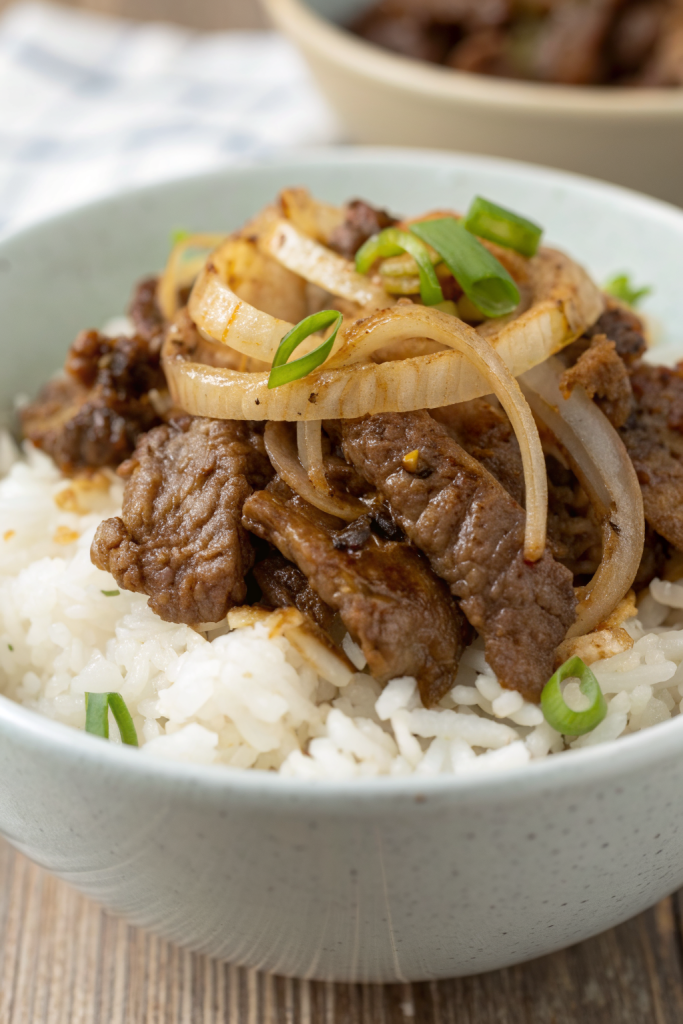
Gyudon Japanese Beef Rice Bowl Recipe tastes savory-sweet, beefy, and deeply comforting, perfect for busy weeknights when you want real flavor in under 30 minutes. It suits beginners and seasoned home cooks who crave a quick Japanese rice bowl that still feels like a cozy restaurant meal. I first learned this version while broke in college, and it still saves my weeknight sanity a decade later.
Why Gyudon Japanese Beef Rice Bowl Recipe Is Worth It
Gyudon packs thinly sliced beef, tender onions, and a soy-based broth over hot rice, so every bite hits salty, slightly sweet, and umami all at once. You cook everything in one pan, which means easy cleanup and more time to actually sit and eat.
The recipe uses simple pantry staples like soy sauce, mirin, and sugar, yet it tastes like you simmered it all afternoon. You can scale it up for meal prep, or make a single cozy bowl when you eat solo and want something better than instant noodles.
This Gyudon Japanese Beef Rice Bowl Recipe tastes like a cozy Tokyo diner at your kitchen table, with rich beef and sweet onions over fluffy rice ★★★★★
Ingredients You Need
Beef & Rice
- 1 pound thinly sliced beef (ribeye, chuck, or hot pot / shabu-shabu style beef; ask the butcher to slice it very thin)
- 4 cups cooked Japanese short-grain rice (use sushi rice or Calrose; leftover rice from the fridge works great)
Broth & Seasoning
- 1 ½ cups dashi stock (homemade or instant dashi granules mixed with water; in a pinch, use low-sodium chicken broth)
- ¼ cup soy sauce (use regular or light; choose low-sodium if you watch salt)
- 3 tablespoons mirin (Japanese sweet rice wine; if you skip alcohol, use 2 tablespoons sugar plus 1 tablespoon water)
- 2 tablespoons sake (optional; swap with extra dashi if you avoid alcohol)
- 1–2 tablespoons sugar (adjust to taste; use brown sugar for a deeper flavor)
- 1 tablespoon neutral oil (canola, avocado, or grapeseed)
Veggies & Aromatics
- 2 medium yellow onions, thinly sliced (onions carry a lot of the flavor, so do not skimp)
- 2 cloves garlic, minced (not traditional, but I like the extra punch)
- 1 teaspoon grated fresh ginger (tube ginger works fine on busy nights)
Toppings
- 2–4 eggs (soft-poached, onsen-style, or fried sunny-side-up)
- 2–3 green onions, thinly sliced
- Shichimi togarashi (Japanese seven-spice) or chili flakes, to taste
- Pickled red ginger (beni shoga), optional but highly recommended
- Toasted sesame seeds, optional
Pantry shortcuts & brand notes
- Dashi: Hondashi granules mix quickly with hot water and save a ton of time.
- Soy sauce: Kikkoman or Yamasa both give solid flavor; use tamari if you need gluten-free.
- Mirin: Look for “hon mirin” for better flavor; if you only find “aji-mirin,” reduce the sugar slightly.
Equipment
- Large skillet or shallow saucepan (10–12 inch)
- Cutting board and sharp knife
- Small bowl for mixing sauce
- Rice cooker or pot for cooking rice
- Tongs or chopsticks for handling the beef
Quick Tips & substitutions
- Slice beef very thin so it cooks quickly and stays tender; partially freeze it for 30 minutes to make slicing easier.
- Use pre-sliced hot pot beef from an Asian grocery store when you want a true restaurant-style texture.
- Swap dashi with low-sodium chicken broth plus a splash of fish sauce when you cannot find dashi.
- Use tamari instead of soy sauce to keep the dish gluten-free.
- Replace mirin with 2 tablespoons sugar plus 1 tablespoon water if you avoid alcohol.
- Skip sake and add extra dashi or water if you prefer no alcohol at all.
- Use thinly sliced mushrooms or extra onions if you want to stretch the beef or keep it lighter.
- Cook eggs separately to your favorite doneness, then place them on each bowl right before serving.
How to Make Gyudon Japanese Beef Rice Bowl Recipe
Step 1: Sauté onions and aromatics
Heat the neutral oil in a large skillet over medium heat. Add the sliced onions and cook until they turn soft and lightly translucent, about 6–8 minutes, stirring often. Add the garlic and ginger, then cook 1–2 minutes until they smell fragrant and cozy.
Step 2: Build the gyudon broth
In a small bowl, mix dashi, soy sauce, mirin, sake (if using), and sugar until the sugar dissolves. Pour this mixture into the skillet with the onions. Bring it to a gentle simmer over medium heat, and let the onions soak up the flavor for 3–4 minutes. Taste the broth and adjust with a pinch more sugar or soy sauce as you like.
Step 3: Cook the beef
Increase the heat slightly so the broth simmers steadily. Add the sliced beef in a loose layer, separating the slices with chopsticks or tongs so they do not clump. Submerge the beef in the broth and cook just until the color turns from pink to brown, about 3–5 minutes, depending on thickness. Skim off any foam that rises to keep the broth clear and clean-tasting.
Step 4: Reduce and balance flavor
Lower the heat to medium-low and simmer everything together for another 3–5 minutes. Let the broth reduce slightly so it tastes rich but not salty. Taste again and tweak: add a splash of water if it tastes too strong, or a pinch of sugar if you want more sweetness. Turn off the heat once the onions turn silky and the beef feels tender.
Step 5: Prep the rice and toppings
While the beef simmers, cook or reheat the rice so it turns hot and fluffy. Prepare your toppings: slice green onions, measure sesame seeds, and get pickled ginger ready. Cook your eggs to your favorite style; I like soft yolks so they run into the rice and sauce.
Step 6: Assemble the bowls
Spoon hot rice into serving bowls, leaving a little well in the center. Ladle beef and onions over the rice, then drizzle extra broth around the edges so the rice soaks up the flavor. Top each bowl with an egg, a sprinkle of green onions, sesame seeds, and a small pile of pickled red ginger. Finish with a pinch of shichimi togarashi or chili flakes if you enjoy a little heat.
Recipe Variations
- Gluten-free: Use tamari instead of soy sauce and confirm your dashi granules list gluten-free on the label.
- Vegan: Swap beef with thinly sliced king oyster mushrooms, tofu slices, or seitan; use vegetable broth with a bit of kombu for umami.
- Low carb: Serve the beef and onions over cauliflower rice, shredded cabbage, or shirataki noodles instead of regular rice.
- Extra veggie: Add thinly sliced carrots, napa cabbage, or spinach during the simmer stage.
- Spicy version: Stir a spoonful of gochujang or chili paste into the broth for a gentle kick.
Ways to Serve Gyudon Japanese Beef Rice Bowl Recipe
- Serve with miso soup and a simple cucumber salad for a full Japanese-style meal.
- Pack leftovers in a bento box with rice on one side and beef on the other.
- Add steamed edamame or blanched broccoli on top for extra greens.
- Offer extra pickled red ginger and shichimi togarashi at the table so everyone can customize.
Storage Success
Cool the beef and onions to room temperature, then store them in an airtight container in the fridge for up to 3 days. Keep the rice in a separate container so it does not turn soggy. Reheat the beef gently on the stove with a splash of water or dashi until it simmers and turns hot. Warm the rice in the microwave with a damp paper towel on top so it stays soft and fluffy.
Gyudon Japanese Beef Rice Bowl Recipe
Ingredients
Instructions
- Heat the neutral oil in a large skillet over medium heat.
- Add the sliced onions and cook until soft and lightly translucent, about 6–8 minutes, stirring often.
- Add the garlic and ginger, then cook for 1–2 minutes until fragrant.
- In a small bowl, mix the dashi, soy sauce, mirin, sake (if using), and sugar until the sugar dissolves.
- Pour this mixture into the skillet with the onions.
- Bring to a gentle simmer over medium heat and let the onions cook in the broth for 3–4 minutes.
- Taste and adjust with a bit more sugar or soy sauce if desired.
- Increase the heat slightly so the broth simmers steadily.
- Add the sliced beef in a loose layer, separating the slices so they do not clump together.
- Submerge the beef in the broth and cook just until it changes from pink to brown, about 3–5 minutes depending on thickness.
- Skim off any foam that rises to the surface.
- Lower the heat to medium-low and simmer for another 3–5 minutes to let the broth reduce slightly.
- Taste and adjust: add a splash of water if too strong, or a pinch of sugar if you want more sweetness.
- Turn off the heat once the onions are silky and the beef is tender.
- While the beef simmers, cook or reheat the rice until hot and fluffy.
- Prepare toppings: slice green onions, ready the sesame seeds and pickled ginger.
- Cook the eggs to your preferred doneness.
- Spoon hot rice into serving bowls, leaving a small well in the center.
- Ladle the beef and onions over the rice, adding extra broth around the edges so the rice soaks up the flavor.
- Top each bowl with an egg, green onions, sesame seeds, and pickled red ginger.
- Finish with a pinch of shichimi togarashi or chili flakes if you like heat, and serve immediately.
Notes
Approximate per serving (1 of 4): 650 calories; fat 24 g; saturated fat 7 g; carbohydrates 75 g; fiber 2 g; sugars 12 g; protein 32 g; sodium 1450 mg. Values will vary based on specific ingredients, brands, and portion size.